
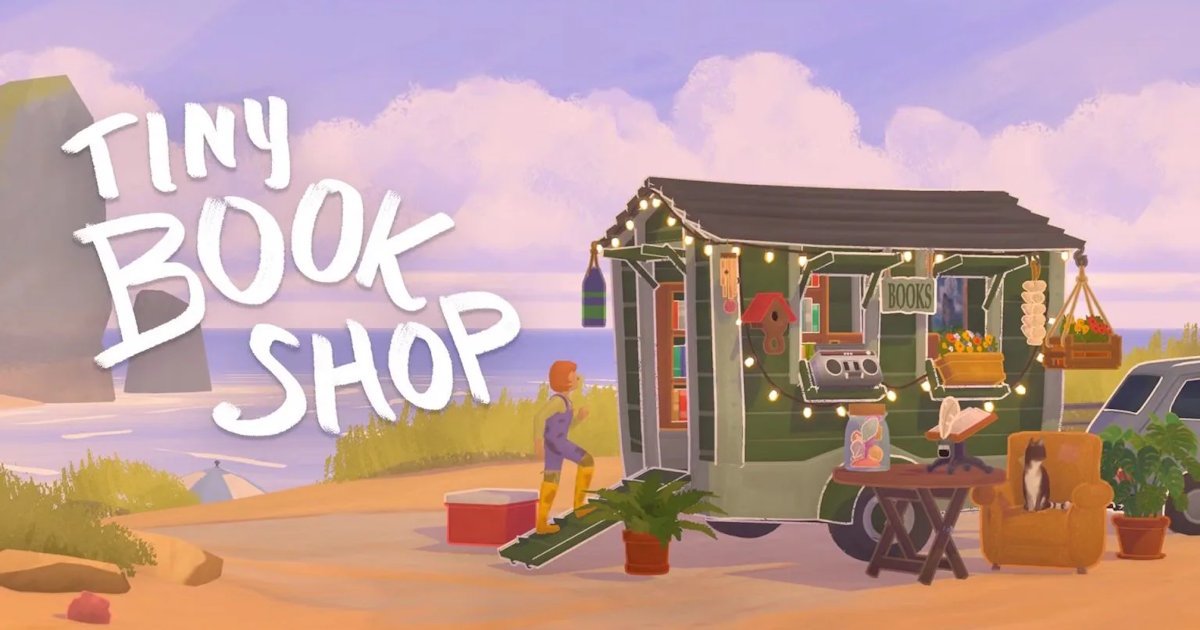
Cozy games can be unpredictable. Some feel warm and inviting straight away, and others take a little convincing before you decide whether they’re worth settling into. Tiny Bookshop didn’t need any convincing. It’s one of those titles that quietly gets under your skin, and before you realise it, you’ve spent more time playing than doing whatever you were meant to be doing, in my case, writing this review…. and laundry. Stupid laundry!
What surprised me most was how quickly it became a team favourite. It wasn’t just me tucked away with a controller, making mental notes and trying to stay objective. The whole DezDoes crew ended up playing it, almost accidentally, and every single person had the same reaction: this thing is delightful. Not in a loud, showy way. More in that gentle, steady way where you catch yourself thinking about it later, wondering what your little bookshop is doing while you’re off living your actual life. Before hurrying back to it when you get home.
There’s a kind of sincerity to Tiny Bookshop that’s hard to fake. You feel it in the pacing, in the way the game lets you breathe, and in the way it rewards curiosity without demanding perfection. I kept telling myself I’d play “just one more in‑game day” before switching back to work, and then suddenly an hour had passed. It’s been a long time since a cozy game has done that to me.
Story & The Little World You Grow Into
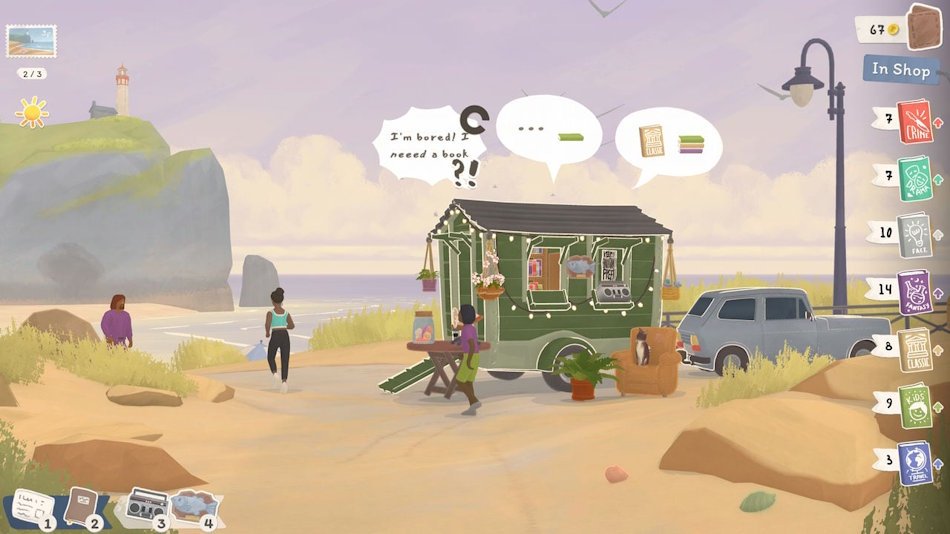
The story in Tiny Bookshop has this gentle pull to it. It doesn’t rush you, and it doesn’t try to overwhelm you with twists or big dramatic beats. Instead, it unfolds in a way that feels almost… lived‑in. You start small, with modest goals and a tiny patch of space to work with, and before long you’re thinking about the next upgrade, the next place to visit, the next person you might meet. It’s a slow build, but a satisfying one.
I kept finding myself curious about what was coming next, even when the game wasn’t explicitly pushing me forward. There’s something about unlocking new areas or meeting new characters that feels surprisingly rewarding. Maybe it’s because each person you encounter has their own little quirks, and those quirks actually matter. They change what you do, what you stock, how you plan your day. It’s subtle, but it gives the world a sense of personality that a lot of cozy games never quite manage.
That feeling of wanting to see who else might show up or what new detail might reveal itself. It’s funny how invested you can get in something so calm. You’re not saving the world or battling anything, but you still want to keep going. You want that extra storage space, that next upgrade, that new interaction. It’s almost like the game nudges you forward without ever raising its voice.
What I appreciated most is how the story stays grounded. It doesn’t try to be bigger than it needs to be. You’re running a bookshop, meeting people, exploring small corners of a town, and somehow that’s enough. It’s the kind of storytelling that feels comfortable, like settling into a chair with a book you didn’t expect to enjoy this much, and realising halfway through that you’re already attached.
Graphics
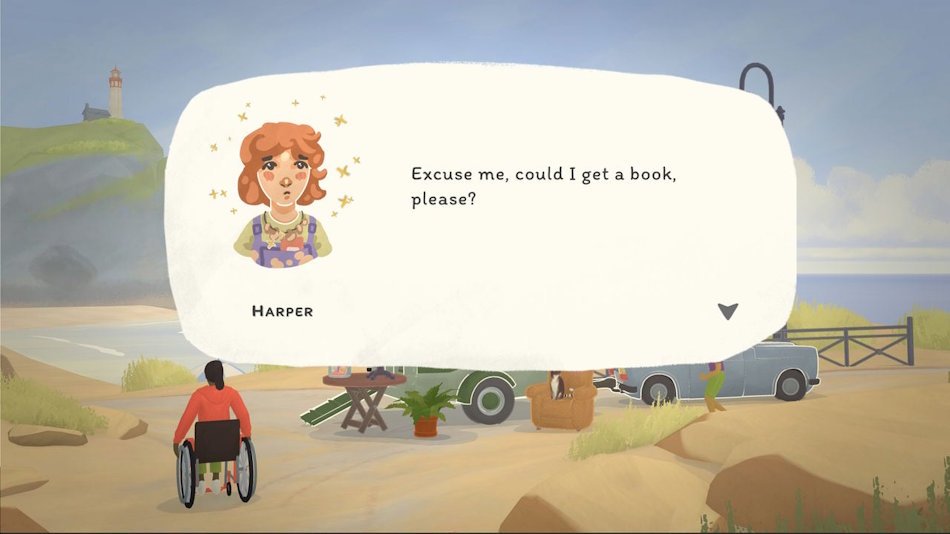
The graphics in Tiny Bookshop have this gentle charm that sneaks up on you. They’re not trying to impress you with flashy effects or anything overly dramatic. Instead, everything feels intentionally simple, readable fonts, clear speech bubbles, colours that sit softly on the screen. It’s the kind of visual style where you don’t have to squint or adjust anything; you just settle in and let the game do its thing.
What stood out to me, and honestly to the whole DezDoes team, is how detailed it all is without ever feeling busy. You’ll be looking at a scene that seems cute at first glance, and then you notice tiny touches tucked into corners or layered into animations. It’s almost like the developers kept asking themselves, “What’s one more small thing we can add to make this feel real?” And somehow they kept finding answers.
One moment that really made me pause was the book recommendation system. You’re not just clicking a random icon and hoping for the best. You actually see titles, descriptions, and little snippets that feel like they belong in an actual bookstore. It’s surprisingly grounding. You get this sense that someone cared enough to make sure every book feels like it could exist, even if you’re only interacting with it for a few seconds.
There’s something almost funny about how much thought went into these tiny quirks. You don’t expect that level of detail in a cozy game, or at least I didn’t, but Tiny Bookshop keeps offering it anyway. It’s one of those hidden‑gem moments where you realise the visuals aren’t just cute; they’re quietly impressive in ways you only notice after spending time with them.
Controls
The controls in Tiny Bookshop are one of those things you don’t really think about until you notice how comfortable you’ve become with them. They’re simple, almost deliberately so, and that simplicity ends up being one of the game’s quiet strengths. You’re never wrestling with the controller or second‑guessing what button does what. You just fall into a rhythm, and before long you’re managing your little bookshop like it’s second nature.
I found myself appreciating that more than I expected. Sometimes cozy games try to add layers of interaction to make things feel “deeper,” but it can backfire and make the whole experience clunky. Here, everything stays light. You move, you interact, you organise, and none of it feels like a chore. Even the DezDoes team mentioned it, everyone picked it up and just… played. No one asked where anything was or how to do something. It’s rare to have a game where the controls disappear into the background that quickly.
There’s also this gentle pacing built into how the actions respond. You’re not rushing through menus or juggling complicated systems. You tap a button, something happens, and you keep going. It’s almost meditative at times. I caught myself zoning out in a good way, just moving through tasks without any friction. It’s the kind of design that makes you feel like the game respects your time and your attention.
And maybe this is a small thing, but I like that Tiny Bookshop doesn’t punish you for being a bit slow or distracted… at times more than a bit distracted. If you put the controller down for a moment, you don’t come back to chaos. The controls are forgiving, steady, and easy to slip back into. It’s nice, especially on days when your brain is already full and you just want something gentle to unwind with.
Final Thoughts
Tiny Bookshop is one of those games that stays with you in a way you don’t fully expect at first. It starts small, almost quietly, and then somehow becomes part of your routine, the thing you open after work, or while dinner’s in the oven, or when you’re trying to avoid that laundry you’ve already ignored twice. It’s gentle without being dull, simple without being shallow, and thoughtful in ways that reveal themselves slowly.
What makes it linger, at least for me, is how consistently it respects the player. The story never rushes. The graphics never shout. The controls never demand more than you’re willing to give. Everything feels like it’s been designed with a kind of calm confidence, as if the developers knew that cozy doesn’t have to mean empty, and simple doesn’t have to mean boring.
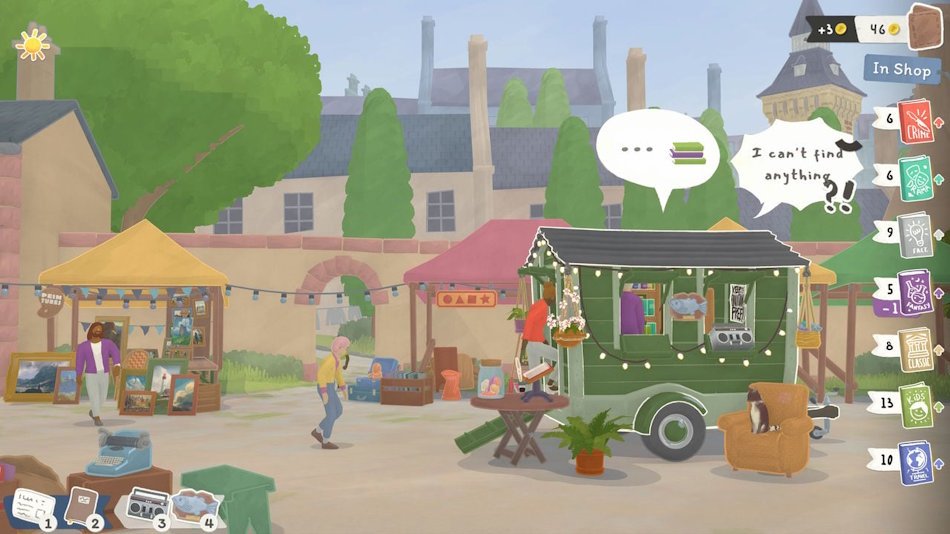
And the more time you spend with it, the more you notice those tiny details; the book descriptions, the character quirks, the way each new area feels like it belongs to a real little world. It’s not trying to be a blockbuster or the next AAA hit. It’s trying to be a place you want to return to, and it succeeds.
I think that’s why the whole DezDoes team ended up playing it. It’s rare for a game to pull everyone in so naturally, without any big push or hype cycle. We just kept drifting back to it, one by one, until suddenly it wasn’t just my review anymore, it was a shared experience.
If you’re someone who loves cozy games, Tiny Bookshop feels like an easy recommendation. But even if you’re more of a casual player, or someone who dips in and out of games depending on mood or energy, this one fits beautifully into that space too. It’s forgiving. It’s warm. It’s engaging in a way that doesn’t drain you.
It’s the kind of game you play on a busy day to unwind, or on a quiet day to settle into something comforting. And honestly, it’s been a long time since a cozy title has felt this steady, this sincere, and this worth coming back to.
And if you want yourself a copy, the current Steam sale has it at 30% off right now!




Recent Comments