
We all have that pile of shame. Maybe it’s old board games that never hit the table anymore, or more likely if you are like me, those grey minis still sitting on sprue (or still sealed in the box…) that never make it to the painting desk, let alone an actual game.
It kind of builds up without you noticing. One kit turns into a few, then suddenly there’s a shelf… or a stack… or something you try not to think about too much. And sitting in all of that is a lot of potential. Stuff that probably should be getting used, or at least enjoyed, even if it’s not by you.
So what do you do with it? Keep holding onto it, or accept that it might be better off with someone else?
In this article, I’ll go through three ways to trim down that pile of shame and turn it into something a bit more useful.
1. Online Marketplaces (eBay / Facebook)
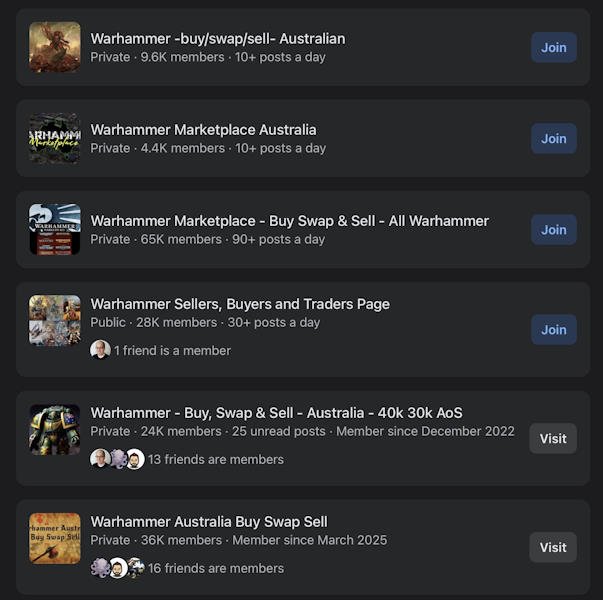
With eBay bringing back free listings for everyday sellers, it’s started to feel like a proper option again. Pair that with Facebook Marketplace, and you’ve basically got the two go-to spots if you want to move minis without setting up your own store… which, honestly, if you’re at that point, the pile might be a different conversation entirely.
The experience, though, is a bit more involved than it first sounds. You’re doing everything. Photos, descriptions, answering messages, packing orders, it’s all on you. There’s a moment where you realise you’re crouched over a desk trying to get decent lighting on a half-built Dreadnought, and it feels slightly ridiculous. But also kind of satisfying, in a strange way.
You do need to be accurate. If that squad of 10 Space Marines is missing a boltgun, or one head option is gone, it has to be in the listing. People notice. And they will absolutely ask.
Pricing is another thing. You end up scrolling through sold listings, trying to work out what things are actually worth. Price too high, nothing moves. Too low, and you feel like you’ve just handed it away. Then there’s postage; whether you include it, charge extra, and whether you can make it to the post office before it closes. Which is harder than it sounds some days.
Still, the upside is pretty clear. These platforms are huge. Your listing gets in front of people already searching for those exact kits or factions. You’re not convincing someone to want it; they already do, which helps.
Pros:
- Maximum control: You choose the price, how it’s listed, and how you want to handle the sale
- Strong reach: eBay opens things up globally, while Facebook can get your minis in front of local hobby groups who already care
Cons:
- The human factor: Low-ball offers, people disappearing mid-conversation, and the occasional time-waster, it happens more than you’d think… “Is this still available?”
- Liability: Lost parcels, damaged items, or disputes can come back to you, especially on eBay. Photos help. Lots of photos
- Effort: Listing, messaging, packing, post office runs… this one takes time. It’s not a quick, clear-out option
2. Swap Meets
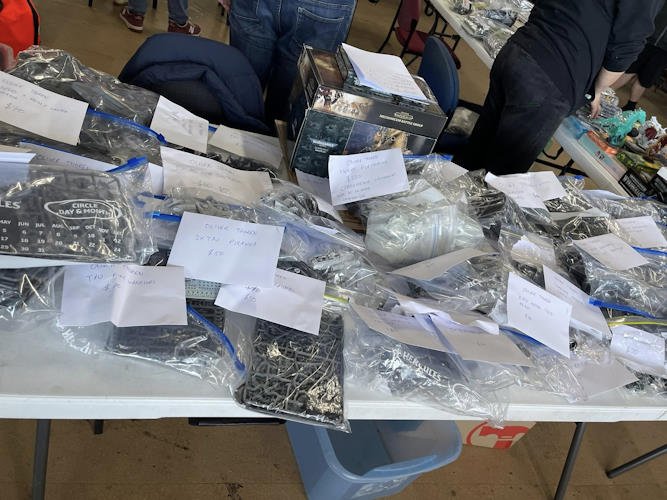
One of my local game stores runs a quarterly swap meet, and honestly, it’s one of the better ways I’ve found to clear out minis while still feeling connected to the hobby. It leans pretty heavily into wargaming, so you’ll see tables full of Warhammer bits, half-built armies, random sprues… but there’s always a mix of board games, books, and other odd stuff too… like my beloved Gundam.
It’s a different kind of sell. You’re not listing things and waiting; it’s all happening in real time. You bring your pile, set it up, and just see what happens. Pricing still matters, of course, but there’s a bit more flexibility. You can haggle, bundle things together, and tweak prices on the fly. And people actually talk to you. About your minis, their projects, what they’re hunting for. It feels less like a transaction and more like… a slightly chaotic hobby meetup where money occasionally changes hands.
Preparation does make a difference. I’ve learned that the hard way. Now I usually grab a bunch of small ziplock bags beforehand and spend a few nights sorting everything out. Single minis, grouped units, bits; just making it easier for someone to pick something up and go “yeah, I’ll take that.” Pricing can be a bit loose, too. Sometimes I label everything, sometimes I wing it with a rough per-mini value depending on what it is. Old plastic Skaven might go cheap, characters a bit higher. It’s not an exact science. It doesn’t really need to be.
The best part, though, is the conversations. You end up chatting to people who actually care about the same things you do. I’ve moved a lot of stuff just by bundling things together mid-conversation. At one point, I sold an entire pile of Orks in one go, which felt oddly satisfying. Slightly bittersweet, maybe, but mostly satisfying.
Pros:
- Immediate results: No waiting around for payments or postage, once it’s sold, it’s done
- Community: You meet other hobbyists, regulars start to recognise you, and it becomes a bit of a social thing as much as a sale
Cons:
- Physical effort: You have to bring everything with you, set it up, and pack it down again. A trolley helps more than you’d expect
- Inconsistent outcomes: Some days are great, others… not so much. I’ve had stalls where I barely covered the table fee and lunch, which can feel a bit rough going home with most of it still in the box
3. Consignment
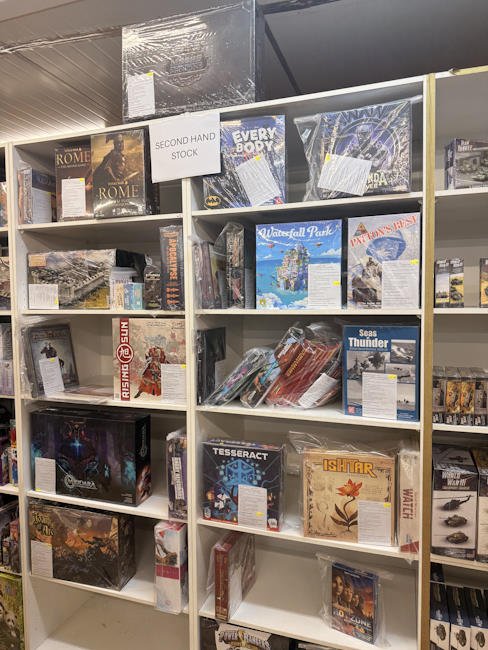
The third option is consignment, and it’s probably the lowest-effort one… which is appealing, honestly. Some local game stores have started running secondhand sections, and while they often lean toward board games, minis do show up depending on the shop.
The setup is pretty simple. You bring your stuff in, agree on a price, fill out a form, and then just leave it there. That’s it. The store handles displaying it, dealing with buyers, and actually processing the sale. You kind of just… walk away and hope it sells. It feels strange the first time. Like you’ve abandoned your minis to a better life.
In the store I use, you fill out a quick form with the details and the price you want. They take a cut, usually a percentage, and the rest comes back as store credit. Which, realistically, just loops straight back into the hobby. You clear a bit of space, then quietly start filling it again. Not ideal, maybe, but it’s honest. And, if we’re being practical about it, at least no actual cash is leaving the bank account… which somehow feels like a win… well, as long as my wife doesn’t read this!
It’s easy, though. That’s the big draw. You’re not taking photos, not answering messages, not packing anything. If it sells, great. If it doesn’t, the store gives you a call after a couple of months, and you pick it back up. You can drop the price before then if you want to nudge things along.
Still, pricing matters more than it seems. If it’s too high, it’ll just sit there. You might walk past it weeks later, still on the shelf, which is… a bit awkward. But if you get it right, it moves without you having to think about it too much.
Pros:
- Trusted environment: Buyers are often more comfortable purchasing through a store, and some offer short return windows for missing parts or issues
- Hands-off: Once it’s dropped off, you’re basically done. No messages, no meetups, no packing boxes
Cons:
- Delayed payoff: You only get credit after it sells, and there’s usually a short wait before you can use it
- Fees: Stores take a percentage, so you’ll get less than if you sell directly
- Pricing risk: If it’s set too high, it can sit there for weeks… or longer, just quietly not moving
What tips do you have to sell your unwanted games and hobby gear?



Recent Comments