
A week inside the chaos and creativity of Tokyo Game Show 2026
It’s been a week since Tokyo Game Show wrapped up, and I’ve genuinely needed all seven of those days to decompress. The scale of it sits in your bones for a while. Coming from Australia, the size difference is almost comical. PAX Australia feels big when you’re in it, but Tokyo Game Show makes it look like a cosy weekend market. I kept trying to estimate the ratio and landed somewhere around four or five times larger, although honestly it might be more. Makuhari Messe is enormous in a way that doesn’t fully register until you realise you’ve walked twelve thousand steps before lunch and still haven’t reached Hall 9.
What surprised me wasn’t just the physical footprint. It was the sense that the whole industry had converged into one place. Tokyo Game Show felt like a genuine global hub, almost like the centre of gravity for gaming had shifted temporarily to Chiba. Studios and exhibitors from fifty‑three countries filled the halls. Brazil, Thailand, Sweden, places I don’t usually associate with big convention representation. It gave the show this layered texture, like every corner had a different creative flavour.
Even navigating the venue became its own mini adventure. The Tokyo Game Show Business Day Map, which I thought would be a simple floor guide, turned out to be a fully interactive layout with live booth updates and route planning. I probably spent too long fiddling with it, trying to optimise my pathing like I was speedrunning the expo. It didn’t help much, but it did make me appreciate just how international the whole thing was. Every hall felt like a different country’s take on what gaming should look like.
By the end of day one, I had already accepted that I wouldn’t see everything. You could spend an entire afternoon in a single hall and still miss half the booths. But that’s part of the charm. Tokyo Game Show isn’t just big. It’s overwhelming in a strangely energising way, like being dropped into the world’s busiest creative crossroads.
Major Industry Heavyweights
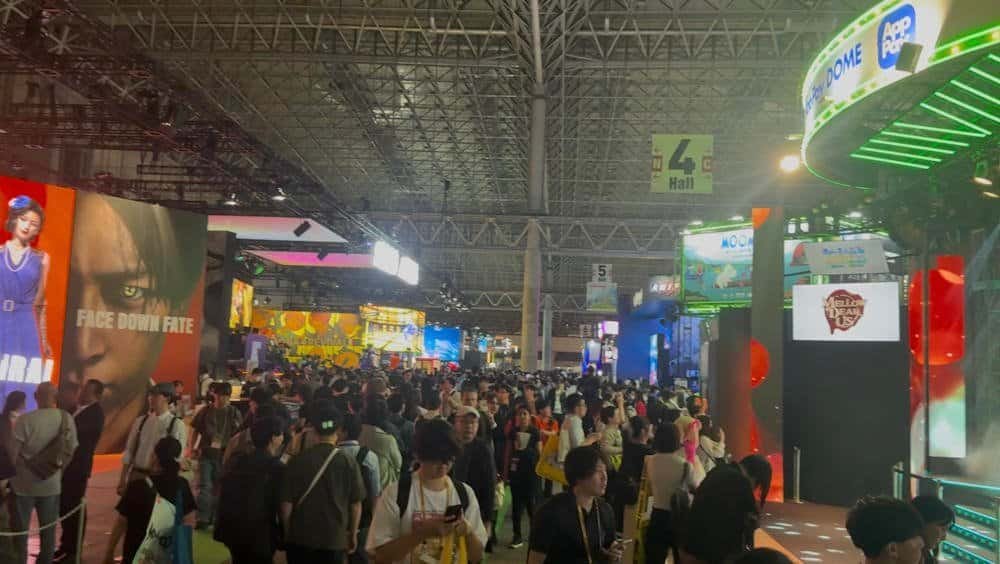
Before I even made it to the Tokyo Game Show indie halls, the big publishers practically swallowed me whole. The General Exhibition area felt like a competition to see who could build the most structurally ambitious booth without accidentally creating a fire hazard. Multi‑story displays, full theatrical lighting rigs, and sound systems that probably needed their own power grid. It was impossible to ignore any of it.
Sony Interactive Entertainment had one of the loudest footprints. PlayStation’s booth was packed with hands‑on stations running everything from early gameplay slices to tech demos that looked like they were still warm from the dev build. Their main stage looped presentations on a screen so large I kept wondering what the pixel density was. Probably something absurd, like 4K per square foot. I didn’t check, but it felt like that.
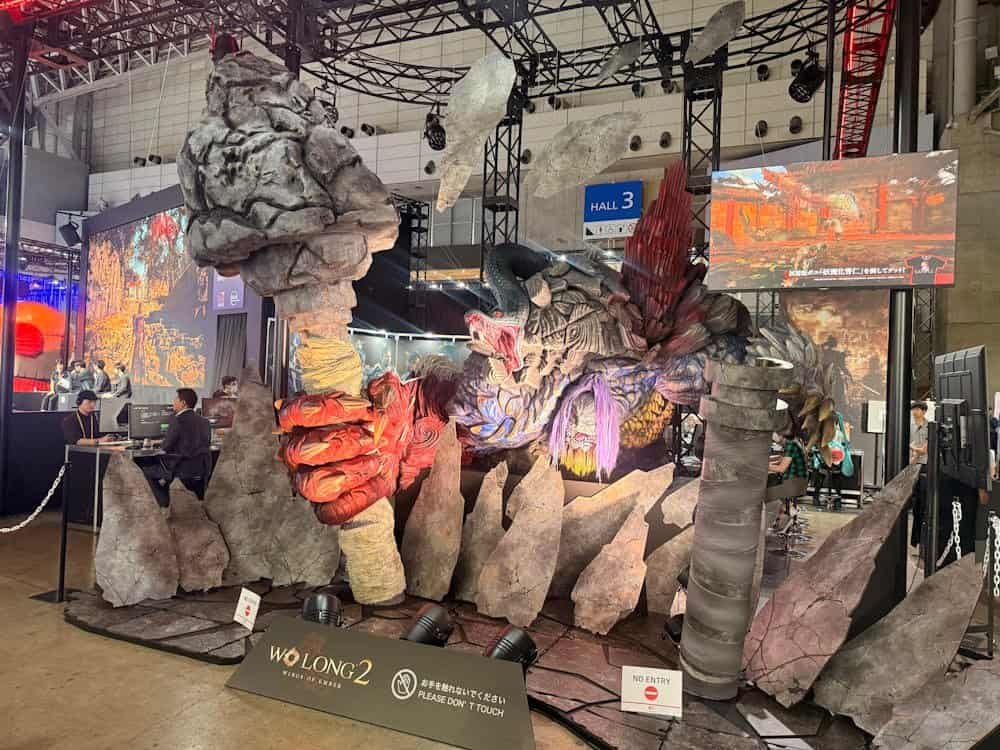
Capcom, Square Enix, and Bandai Namco took over entire sections of the hall with themed structures that looked like temporary theme park zones. Capcom had a monster display that towered over the crowd. Square Enix leaned into cinematic trailers with audio that rattled your ribs. Bandai Namco had queues so long I started mentally calculating average wait times like I was doing maths homework. I think one line was pushing ninety minutes, maybe more.
SEGA, ATLUS, and Konami brought a different kind of energy. Their booths felt like a mix of character showcases and esports arenas. Live matches, cheering crowds, giant screens showing frame‑perfect combos. I wandered past one match and got sucked in for longer than I meant to. It’s hard not to when the players are pulling off inputs faster than my brain can register.
Koei Tecmo, LEVEL‑5, and HoYoverse rounded out the heavy hitters with massive cross‑platform displays. HoYoverse in particular had a crowd that never seemed to shrink. I think they could have announced a calculator app and people would still queue for it. Their lighting setup alone probably had more lumens than my entire house.
The majors are always the anchor of any convention. You need them, even if they make the floor feel like peak hour at Shinjuku Station. The crowding gets intense, especially on industry and media days when you’d expect things to be calmer. Hands‑on time becomes a bit of a gamble. Sometimes you get lucky, sometimes you get politely waved toward a queue that looks like it has its own weather system.
Still, I love the theatre of it all. The lighting, the stage design, the engineering that goes into building a booth that can be assembled in a day and still look like a permanent installation. There’s something oddly charming about watching a publisher try to out‑spectacle the one next door. It’s loud, chaotic, and occasionally overwhelming, but that’s part of the fun. And why I now love Tokyo Game Show.
Hands-On with Standout Indies
The indie halls at Tokyo Game Show are always my favourite part of any show. They feel like the creative lungs of the whole event. You walk in and suddenly the noise shifts from blockbuster spectacle to something more personal. Smaller teams, stranger ideas, prototypes held together with hope and caffeine. Among all that, a handful of titles really stuck with me, each for different reasons.
Venn Studios / Rogue Reigns
Venn Studios was one of the first booths I stumbled into, mostly because someone smiled at me as I walked past. Their setup wasn’t flashy. In fact, they were still adjusting cables and monitors when I arrived. But the team was warm and eager to talk, and sometimes that’s more inviting than a giant LED wall.
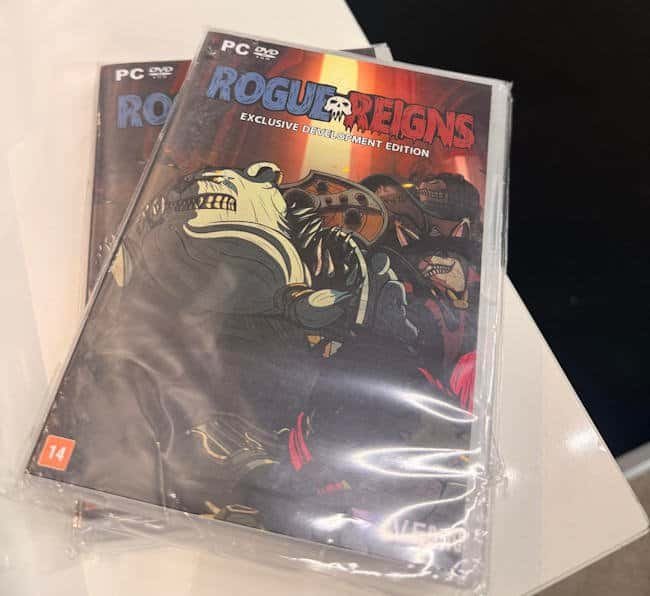
They walked me through their upcoming title, Rogue Reigns. It’s a dark fantasy roguelike deckbuilder, the kind of genre mashup that can either be brilliant or overwhelming. This one leans toward brilliant. The art direction has that gritty, ink‑washed look that feels hand‑crafted. The gameplay loop, at least from what they described, mixes tactical card sequencing with branching dungeon paths. I think they mentioned around a hundred unique cards planned for launch, plus modifiers and relics that stack in unpredictable ways. It sounded like the sort of game where you tell yourself you’ll play one run and suddenly it’s two in the morning.
Even without a playable demo at that moment, the vibe was strong. Venn Studios feels like a team on the rise.
Name of the Will
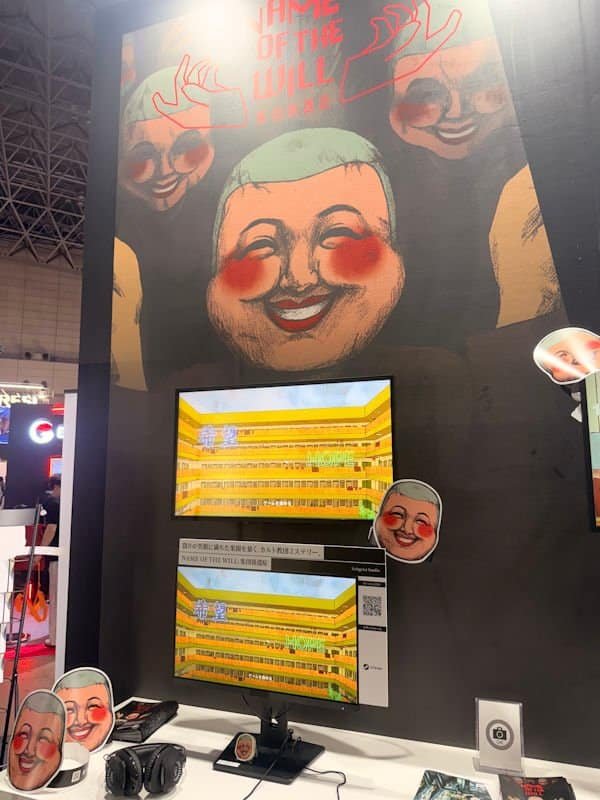
Name of the Will was a completely different experience. Zeitgeist Studio and HYPER REAL have built something unsettling in a very intentional way. The booth had this dim, oppressive lighting that made you feel like you were already inside the game’s world. I didn’t expect to be pulled in so quickly.
The game is set inside HOPE, a cult‑like facility with a strict compliance system. You’re graded constantly, almost like a behavioural report card. The aesthetic is bleak and industrial, inspired by dense Asian cityscapes where everything feels cramped and slightly off. The hand‑drawn art gives it a raw, almost uncomfortable texture. It’s a point‑and‑click puzzle game at its core, but the psychological horror elements make every interaction feel heavier.
I tried the demo for a few minutes and immediately realised it wasn’t a five‑minute kind of game. It’s the type where you start poking at details, talking to strange residents, and suddenly you’re deep into a mystery you didn’t plan to commit to. The Steam demo supports Windows, Mac, and SteamOS, and I think it’s worth downloading if you enjoy narrative games that make you feel slightly watched.
Tokyo Stories
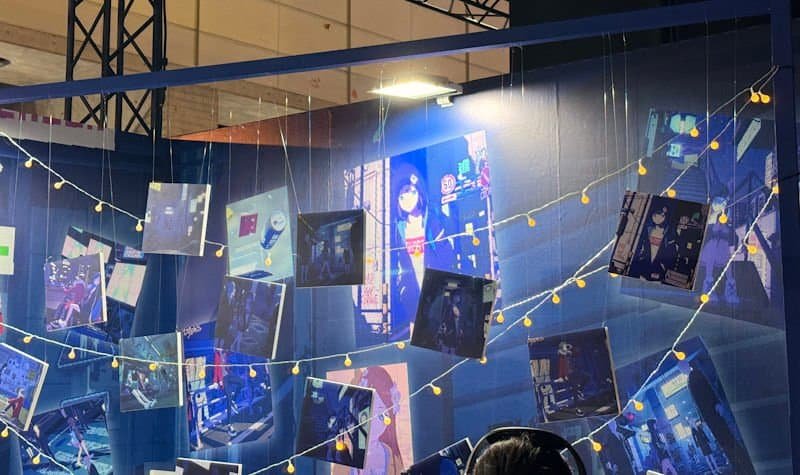
Tokyo Stories was a breath of fresh air after the intensity of HOPE. Drecom and Happinet have created something gentle and melancholic. The booth looked like a small slice of the game world, almost like a forgotten alleyway in an abandoned Tokyo. It was surprisingly calming.
The game blends 3D environments with detailed pixel art, and the combination is striking. You wander through a maze‑like city, piecing together memories and searching for a missing friend. It’s slow, intentionally so. The kind of pace where you read every line of dialogue because rushing would feel wrong. The queue wasn’t long, but it moved slowly because everyone stayed until the end of the demo. I did too.
There’s a Steam demo coming soon, and I’m already planning to sink into it with a cup of tea and no distractions.
Earth Atlantis 2
Earth Atlantis 2 was the indie equivalent of a shot of espresso. Pixel Perfex has taken the original’s underwater SHMUP concept and rebuilt it with vibrant pixel art. It looks fantastic. The controls felt tight and responsive, even in the chaos of boss fights against machine‑hybrid sea monsters. One of the bosses had so many moving parts that I briefly wondered how many animation layers were stacked on top of each other.
Side‑scrolling SHMUPs are one of those genres you forget you love until you’re suddenly dodging bullet patterns and grinning like an idiot. This one hit that sweet spot. Fast, challenging, colourful. A nice contrast to the slower narrative titles I’d been playing earlier in the day.
I chatted with the developers afterward. They mentioned a roadmap leading to a 2027 release, with planned updates to enemy AI behaviour and expanded biome zones. It all sounded promising. I added it to my Steam wishlist before I even left the booth.
Tech & Hardware Highlights
The hardware presence at Tokyo Game Show felt like its own miniature convention. Every time I thought I’d reached the end of a hall, another row of peripherals appeared, almost like the venue was generating new booths procedurally. It was a mix of custom accessories, handheld PCs, arcade gear, and enough mechanical keyboards to make any enthusiast question their financial stability.
Custom Accessories and Arcade Gear
Grapht had one of the most interesting accessory spreads. Their booth looked like a workshop crossed with a collector’s shelf. Fight pads, arcade sticks, custom shells, even a few experimental layouts that made me pause and think about how people’s hands must work. Retailers like Fumoshop showcased imported peripherals you don’t usually see outside niche online stores. I ended up spending longer than I meant to testing different stick layouts, mostly because I kept opening the cases to look at the internals. Some of the boards had cleaner wiring than my actual PC.
Mobile and Phone Controllers
Mobile gaming adapters were everywhere. Bluetooth models, direct USB‑C models, even a few hybrid designs that could switch between Xbox‑style and PlayStation‑style layouts. I tried one controller that had adjustable tension on the sticks, which felt oddly premium for something meant to clip onto a phone. It made me realise how far mobile gaming has come. Ten years ago, you were lucky if your phone didn’t overheat during a match. Now you can attach a controller with hall‑effect sticks and low‑latency Bluetooth 5.3.
Ultra-Lightweight Mice
The G‑Wolves Fenris Max 8K Wireless Mouse was one of the strangest and most impressive pieces of tech I saw. It has an 8,000 Hz polling rate, which is absurdly high. I’m not even sure I can physically react fast enough to justify that number, but it’s nice to know the mouse can. The design is basically half a mouse. No palm rest, no extra shell, just a lightweight frame that forces a fingertip grip. I picked it up and immediately felt like I should be competing in an esports tournament. It weighs almost nothing, around the mid‑20 gram range depending on the configuration. It’s the kind of mouse that makes you question whether your current one is secretly a brick.
Keyboards and Custom Switches
Epomaker and Keychron brought out a full buffet of mechanical keyboards. Hot‑swappable boards, gasket mounts, compact layouts, and switch testers that looked like candy trays. I tried a few switches I hadn’t used before, including a linear set with a 35 g actuation force that felt almost too light. There was also a tactile switch with a deep, satisfying thock that made me consider buying a board I absolutely do not need. Seeing and hearing switches in person is invaluable. You can watch sound tests online all day, but nothing beats pressing the key yourself and thinking, yes, that’s the noise I want to hear at 2 a.m.
Portable Gaming Handhelds
The ROG Ally lineup drew a steady crowd. The newer models have improved thermals, better battery efficiency, and slightly refined ergonomics. One of the units I tested ran a modern AAA title at a stable frame rate on battery, which still feels a bit magical. Windows 11 optimisations and SteamOS flexibility make handheld PC gaming feel mainstream now. You don’t have to be a tinkerer to get good performance. Just pick it up, launch a game, and forget you’re holding a device that’s basically a tiny gaming laptop.
Handhelds used to feel like compromises. Now they feel like alternatives.

Final Thoughts
Tokyo Game Show really does feel like a snapshot of where the global games industry is heading. You get quiet, artistic indie projects that make you slow down, and then a few steps later you’re staring at hardware pushing performance in ways you didn’t quite expect. It’s a strange mix, but a good one. I think that’s what makes Tokyo Game Show feel so alive. You never really know what you’re about to walk into. Sometimes it’s a booth with a single developer proudly showing off a prototype, and sometimes it’s a stage setup that looks like it could host a small concert.
There’s also this odd sense of momentum in the air. You can feel how fast things are moving, even if you’re not entirely sure where everything is heading. One moment you’re playing a pixel‑art narrative game that feels like a quiet walk through memory, and the next you’re holding a handheld PC that runs modern AAA titles smoother than your actual laptop. It’s a bit surreal. In a good way, mostly.
If you plan on going to Tokyo Game Show in the future, a bit of strategy helps. Makuhari Messe has eleven halls, and they’re not small. I tried wandering aimlessly at first and immediately regretted it. At one point I thought I’d looped back to the same booth, but it turned out to be a different booth with the same colour scheme. A full walkthrough on the first morning is worth the effort. It gives you a rough mental map, even if you forget half of it by lunchtime. After that, tackling the show section by section feels more manageable. It also stops you from accidentally missing an indie demo tucked behind a hardware booth or a handheld showcase hidden near a food stall. I missed one demo entirely because I got distracted by a display of custom keycaps shaped like tiny fruit. It happens.
The trip is worth it. Not just for the games, although that’s obviously the main draw. There’s something special about seeing so many countries represented in one place. It makes the industry feel bigger and more connected than you expect. You hear accents from everywhere, see ideas from everywhere, and it reminds you that gaming isn’t just one culture or one market. It’s a whole ecosystem of people trying things, sometimes strange things, sometimes brilliant things.
And you get Japan in the process, which is its own reward. Good food, good trains, good everything. Even the convenience stores feel like part of the experience. I left tired, slightly overwhelmed, and already thinking about next year. I’m not sure I’ll be fully recovered by then, but I’ll probably go anyway.



Recent Comments