
Travelling through Japan makes you realise pretty quickly that someone, somewhere, has spent an unreasonable amount of time thinking about the tiny details of everyday life. Not the flashy stuff either. Just the quiet conveniences that make a normal day run smoother. You see it in the trains first, of course. They glide in with almost smug punctuality, and half the time you’re still admiring the LED route maps when the doors open exactly where the platform markings said they would. Then you notice the micro-apartments, somehow fitting a whole life into twenty-something square metres without feeling like a storage unit.
But it’s inside the home where the difference really hits. Australia has made progress with smart home gear, sure. We’ve got Wi-Fi light bulbs and fridges that send you notifications for reasons I still don’t fully understand. Yet the practical, everyday infrastructure… I think we’re still catching up. Japan has this knack for turning routine annoyances into neat little systems that just work. No fuss. No “have you tried resetting the app”.
Multi-zone hot water panels with temperature presets. Bathrooms that dry themselves with built‑in fans pushing around something like 1,500 watts of warm air. Compact cooktop grills that somehow reach 250°C in a drawer the size of a sandwich press. Every home seems to have at least one clever idea that makes you wonder why we haven’t adopted it already.
So here’s a look at the Japanese home tech Australia is missing, and honestly, should probably steal.
Hot Water Systems
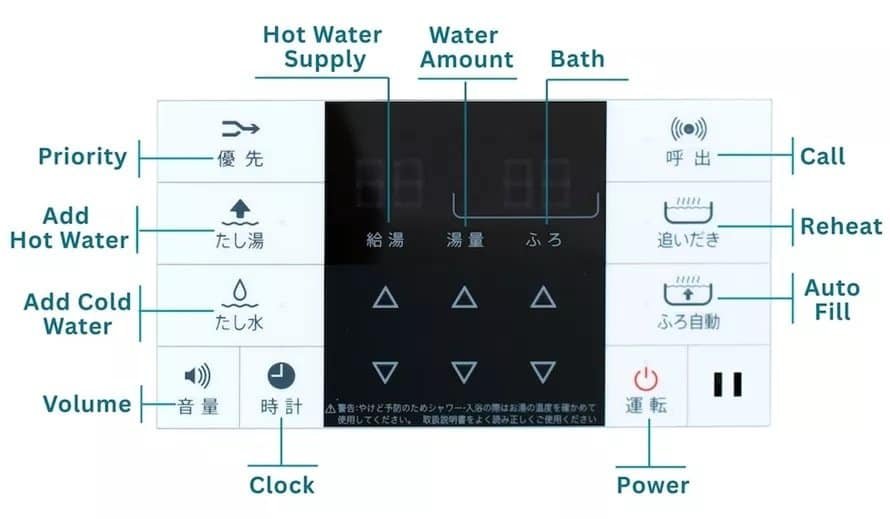
In Australia, we’re pretty familiar with instantaneous hot water systems. They do the job, most of the time, unless someone decides to shower for twenty minutes and the rest of us get punished for it. Japan takes the same idea and somehow turns it into a whole household experience. You’ll find wall‑mounted control panels in the kitchen and bathroom, usually these neat little digital units with soft-touch buttons and a tiny speaker that sounds like it’s trying its best. They don’t just switch the system on. They let you pick exact temperatures, often down to a single degree. Forty-two for dishes, thirty-eight for the kids, forty-one for a soak. It’s oddly satisfying.
The kitchen panel is where things get a bit magical. You press a button, and the bathtub fills itself to a preset volume and temperature. No babysitting the tap. No guessing. The system just does it. When the bath is ready, a polite voice chimes in to let you know, usually something like “Ofuro ga wakimashita”, which roughly translates to “Your bath is ready”. It feels strangely luxurious, even though it’s just hot water behaving itself.
Then there’s Otaidaki, the reheating function. Instead of topping up the tub with more hot water, the system circulates the existing water through a heat exchanger and warms it back up. Some units can maintain temperature within half a degree, which is honestly more precise than my oven. It’s clever, and it makes sense once you understand Japanese bathing culture.
The bath isn’t for washing. It’s for soaking. Everyone showers first, properly, and only then gets into the tub. Because the water stays clean, the whole household can use it, reheating it as needed. It’s efficient, it’s cultural, and it’s one of those things that makes you wonder why we haven’t adopted it here. Imagine a family bathroom in Australia where the bath fills itself, reheats itself, and politely tells you when it’s ready. I think most of us would get used to that pretty quickly…. even if I’m still not 100% on getting into someone elses bathwater.
Self-Contained Shower/Baths
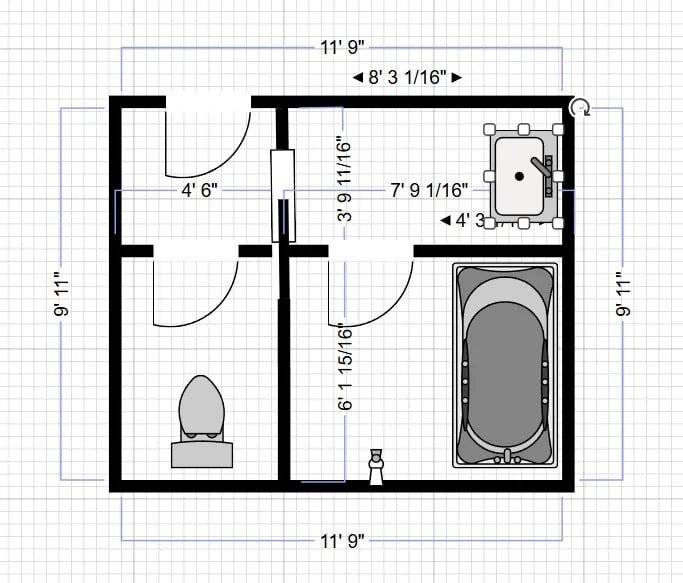
Japanese bathrooms feel like they were designed by someone who actually thought about how people use them. The toilet is in its own little room. The vanity sits somewhere else entirely. And the bathroom, the actual bathroom, is just for showering and bathing. It’s a small thing, but once you experience it, you start wondering why we ever combined everything into one slightly damp multipurpose space.
The whole room is waterproof. Floor, walls, ceiling. You can shower standing outside the tub without worrying about splashing anything important. It’s strangely liberating. Some rooms even have a built‑in drying system that pushes warm air around at something like 1,200 to 1,500 watts. It dries the room after a shower and, if you hang clothes inside, it’ll dry those too. I didn’t expect to like that as much as I did. There’s something nice about walking into a bathroom that never smells like a wet towel. And as someone with daughters, I know that smell all too well.
The design details feel practical in a way that’s almost charming. A little footrest moulded into the floor for washing your legs. A wide drainage channel that you can rinse clean in seconds. Everything is meant to be used, not tiptoed around. And when the drying function is included, the whole space becomes this multipurpose cleaning zone that just makes sense.
Having three separate spaces also solves a lot of family arguments. In a mixed household, everyone can use what they need without blocking anyone else. Someone can be doing their hair at the vanity. Someone else can be in the shower. Someone else can duck into the toilet. No queue. No shouting down the hallway. I think parents would call that a miracle.
It’s one of those ideas that feels almost too sensible. Once you’ve tried it, the Australian one-room-for-everything layout starts to feel a bit outdated, like something we kept doing out of habit rather than logic.
Fully Integrated Washlet Bidets
Toilets aren’t usually the kind of thing people get excited about. They’re practical, they’re necessary, and most of the time they just… work. Japan, though, treats cleanliness like a national sport, and the modern washlet is basically the gold medal event. It’s hard not to admire the commitment.
Bidets never really took off in Australia. They had a brief moment in the UK decades ago, mostly as a punchline in sitcoms, but that was about it. The Japanese version is something else entirely. It’s not just a spray nozzle. It’s a whole system. Heated water that you can aim precisely. Adjustable pressure. Adjustable duration. A separate mode for the front and the back. It’s almost too much choice, but in a strangely comforting way, and weirdly reminds me of the three shells from Demolition Man.
And that’s just the beginning. Standard Japanese toilets come with heated seats that hover around thirty-eight degrees, motion sensors that lift the lid automatically, air deodorisers that scrub smells through a tiny charcoal filter, and ambient white noise to politely cover whatever is happening. Some models even use UV or electrolysed water to clean the wand after every use. The toilet basically sanitises itself before you’ve even stood up. There are also automatic flush calculations based on how long you’ve been seated, which feels a bit intrusive but also kind of impressive.
The first time you sit down and see a control panel with fifteen buttons, it’s hard not to laugh. You end up reaching for Google Translate just to figure out which one won’t accidentally trigger a surprise. It turns a quick bathroom break into a small adventure. Not a dramatic one, but still something you remember.
It’s one of those technologies that seems excessive until you try it. After that, the idea of going back to a regular toilet feels a little primitive.
Fish Grill Drawers (Sakana Yaki-ki)
Japanese homes, especially in cities like Tokyo, don’t have the luxury of sprawling kitchens. Most apartments squeeze everything into an LDK layout, which is basically the lounge, dining and kitchen sharing the same air. You might get one or two hotplates, maybe induction, maybe gas, and that’s your lot. No oven. No dishwasher. Sometimes not even enough bench space to chop more than one vegetable at a time. It’s impressive what people manage to cook in these spaces.
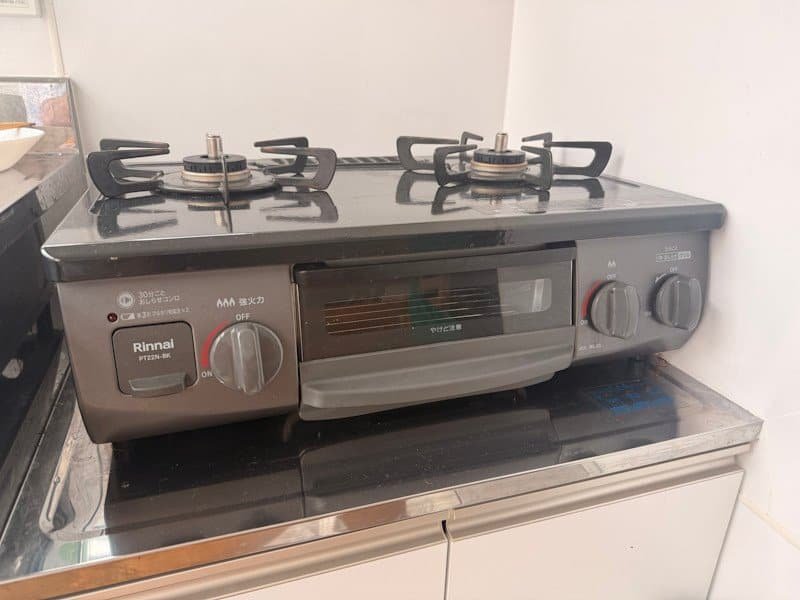
Microwaves can handle a lot, but they can’t grill fish properly. That’s where the fish grill comes in. It’s this little pull‑out drawer built directly under the cooktop. Looks almost like a narrow toaster oven, but it’s not. It’s a high‑heat radiant grill that hits around 250 to 300 degrees and somehow doesn’t fill the entire apartment with smoke. Most Japanese cooktops include one as standard, which feels almost futuristic compared to our “just use the oven” approach.
And despite the name, it’s not just for fish. It’s surprisingly versatile.
- Toast and Baked Goods: It makes toast in under two minutes, and it comes out with that perfect crispy‑outside, soft‑inside thing. You can throw in cheese toast, mini pizzas, naan, mochi. It’s basically a tiny bakery drawer.
- Meat and Poultry: Chicken thighs come out with skin so crispy it’s almost unfair. Sausages, pork belly, even steak cook quickly because the grill renders fat fast. It’s like a shortcut to flavour.
- Roasted Vegetables: Eggplant, zucchini, capsicum, asparagus. They all char beautifully. You can even wrap veggies in foil with butter or miso and let the grill do its thing.
- Reheating Leftovers: Anything fried gets revived better than in a microwave. Karaage, croquettes, tonkatsu. They come out tasting almost fresh again.
For small apartments, it’s a lifesaver. You get oven‑like results without needing an actual oven. I kept thinking about how many Australian city apartments could benefit from something like this. Instead of trying to cram a full oven into a kitchen the size of a broom cupboard, maybe a fish grill drawer is the smarter option. It’s one of those ideas that feels niche until you use it, and then it becomes hard to imagine living without it.
Air Purifying / Dehumidifying Clothes Drying Units
Space disappears quickly in Japan, especially in Tokyo, where apartments seem to shrink a little every year. Detached houses still exist, but many are built right to the edge of the block, leaving barely enough room for a bicycle, let alone a clothesline. Outdoor space becomes this rare luxury, something you admire from afar. Because of that, the traditional Western dryer never really became a household staple. Most people still hang clothes on balcony rails or outside windows. It works well enough until the weather decides to be unhelpful.
That’s where Japan quietly pulls ahead. As I mentioned earlier, some bathrooms have built‑in drying systems that push warm air around the room. They don’t just dry the walls or the floor. They dry your laundry too. It’s surprisingly efficient. You hang your clothes, press a button, and the system cycles warm air at a steady wattage until everything is crisp again. No humidity, no damp smell, no guessing.
A lot of homes also use ceiling‑mounted drying units. They look like a simple vent at first, but they’re actually targeted airflow systems with motion sensors that detect where the clothes are hanging. Some models even adjust the angle of the warm air automatically. Others take a different approach and come as full cupboards with built‑in racks, almost like a tiny walk‑in wardrobe dedicated to drying. And then there are the AC units with a “laundry dry” mode, which feels like a hidden feature you only discover by accident.
Smaller rooms make these systems more economical. You don’t need to heat a whole laundry. You just warm a compact space and let physics do the rest. I kept imagining an Australian home with a dedicated drying room in winter. Something that uses less energy than a traditional dryer and doesn’t leave half the house smelling like warm cotton. It’s one of those ideas that seems niche until you realise how often we complain about damp clothes during cold months.
It’s clever, and it’s practical, and it feels like the kind of thing we should have adopted years ago.
App-Connected IC Cards (Suica / Pasmo)
Melburnians know all too well the long saga of Myki. It’s almost a rite of passage at this point. And yes, Transport Victoria finally announced Tap and Go support using debit and credit cards in September 2026, which feels a bit surreal when you compare it to how Japan has been doing things for years. Maybe decades ago. Smoothly.
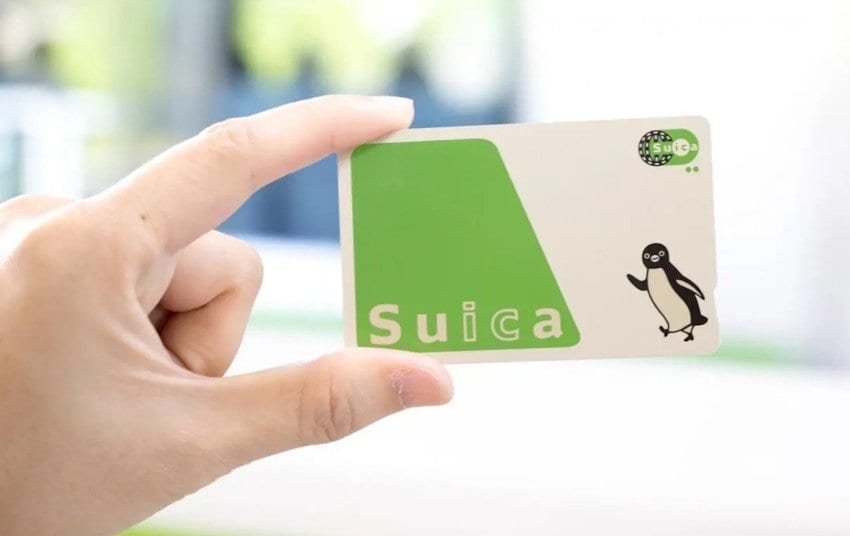
Japan’s NFC tech runs on FeliCa, an ultra‑fast system that processes taps in a fraction of a second. You don’t need to wake your phone. You don’t need to wait for a beep. You just tap and walk through the gate. It’s so fast that you barely register the interaction. The same card can buy drinks from vending machines, pay for lockers, unlock apartment doors, and even settle convenience store purchases. It’s almost strange how normal it feels once you get used to it.
We ended up getting Suica cards for the whole family. I didn’t want to set up accounts on the kids’ phones, and having physical cards made it easier to track how much we were spending on trains. It also meant fewer arguments about whose phone battery was flat. A small win.
The transport system in Tokyo is so well integrated that you barely notice there are around a dozen different train companies operating within the city, and more than thirty across Greater Tokyo. Suica and Pasmo work across all of them. You tap out of one company’s station and into another without even realising you’ve changed networks. Coming from Melbourne, where everything is run by a single operator, who may or may not be a work experience kid, it feels a bit like stepping into a parallel universe.
One feature I really appreciated was the pay stations inside the gates. If you’re short on fare, you can top up right there before exiting. No drama. No alarms. No “please see a staff member”. In Melbourne, going into the negative is helpful enough, but Japan’s approach feels cleaner. You just pay the difference and move on with your day.
It’s simple, it’s fast, and it works. And once you’ve used it, you start wondering why we’ve spent so long wrestling with systems that feel slower and more complicated than they need to be, and not just adopt the Japanese system?
Automated Cold/Hot Vending Machines
Japan’s vending machines have a reputation that almost feels exaggerated until you actually see them. You can be walking down a quiet residential street, not a shop in sight, and suddenly there’s a machine glowing away like it has no idea it’s standing in the middle of nowhere. Drinks, ice creams, hot meals, umbrellas, batteries. One machine even claimed to vend a car, although I didn’t have the courage or the spare change to test that.
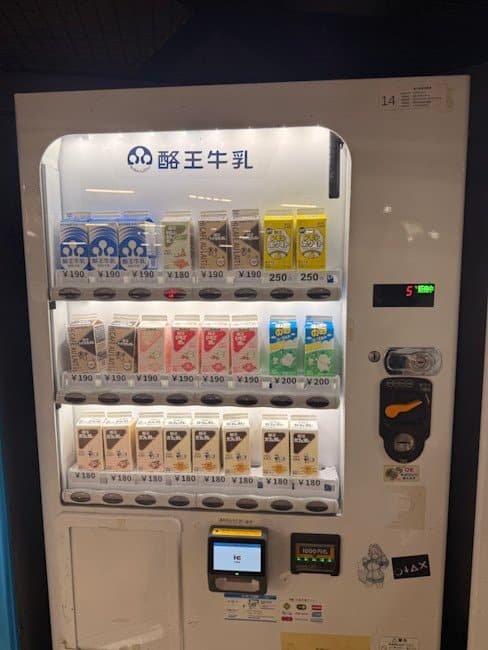
The clever part is how even the most ordinary drink machines work. They don’t just chill beverages. They heat them too. One refrigeration loop, one heating system, two temperature zones sitting side by side. You press a button, and the machine drops either a cold soft drink or a hot canned coffee. No delay. No second machine. Just one compact box quietly doing something that feels a bit like magic.
The temperature control is surprisingly precise. Cold drinks sit around four degrees. Hot drinks hover somewhere near fifty‑five. It’s consistent, and it never seems to struggle. You start to forget how unusual it is until you return home and realise our machines only do one thing and often charge extra for the privilege.
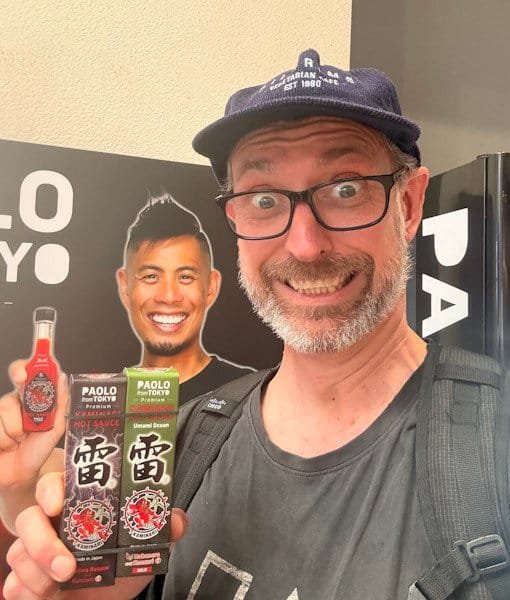
Paolo from Tokyo, the YouTuber, even installed his own vending machine in Shibuya to sell his hot sauce. It’s a smart idea. Low rental costs, constant foot traffic, and no need to stand around handing out samples. We ended up buying a twin pack because it’s hard to walk past a machine selling hot sauce without feeling slightly obligated. It’s part novelty and part “well, this is just how things work here”.
Payment is simple. The machines accept coins, notes, credit cards, IC cards. You tap or insert whatever you have, and the machine responds instantly. And because they’re legally required to give change, you never end up feeding in a large note and hoping it doesn’t vanish. You get the exact amount back, neatly sorted.
What makes the whole system even better is the pricing. With so many machines competing for attention, none of them can inflate costs. You pay roughly what you’d pay at a convenience store like 7‑Eleven or Lawson. It’s a stark contrast to Australia, where vending machines often feel like they’re charging a small fee for existing.
Japan treats vending machines like tiny, dependable shops. Always stocked. Always working. Always ready. After a week of using them, you start wondering why other countries haven’t embraced the idea with the same enthusiasm.
Looking Back on It All
Spending time in Japan makes you realise how many small, thoughtful ideas never made their way to Australia. None of it is sci‑fi. It’s not holograms or robot butlers, thought I did walk past a cafe offering that. It’s everyday tech, quietly doing its job in the background. Hot water that behaves itself. Bathrooms that dry themselves. Toilets that seem to have more features than my first car. Tiny kitchen grills that somehow outperform full ovens. Drying systems that make winter laundry feel less like a punishment. Transport cards that just work. And vending machines that feel like they’re running the country better than half the politicians.
What stood out to me wasn’t the novelty. It was the practicality. Everything feels designed by someone who actually lives in a home, uses a bathroom, cooks in a small kitchen, catches a train, or needs a drink at midnight. There’s this underlying sense that convenience shouldn’t be a luxury. It should just be part of daily life.
Australia has plenty of great tech, and we’re catching up in some areas, but I think we still treat home convenience as an optional extra rather than a baseline expectation. Maybe that’s why travelling through Japan feels a bit like glimpsing an alternate version of modern living. One where the small frustrations have been quietly solved.
I don’t think we need to copy everything. Some things fit their culture perfectly and might feel odd here. But a lot of it, honestly, would make life easier without changing who we are. A few smarter systems. A few better ideas. A few upgrades that make the everyday feel less like a chore.
If anything, Japan shows that good design doesn’t have to be loud. It just has to be thoughtful. And maybe, if we’re lucky, a little of that thinking will make its way Down Under sooner rather than later.


Recent Comments