
The upgrade I didn’t think I needed… until I kind of did
I’ll be honest, straight up, the Razer Hammerhead V2s are still sitting on my desk as I write this. Within arm’s reach. I still use them, and they are always on my desk or my work bag. I pick them up sometimes out of habit when I start gaming. That alone probably says a lot.
The V2s weren’t perfect, but they were… dependable. Great audio, solid for gaming, low latency that worked most of the time. They became that pair of earbuds you stop thinking about. You just grab them, throw them in, and carry on. No second-guessing, no fiddling around. And I think that’s why I wasn’t particularly excited about the Razer Hammerhead V3.
Not because I thought it would be bad. I just… didn’t feel like I needed it. The Razer Hammerhead V2s had settled into that comfortable spot where upgrading feels optional, rather than necessary. And when something feels optional, it’s actually a bit harder to justify. So instead of hype, there was this low-level resistance. Like, do I really want to relearn something that already works?
There’s also that slightly annoying part of your brain that goes, what if it’s better, and I have to switch? Which sounds ridiculous, but it’s real. Once something becomes part of your routine, changing it feels like more effort than it should. That’s the headspace I was in when I picked up the Razer Hammerhead V3.
Not excited. Not disappointed. Just… cautious.
First impressions (and a bit of resistance)
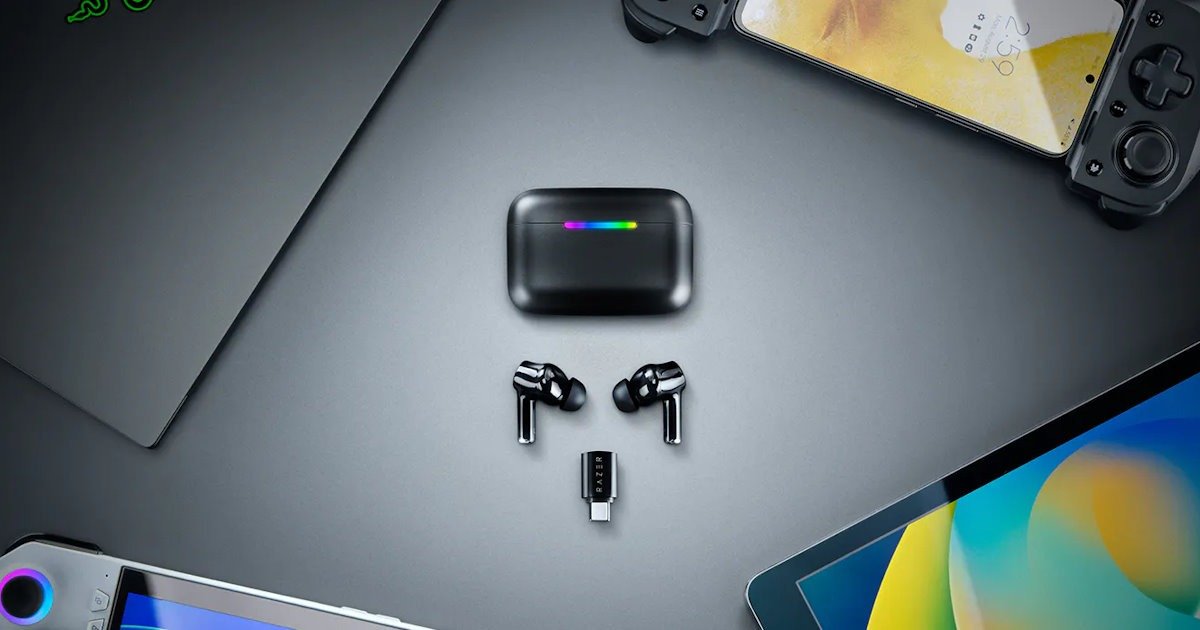
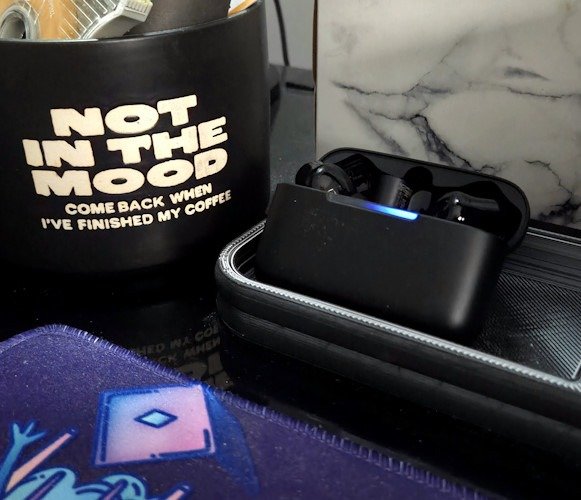
Physically, the Razer Hammerhead V3 still feels very Razer. Black, slightly understated, just enough “gamer” to remind you what it is without going overboard. I actually appreciated that more than I expected. It doesn’t try too hard. They’re slightly more refined this time around. Maybe a touch smaller, a bit sleeker in the hand, but not drastically different. Honestly, if you’ve used the V2, you’ll pick these up and feel immediately at home… which is both a good thing and, weirdly, part of the problem because familiarity makes it harder to justify the switch.
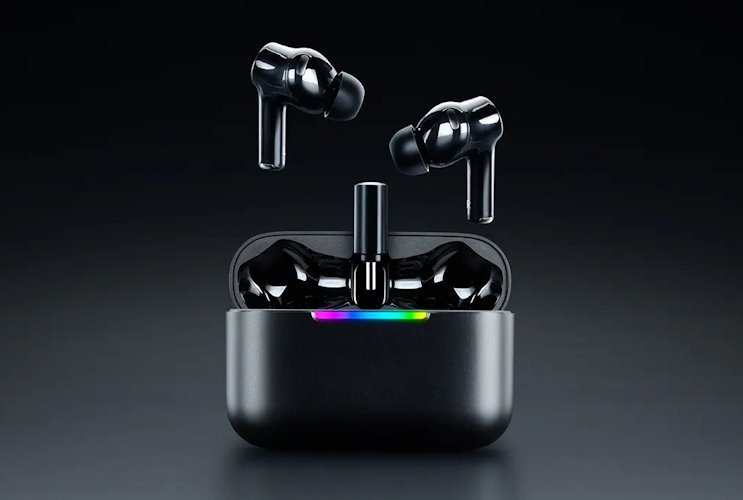
There wasn’t that big first impression moment. No, okay, wow, these are clearly better. It was more like, yep… these are Hammerheads. Comfortable, easy to wear, no real adjustment needed. And part of me wanted more than that. Something obvious. You get the usual ear tips, the case… and then the thing that actually stands out, the dongle tucked neatly into the case. That’s the moment where the Razer Hammerhead V3 starts to feel different. With a change I actually wanted.
It’s not subtle either. It almost feels like Razer is saying, ” This is the reason this exists.” That little dongle sitting there is almost like a reminder that these aren’t just your normal wireless earbuds anymore.
I remember picking it up, flipping the case open, seeing it sitting there and thinking: “Am I really going to use this every day?” Because realistically, I’ve been living in Bluetooth land for a long time. Open case, connect, done. No extra steps. No extra pieces. Simple. And this felt like… more. More steps. More setup. More things to think about. Which is probably why my first instinct was to ignore it.
I used the Razer Hammerhead V3 like I used the V2s at first. Just Bluetooth, straight out of the case, no dongle, no changes. Kept everything familiar, easier that way. But then curiosity got the better of me. So I tried the dongle. Not because I was convinced, just because… alright, I should at least see what the point of this is. I’m meant to be reviewing this as a whole.
Turns out… sometimes, yeah. Sometimes you do end up using it. Not all the time. Not for everything. But enough that it stops feeling like an extra and starts feeling like an option you didn’t have before. And that’s kind of where the Razer Hammerhead V3 starts to shift from familiar… to fascinating.
The big change: latency actually disappears
This is the part where the Razer Hammerhead V3 makes its case properly. The HyperSpeed 2.4GHz connection is the headline feature, and it’s not fluff. It genuinely cuts latency in a way Bluetooth just never quite manages. With the Razer Hammerhead V2, even with gaming mode, there were always those moments, tiny delays, subtle enough that you’d second-guess yourself. Was that lag? Or just me being bad? Usually both… although, as someone who loves gaming but isn’t exactly carrying the team, I’m definitely blaming the tech before I admit anything else.
You never really stop to analyse it. You shrug it off, maybe blame your aim, maybe blame your reaction time, and move on. It never feels broken, just… slightly uncertain.
With the Razer Hammerhead V3, especially once I actually gave the dongle a proper go, that uncertainty just fades away. Audio lines up. Footsteps feel immediate. Directional cues land exactly where you expect them to. It’s not louder or sharper in a dramatic way, just… in sync. And that sounds like a small thing, but it changes how you react. You stop hesitating. You trust what you’re hearing without needing that extra half-second to confirm it.
It’s… weirdly reassuring.
And I noticed it in small, slightly chaotic ways. Playing Farlight 84, I only got shot in the back once, which, for me, is progress. I actually managed to react to things properly and pick up a few extra kills. I also got shot a lot while turning towards the noise, but that feels like a separate issue. One step at a time.
It’s strange how much more noticeable it becomes the longer you play. That split-second delay from the sound to get to your ear, followed by the tiny moment your brain takes to process it, and then the reaction, a little longer the older I get; all of that feels tightened up. Not gone entirely, just compressed into something quicker, more immediate.
I didn’t expect that to matter as much as it does. But once it’s there, you realise how much you were compensating before without even thinking about it.
That said, I didn’t switch to the dongle full-time straight away. There were still plenty of moments where I stayed on Bluetooth out of habit. It’s quicker, easier, no extra steps. And in those situations, the Razer Hammerhead V3 still feels very familiar, solid, reliable, nothing jarring.
But every time I went back to HyperSpeed, especially in something fast-paced, that difference came back. Not aggressively, not in a “wow” game-changing moment, just enough to make me pause and think, oh… yeah, there it is.
And switching between HyperSpeed and Bluetooth 6.0 is seamless enough that it never becomes a hassle.
Sound quality — cleaner, fuller, and more controlled
The Razer Hammerhead V3 uses 11mm drivers, and you can feel a bit of that extra space in how everything comes together. It’s not a huge jump when you first hit play, but there’s a sense that things have a bit more room to breathe. The overall tuning feels more controlled, a little more deliberate. And yeah, it sounds cleaner. Fuller. A bit more balanced across the board.
The low end has more presence than I expected. There’s proper depth there, enough weight to give explosions, basslines, and deeper effects some impact, but it doesn’t bleed into everything else. It feels tighter, more contained, which makes a bigger difference over longer sessions than I thought it would. It’s the kind of bass that you notice after a while, rather than instantly.
The mids sit comfortably in the mix. Vocals, dialogue, anything in that centre range comes through clearly without needing to push for attention. It’s not overly forward, not trying to dominate, just easy to follow. I caught myself listening to podcasts and conversations without really needing to focus, which is usually a good sign. Even in-game, when you have dialogue and background music that become a blend of both, there was a clearer divide, and I like that.
Highs are handled pretty well, too. There’s detail there, small sounds, environmental cues, the little bits that fill out a track or a game, but it never tips into that sharp, fatiguing territory. I didn’t find myself turning the volume down to compensate, which I tend to do if something leans too bright.
There’s also the added benefit of spatial audio support on PC, which gives things a slightly wider feel. Sounds feel more placed rather than just “around you.” Directionality is easy to pick up, and it all just feels a bit more natural. But it didn’t hit me with a “wow, this replaces everything” moment.
Music sounds good. Games sound great. Everything is a bit clearer, a bit more defined, a bit more refined.
But I’d be lying if I said it completely redefines the experience. It’s more like… everything has been tightened up. Cleaned up. Smoothed out in small ways that don’t demand attention straight away, but become more obvious the longer you use them. And honestly, that kind of improvement tends to last longer than the flashy kind.
ANC and everyday use – surprisingly important
I didn’t expect to care this much about noise cancelling, especially while gaming. It’s one of those features that I’ve always treated as a nice extra. Good to have, sure, but not something I really relied on day to day. I’d turn it on occasionally, mostly out of curiosity, occasionally when the marketing team are in and I can’t hear myself think, and then forget it existed again. That changed pretty quickly here.
The Razer Hammerhead V3’s ANC is noticeably more effective. Not a completely silent world kind of way, it softens the background rather than trying to eliminate it entirely, which actually ends up feeling more natural. On a tram, in a café, walking through the city on my regular Tuesday visit to the office. It smooths out the noise just enough that you stop noticing it. That constant low-level hum of life around you just fades into the background. Conversations become less distracting, traffic becomes less sharp, and you don’t feel the need to crank the volume to compensate. And my old ears are thankful for that. I actually found myself listening to music about 4 or 5 notches before I normally listen to them. And that’s probably the part I didn’t expect. I found myself lowering the volume more often because I didn’t need to fight the environment anymore. Everything was just… easier to listen to.
There’s also a bit of flexibility in it. You can leave ANC on and just let it do its thing, or dial into transparency when you need to be aware of what’s around you. It’s not something I was constantly adjusting, but it’s good to have when you do need it.
What surprised me most, though, is how it changed how I used them. I wasn’t just picking them up for gaming. There were moments where I’d throw the Razer Hammerhead V3 in just to listen to music, or a podcast, or nothing in particular. Just having that slightly quieter space around me made it easier to sit there and zone out for a bit. That didn’t really happen before.
Which is funny, because these are very clearly gaming-first earbuds. But they don’t stay in that lane. They end up being something you reach for when you just want a bit of quiet… even if you didn’t realise you wanted that at the time.
Battery life – finally not a concern
Ever since wireless has been out, my anxiety around batteries has always been a thing. I don’t know why, but I hate having things run out of battery. Be it a mouse, my phone, or most annoying your earphones when you still have half a day left of work. Battery anxiety isn’t really a thing here, and I love it!
You’re getting about 10 hours on the buds, then roughly 30 more from the case, and for once, those numbers don’t feel like marketing optimism. They actually line up with real use, or at least close enough that you stop thinking about it. I haven’t managed to run them flat on a normal day. I’ve tried. Long sessions, back-to-back use, forgetting to charge them entirely… they just keep going. There was even a point where I realised I hadn’t plugged the case in for a couple of days, and they were still happily ticking along.
That’s the part that stands out. You stop checking the battery. No quick glance at the case before heading out. No mental note that I should probably charge these later. They just become something you use, and the battery keeps up in the background without asking for attention.
Charging itself is straightforward, too. USB-C keeps things simple, and I normally have one to charge my phone, and topping them up feels quick enough that you’re never really waiting around for them. Even short charges give you more time than you probably expect.
It’s not the most exciting upgrade on paper, but in day-to-day use, it’s one of the most noticeable. That quiet confidence of knowing they’ll last, through work, gaming, travel, whatever you throw at Razer Hammerhead V3 ends up mattering more than any headline feature. And once you get used to that… It’s hard to go back to anything that makes you think about battery at all.
So… did it replace my V2?
Yes…. already have.
There was a weird transition period where I kept reaching for the V2 out of habit. Like muscle memory kicking in before my brain had a say. I’d start a session, grab them without thinking, then halfway through, realise I’d switch over to the Razer Hammerhead V3 and go, oh right… I wonder why these were better.
It was a clean handover. No gradual drift. Just fit in like they were always there. I think that’s what caught me off guard. I expected a clear moment, something definitive, where I’d decide the Razer Hammerhead V3 wins, and that’s it. Instead, it just took over. One session, they weren’t there; the next, they were. Then one day I realised I hadn’t touched the V2s in a while.
Not because I’d decided not to, just… because I didn’t need to anymore. Now the Razer Hammerhead V3 is the daily driver. It just makes more sense. Fewer compromises, fewer little annoyances you don’t notice until they’re gone. It’s easier to rely on without thinking about it, which is exactly what I liked about the V2 in the first place.
Still, I haven’t boxed the V2 up yet, and they’re still sitting there in my top drawer. Still within reach. Still technically “in rotation,” even if realistically they aren’t getting any use. And that probably means something. Maybe it’s a habit. Maybe it’s just not quite ready to admit the switch is complete. Or maybe it’s just hard to let go of something that worked for so long… even when you know you’ve already moved on.
Final thoughts — a bit unexpected, and honestly… kind of brilliant
I didn’t really want to like the Razer Hammerhead V3 as much as I do. That sounds strange to say out loud, but it’s true. The Razer Hammerhead V2s had already earned their place. They were reliable, familiar, and easy to live with. Upgrading felt optional. Maybe even unnecessary. But the Razer Hammerhead V3 doesn’t force the upgrade. It just quietly makes sense.
There’s no one big moment where everything changes. No dramatic reveal where you suddenly realise it’s in a completely different league. Instead, it’s a series of small improvements, improvements on earbuds I didn’t think needed them. Latency, clarity, ANC, battery, those don’t demand attention at first. They just sit there. And over time, they stack up. By time, I mean a few days.
You start trusting the audio more. You stop thinking about the battery. You notice details without trying. You reach for them without questioning it. And somewhere in the middle of all that, they stop being “the new ones” and just become the ones you use. That’s probably the best way to describe the Razer Hammerhead V3.
It removes the little things that used to get in the way. And once those are gone… You don’t really want them back. I think that’s why this feels slightly sentimental in a way I didn’t expect. It’s not just about getting something better, it’s about realising something you’d gotten used to wasn’t quite as effortless as you thought.
And now it is.
Is it perfect? Probably not. Is it overkill for some people? Maybe. But if you game even semi-regularly, and you want something that works without needing to think about it, not just for gaming, but everything else around it, the Razer Hammerhead V3 earns its place. Even if, at first, you weren’t convinced it needed to.



Recent Comments