
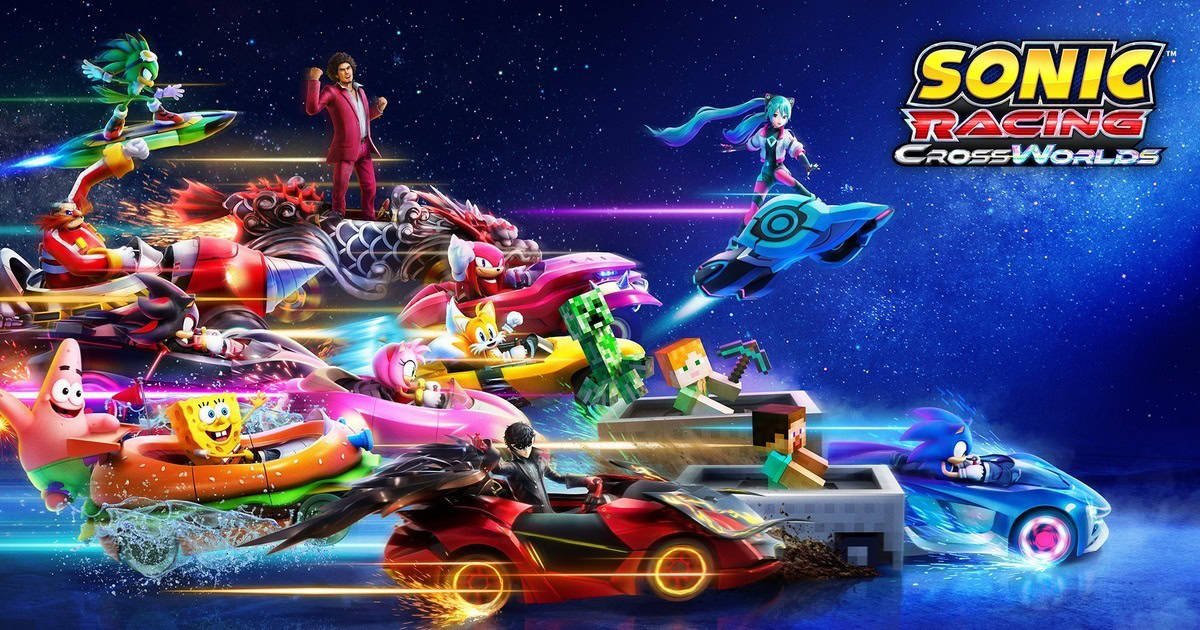
I’ve played Sonic games since I was a kid, those bright blue loops and the rush of collecting rings are kind of stitched into my gaming memory. But the racing spin‑offs? I always brushed them aside. They felt like side projects, something I didn’t need to bother with. Maybe I thought they couldn’t capture the same energy.
Then I actually sat down with this one, and it caught me off guard. Kart racers usually hit that wall where everything blends together. Same tracks, same shortcuts, same “oh, I’ve done this lap a hundred times.” I was expecting that here too. Instead, the game kept throwing curveballs.
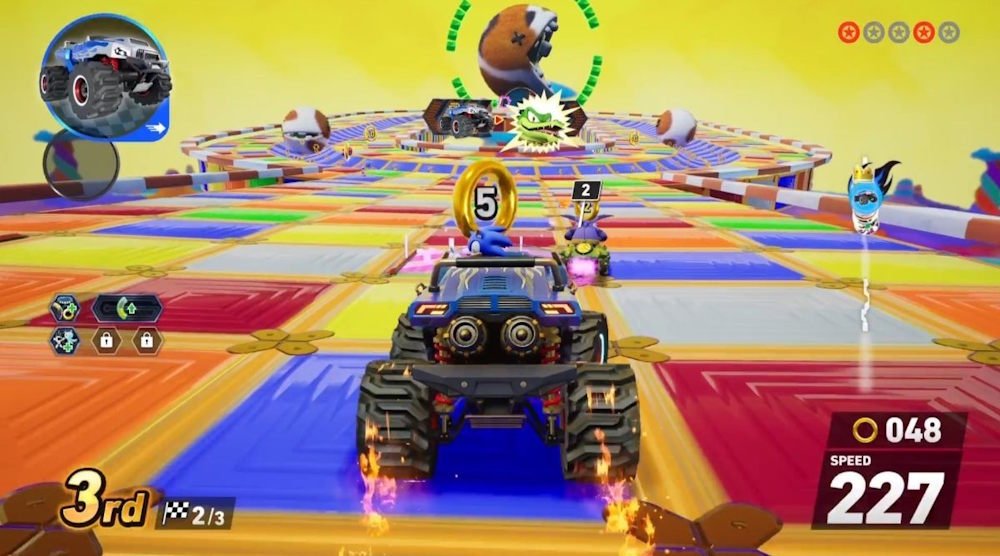
You’re not just circling a track, you’re being launched across land, sea, air, even space. Travel Rings pop up mid‑race, and suddenly you’re somewhere else entirely. It’s disorienting at first, almost like the game is daring you to mess up. And yes, I did mess up. More than once. But that’s the point, it shakes you out of autopilot.
I remember one race where I was cruising along, feeling pretty confident, and then a Travel Ring yanked me into this wild aerial section. I panicked, clipped the edge, lost speed, and thought, “Well, that’s it, I’m done.” But then another portal dropped me back into the original track, and somehow I clawed my way back into the race. It wasn’t perfect, but it was exciting.
That unpredictability is what makes it work. Instead of zoning out, I found myself leaning forward, waiting for the next twist. It’s not polished in the way some racers are; it’s messy, chaotic, and sometimes unfair, but that’s exactly why it feels alive.
Tracks That Keep You Guessing
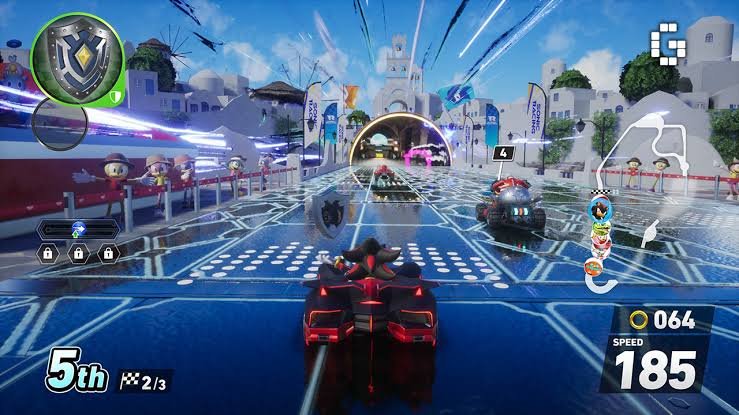
There are 24 tracks in total, and 15 of them have those Travel Ring moments. At first, I thought they’d be gimmicks, like flashy detours that look cool once and then get old. But no, they became the highlight.
One race started in this sleek, futuristic space setting. Everything felt sharp, metallic, almost sterile. Then, boom, you’re suddenly dropped into a completely different style of track, something brighter, more chaotic, almost playful. It’s like the game is saying, “You thought you knew where this was going? Think again.” And then, just as quickly, another portal pulls you back to the original course. It feels like a lap within a lap, but not quite. More like a detour that rewrites the rhythm of the race.
What I love is that it never feels predictable. Even after several runs, I didn’t hit that “ugh, same again” wall. Instead, I found myself leaning forward, waiting for the next portal, wondering if it would help me or completely throw me off. Sometimes it saved me and gave me a shortcut or a burst of speed. Other times, it sent me into a section where I immediately messed up a corner. And honestly? I didn’t mind. That unpredictability kept me awake.
There was one track where I actually laughed out loud. I was mid‑race, focused, and then the Travel Ring threw me into this underwater section. The sudden change in visuals, the slower feel of the track, it was so unexpected that I almost forgot I was racing. I lost a place or two, sure, but it didn’t matter. It felt like the game was playing with me, nudging me to stop taking it so seriously.
That’s the charm. The tracks aren’t just backdrops; they’re part of the experience. They shift, they surprise, they mess with you in ways that make each race feel alive. And even when I thought I had a track memorised, the Travel Rings reminded me I didn’t.
Characters Beyond Sonic
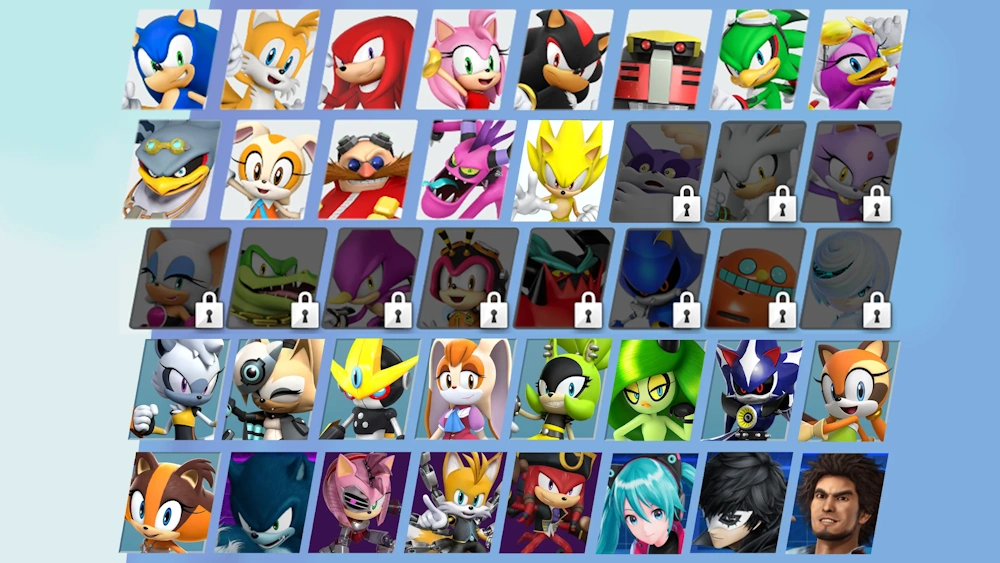
The roster is stacked, 23 playable characters, not just Sonic and his usual crew. Sega pulled from across its wider universe, and that’s where things get interesting. Even if you’re not a hardcore fan, you’ll spot someone familiar. It’s almost like bumping into an old friend you didn’t expect to see at the party.
I spent way too long just scrolling through the lineup, debating who to pick. At first, I went with Sonic because, well, habit. But then curiosity got the better of me. I tried a few others, some I barely remembered from older Sega titles and suddenly the races felt different. Not just visually, but in the way I connected with them. Picking a favourite became part of the fun.
Once I settled on one character, I started tinkering with upgrades. It’s a small thing, but it made the races feel personal. I wasn’t just trying to win; I was shaping my racer into something that felt like mine. I remember adjusting the setup before a big race and thinking, “Okay, this is my build, let’s see if it holds up.” Sometimes it did. Sometimes it didn’t. But that sense of ownership kept me coming back.
What surprised me most was how much variety the roster added to the overall experience. It’s not just cosmetic. Each character brings a little personality into the race, and when you’re swapping between them, the game feels fresh again. I didn’t expect to care about that, but I did.
And maybe that’s the point, the game doesn’t force you to be a Sonic fan to enjoy it. It gives you options, lets you experiment, and nudges you toward finding your own favourite. For me, that made the whole thing feel more rewarding.
Controls: Learning the Hard Way
The game kicks things off with a tutorial. I glanced at it, thought, “I know how to drive,” and skipped ahead. Big mistake. Within minutes I was bouncing off walls, missing corners, and generally making a mess of things. Turns out the tutorial wasn’t just filler, it was trying to teach me the one mechanic that actually changes everything: drifting.
I’ll admit, I was stubborn. I kept thinking I could wing it, that I’d figure it out mid‑race. Instead, I introduced my kart to just about every barrier on the track. I wasn’t sure if I’d logged into Sonic Racing or Sonic Pinball. It wasn’t until I swallowed my pride and went back to the tutorial that it clicked. Hit the top‑right button, slide into the corner, boost out, and suddenly the whole race feels different. Less chaos, more control.
And once you get it? Drifting becomes addictive. I replayed races just to nail the perfect drift. Sometimes I drifted even when no one was around me, just because it felt good. The AI probably thought I’d lost it, sliding around corners with no one to chase. But that’s how satisfying it is.
The rest of the controls are straightforward, accelerate, brake, steer. No complicated button combos, no finger gymnastics. It’s easy to pick up, which makes the drifting stand out even more. It adds just enough depth to keep things exciting without overwhelming you.
There was one race where I went from dead last to first place in the final lap, all because I finally strung together a series of clean drifts. That moment, going from “there’s no way I’m catching them” to “never mind, I’m first”, is the kind of payoff that makes you grin at the screen.
So yes, the controls are simple. But don’t underestimate them. Learn the drift, embrace the chaos, and suddenly the game opens up in ways you don’t expect.
Modes of Play
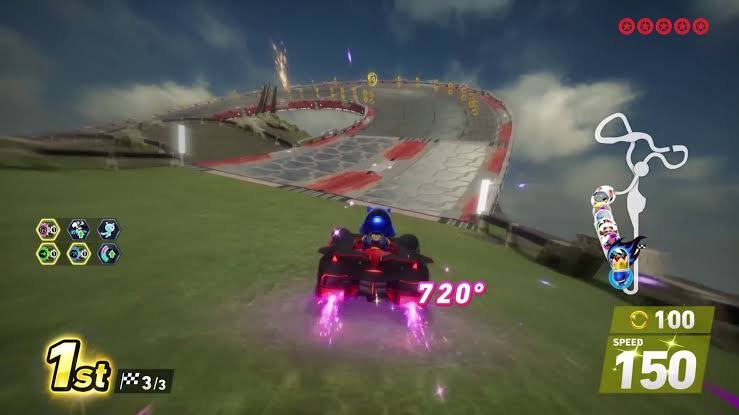
The game gives you plenty of ways to play. I started with single‑player because, honestly, that’s where I usually feel most comfortable. No pressure, no strangers watching me mess up. And it was epic fun; hours slipped by without me noticing. Each race felt like its own little adventure, and I didn’t feel like I was missing out by sticking to solo.
But curiosity got the better of me, so I peeked into the multiplayer options. There’s Party Mode, Race Park, ranked races, and even 12‑player Friend Matches where you can customise the rules. It’s a lot. At first, I thought it might be overwhelming, but the way it’s laid out makes it easy to dip in and out. I didn’t dive too deep into competitive play, but I could see how it would hook someone who loves climbing ranks.
One thing I really liked was the option to race against friends online. I’m not always in the mood to play against random people, so being able to set up matches with people I actually know felt reassuring. It’s the kind of feature that makes the game more approachable, especially if you’re not chasing leaderboards.
And then there are Time Trials. I didn’t expect to spend much time there, but once I tried shaving seconds off my lap, I got stuck. I kept thinking, “I can do better, just one more run.” Twenty attempts later, I was still chasing that half‑second improvement. It’s frustrating, but in a strangely satisfying way.
Overall Impressions
Sonic Racing: CrossWorlds is the kind of game you should give yourself the chance to play if you love racing. I went in with low expectations, half curious, half sceptical, and came out genuinely impressed. If I had bought it on a whim, I wouldn’t have been disappointed at all. In fact, I think I would’ve been pleasantly surprised by how much fun it brought, and how often I wanted to jump back in for “just one more race.”
What stood out most was the way it kept pulling me in without relying on the usual tricks. The Travel Ring mechanic made every race feel fresh, the controls were easy to learn but still rewarding once you mastered drifting, and the sheer variety across tracks and modes meant I never felt stuck in a loop. It’s rare for a racing game to balance accessibility with depth, but this one managed it.
I’ve never considered myself a big Sonic fan. I enjoyed the occasional game here and there, but I never rushed to buy them. Now? I get it. I understand why friends keep telling me Sonic games are worth the time. This one showed me a different side of the franchise, playful, chaotic, but also surprisingly polished in the way it keeps you engaged.
There were moments where I laughed at myself for messing up, moments where I leaned forward in anticipation of the next portal, and even moments where I felt oddly proud of nailing a drift I’d failed twenty times before. That mix of emotions is what makes it memorable. It’s not perfect, but it doesn’t need to be. It’s fun, it’s alive, and it keeps you guessing.
So even if you’re not a huge Sonic fan, don’t let that stop you. I wasn’t, and I still found myself hooked. If you’re looking for a kart racer that doesn’t just recycle what’s already out there, Sonic Racing: CrossWorlds deserves a spot on your radar.



Recent Comments