
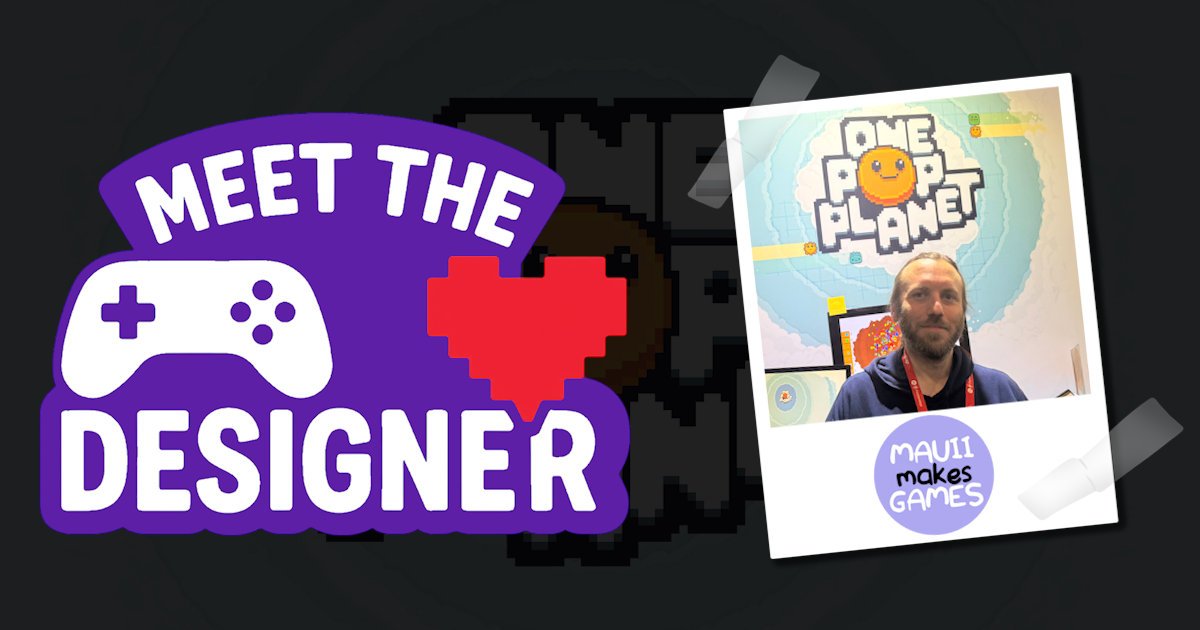
Lyndon is an accomplished tabletop game designer who made a major splash with the inaugural win of the PAX AUS Showcase for his pocket-sized tactical spaceship game, Pixel Star. Combining clever decision-making with strategic depth in a remarkably compact package, the game quickly caught the attention of players and industry veterans alike, helping establish Lyndon as an exciting talent within Australia’s tabletop scene.
Since then, Lyndon has expanded his creative horizons, transitioning from physical board game design into the world of digital game development. While the medium may have changed, his passion for tight mechanics, thoughtful strategy, and accessible gameplay remains firmly intact. That design philosophy can be seen throughout projects such as One Pot Planet, a clever puzzle-strategy title that continues his tradition of creating engaging experiences that are easy to pick up but packed with depth for those willing to dig a little deeper.
Whether he’s designing for the tabletop or the screen, Lyndon has built a reputation for crafting games that reward creativity, experimentation, and smart decision-making, making him one of the more interesting independent designers to watch.
Ben: I’m here with Lyndon. How are you going?
Lyndon: Yeah, good. How are you?
Ben: Good, thanks. What have we got here? What’s this game?
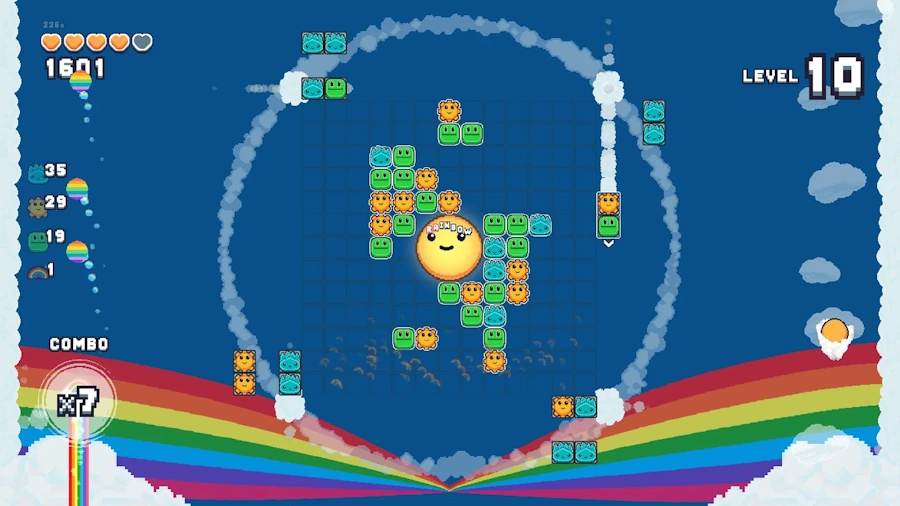
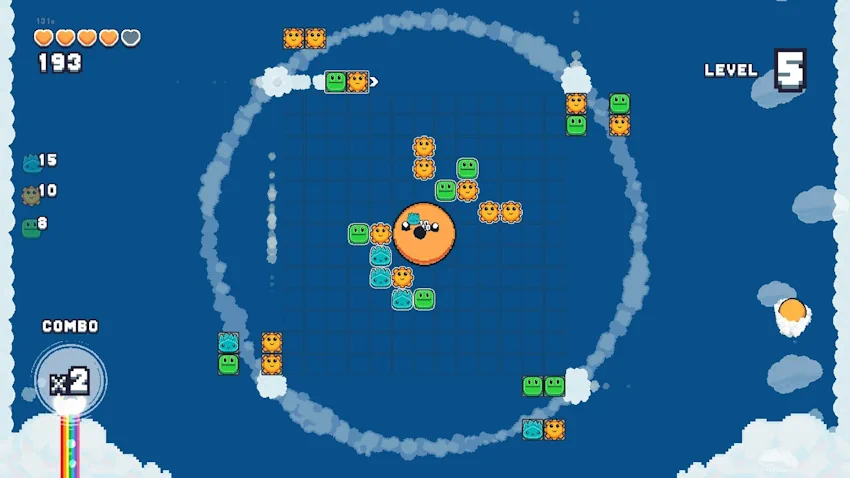
Lyndon: This is my little puzzle game called One Pot Planet. It’s sort of a Tetris-like matching game played with a single button, and the pieces fall from all four directions.
Ben: Okay. How did you… I know you from the tabletop game world, obviously, and we’ve chatted before about different tabletop stuff. How did you get into digital games? Where did that come from?
Lyndon: I mean, I like games in general, just all games, no matter what format they are. And actually, the first game—I’m doing air quotes, by the way—was like a companion app for a board game that we had made. There was a little companion app that rolled the dice and did things for you.
And I thought, “I can do this. I did the thing.” So I kind of went further and kept making more things, and this actually started in a game jam. So, yeah, and then about a year ago, I think, was the game jam, and I just kept working on it after that.
Ben: So did you start, because it’s a digital game, did you start in that physical space and then transpose that to a digital world, or did you start with the digital?
Lyndon: For this one, entirely digital. Just by virtue of the kind of game it is, it’s one that… well, I was going to say, One Pot Planet is one that’s very tricky to do tabletop-wise, but that said, there is a tabletop matching game that I designed that is being shown in the tabletop area at PAX, so you get the best of both worlds.
Ben: Show me a little bit about the gameplay of One Pot Planet. How do you play it? What happens in the four different directions, and how does that all work?
Lyndon: Well, the theme of the original game jam was “Only One,” so I went with the notion of only being playable with one button entirely. The idea is that the pieces bounce back and forth on the side, and you press a button to shoot them in towards your planet, and then you shoot them from the next side, and then the side after that in a clockwise order.
Basically, you’re trying to get four pieces or more to connect in any kind of shape; vertical, horizontal, or even like an L-shape or zigzag. Then your planet in the middle eats them all up, and any pieces that weren’t part of that connection are left floating in space to get in the way of the other pieces coming in and block your other moves further on. That’s kind of the crux of it.
Ben: And so the goal is to get as many of those four connections to get as many points, and that gives you your high score?
Lyndon: Exactly. So at the moment, the One Pot Planet version that I have here is a sort of endless mode just for high-score getting. What I would love to get from the experience of PAX is an understanding of where to focus my efforts in terms of game modes moving forward, whether people who love these kinds of games really want multiplayer, or a more campaign-y mode like Candy Crush doing puzzles, or anything else, something I haven’t thought of would be great. An understanding of that, if anyone comes to play it and lets me know what they want to see next, would be awesome.
Ben: And that’s coming from the tabletop world where you said you’ve got a game over there getting play-tested this weekend. That’s part of that whole process in play-testing for physical games, testing it out, playing it, trying to do something different, and you’ve brought that into the digital world. I think that’s fantastic.
Lyndon: Yeah, absolutely. When I come to things like this, I like to know what I’m trying to get out of it. You see a lot of people who are like, “Oh, look at my game!” and you go, “Okay, cool. Do you want feedback? Do you want to know why we’re here?” And it can often just be, “Oh, just look at my game, tell me it’s good.” Okay, I mean, that’s lovely, I want that too, but having an understanding of why I’m here other than just “give me money in six months when it comes out” is sort of, it’s come here to tell me how to make it the best thing it can be in six months or ten months because you gave me an awesome idea I need to work more on.
Ben: A little bit, coming back to how you got here: you started with the game jam; what happened after that? How did you get to the stage of developing One Pot Planet into what it is now?
Lyndon: I submitted this to the game jam and was pretty happy with that version, and then woke up to some weird messages through Discord and itch.io and things like that from people saying, “Hey, well done!” It turns out I won the game jam, which was awesome. I woke up and had to watch the live stream reporting in the middle of the night for us of them playing the game and saying how great it was to hundreds of people, which is really nice.
So that was like, “Oh, there’s something here.” And then last year, for the first time ever, Screen Tasmania started a digital games fund so that a whole broad range of people could apply for funding for projects wherever they’re at. I submitted and was successful for that, along with—I want to say 11 other people, I’m not sure. They got some funding for that, so that’s kind of brought me to where I am now, and then hopefully off the back of that can push forward either independently and publish it myself or look at publishers.
Ben: And also, you were supported with this booth here from Screen Tasmania as well?
Lyndon: Yes, there’s actually four of us here all in a row. So if you come see mine, you can check out the other three that all have had similar funding and exposure behind them from Screen Tasmania, which is really awesome.
Ben: Well, look, thanks for having a chat with me. It’s awesome that you’ve got to this point. I hope you get all the best and get some fantastic ideas here at PAX.
Lyndon: I hope so. I’m here for the whole three days, so awesome. Thank you very much.
Ben: Cheers.




Recent Comments