
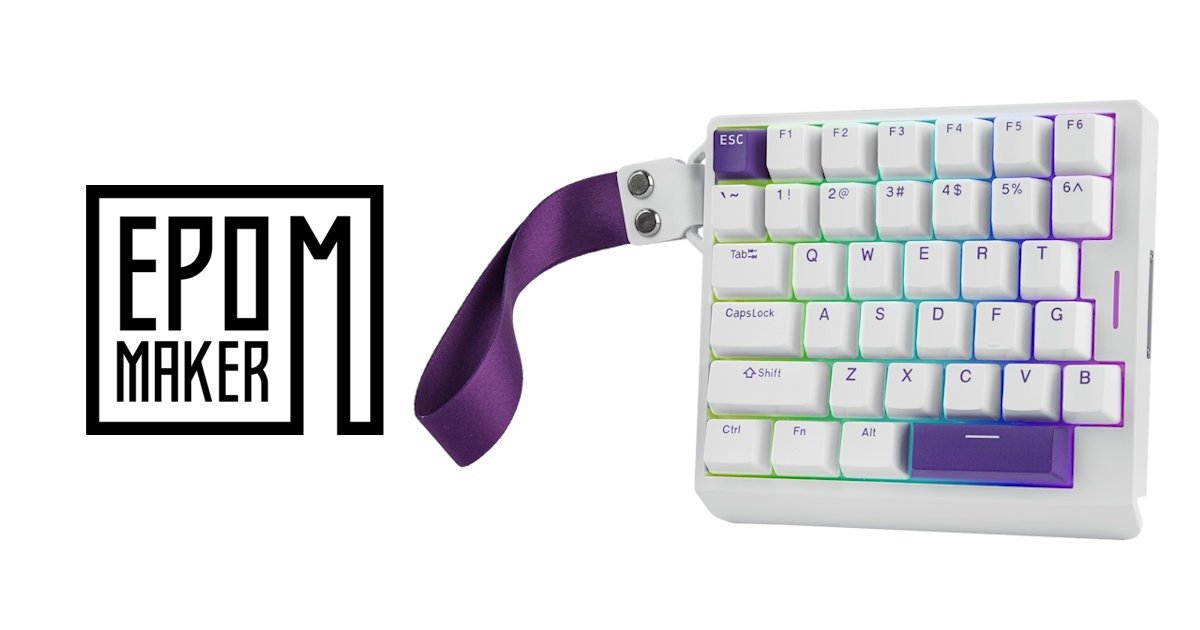
In the competitive peripheral market, fast isn’t just talked about anymore; it’s expected. Epomaker seems to know this, and they’ve put forward a duo that tries to balance speed with space: the Epomaker HE30 One‑Handed Hall Effect Keyboard and the Epomaker CLICK Wireless Gaming Mouse. This review will focus on the Epomaker HE30 for now, though the mouse deserves its own spotlight soon.
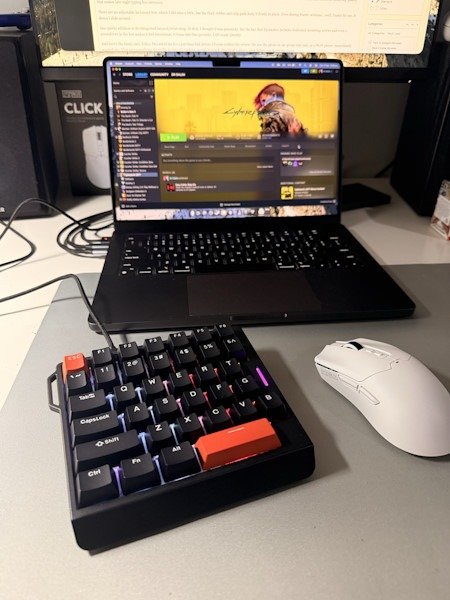
I’ll admit, when I first unboxed the Epomaker HE30, I wasn’t sure how much I’d actually use it. One‑handed keyboards always feel like they’re designed for someone else—streamers, maybe, or people who live inside MOBAs. But after a few sessions, I started noticing the little conveniences. Less clutter, fewer keys I never touch anyway, and a strange sense of freedom on my desk. My notebook and mousepad finally had space to breathe.
The switches caught me off guard, too. Hall Effect sounds like marketing fluff until you actually press them. They’re quick, almost too quick at first, but then you settle in and realise how consistent they feel. I found myself hitting combos without thinking, which is rare for me. Maybe it’s just the novelty, but the Epomaker HE30 gave me that odd mix of confidence and curiosity—like I wanted to keep testing what else it could do.
Pairing it with the Click Wireless Gaming Mouse felt natural. No drama, no digging through settings. I even walked away mid‑match to grab a drink, half expecting the connection to hiccup, but it held steady. Not perfect—there were moments where I thought the sensor was a little twitchy—but nothing that ruined the flow.
Together, they don’t scream “game‑changer.” They whisper something more practical: speed, space, and a smoother rhythm at the desk. And sometimes, that’s enough.
Epomaker HE30 at a glance
- Layout: 30% One-Handed (36 Keys)
- Switch Type: Himu Aurora / VTER Purple Magnetic Switches (Linear, Pre-lubed)
- Polling & Scan Rate: True 8,000Hz (0.125ms latency / ~1.2ms real-world trigger)
- Actuation Range: 0.1mm to 3.4mm (Adjustable in 0.01mm increments)
- Build: ABS Plastic Case, Aluminum Plate, Resin Bottom Plate
- Weight: Approx. 251g – 320g
- Connectivity: Wired USB-C (High-quality braided cable included)
- Aesthetics: White/Purple or Black/Orange colourways; Side-mounted RGB light strip
Design & Build Quality
Despite being made of plastic, the Epomaker HE30 doesn’t feel flimsy. It has a dense, reassuring weight with no noticeable flex. The board is tray‑mounted and layered with a five‑stage dampening system, sandwich foam, IXPE, PET, and EPDM, all working together to refine the acoustics. It’s not silent, but the sound has a muted, satisfying quality that makes late‑night typing less intrusive.
There are no adjustable kickstand feet, which I did miss a little, but the thick rubber anti‑slip pads keep it firmly in place. Even during frantic sessions… well, frantic for me, it doesn’t slide around.
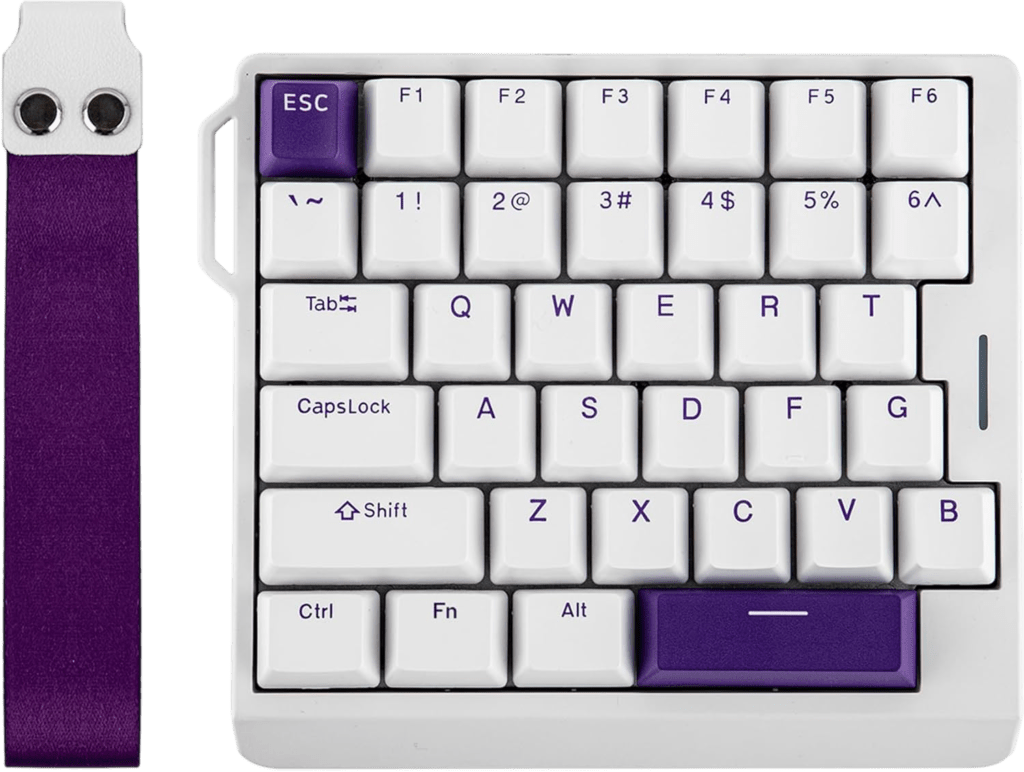
One quirky addition is the integrated lanyard/wrist strap. At first, I thought it was gimmicky, but the fact that Epomaker includes dedicated mounting screws and even a screwdriver in the box makes it feel intentional. It leans into that portable, LAN‑ready identity.
And here’s the funny part, Editor Dez asked me for a purchase link before I’d even written the review. He saw the photo in our group chat and, as a WoW player, immediately wanted one. That says something about the design: it’s striking enough to spark interest at a glance, even before you know the specs.
Epomaker HE30: The 30% Hall Effect Powerhouse
The Epomaker HE30 is a specialised 36‑key, 30% layout designed exclusively for your left hand. It’s one of the most compact magnetic keyboards out there, small enough to be genuinely pocketable. And yes, I’m a dad with cargo pants, so I’ve got the kind of pockets that can actually swallow this thing whole. The design is meant to give your mouse hand total freedom of movement, and it really does. My little desk feels huge when I use it.
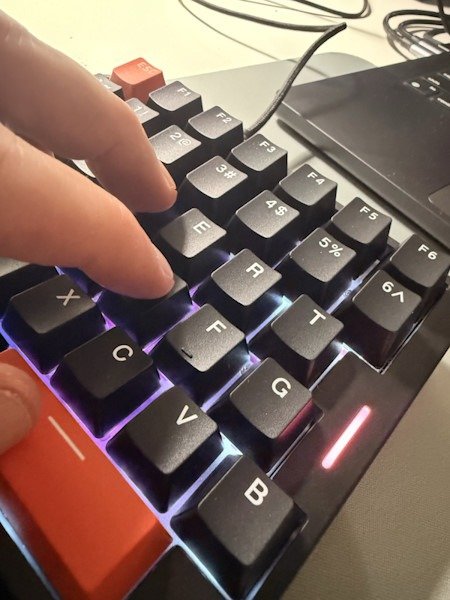
What struck me, though, is how Hall Effect switches seem to be quietly becoming the new standard. A year or two ago, they felt like a niche experiment, something you’d only see in enthusiast circles. Now, more and more brands are adopting them, and I kind of love it. The Epomaker HE30 leans into that shift with features like Rapid Trigger, which resets the key to 0.01 mm sensitivity the instant you lift your finger. It sounds extreme, but in practice, it just feels snappy, almost like the keyboard is reading your mind. Then there’s SOCD (or “Rappy Snappy,” as Epomaker cheekily calls it), which prioritises the most recent input between opposing keys. In FPS games, that means counter‑strafing feels near‑instant, and I’ll admit, I grinned the first time I noticed it working. Add in 8K scanning, where the board checks your finger position 8,000 times per second, and you start to see why magnetic sensing feels less like a gimmick and more like the new baseline.
With the Epomaker HE30, that shift feels especially clear. The actuation is fast, yes, but it’s also consistent in a way that makes you trust it. I found myself leaning into the responsiveness, almost daring it to miss a beat, and it didn’t. There’s a learning curve, of course. At first, even after using so many keyboards with Hall Effect switches, the sensitivity made me second‑guess whether I was pressing too lightly. Still, after a while, it became second nature. That’s the charm of Hall Effect: it rewards you for adapting, and then it feels like a second skin.
It’s funny because I never thought I’d care about switch technology this much. Yet here I am, appreciating how the Epomaker HE30 makes magnetic sensing feel normal, not experimental. Maybe that’s the point—it doesn’t scream innovation, it just works, and in doing so it quietly sets a new baseline for what “fast” should mean.
Software? Or Lack Thereof: Web‑Based Customisation
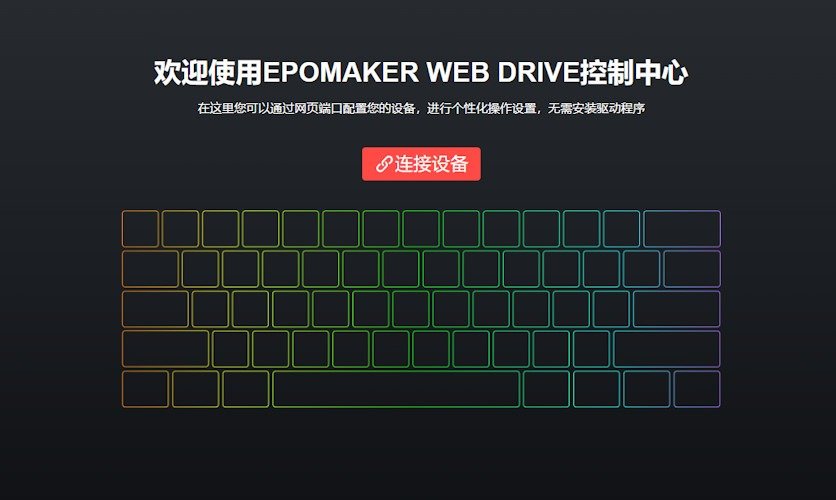
The Epomaker HE30 skips the usual bulky software download and instead runs everything through a web‑based driver (accessible via epomaker.keybord.net.nc. Yes, it’s spelled exactly like that). It’s a refreshing change if you’re tired of installing yet another program just to remap a few keys. Or worse, find that it doesn’t have a macOS version.
The interface itself is surprisingly capable. You get four layers of mapping, which means you can theoretically spread a full 60% keyboard across multiple layers. It feels a bit like unfolding hidden compartments, press a key, and suddenly you’re in a different layout. Then there are the advanced tricks: DKS (Dynamic Keystroke), Mod‑Tap, and Toggle Keys, all tucked neatly into the menu. I didn’t dive too deep into every function, but even a quick test made me realise how much flexibility is baked in.
There’s also a calibration tool designed to fine‑tune the magnetic sensors to your environment. It’s the kind of feature you don’t think you’ll need until you try it, and then you wonder why every Hall Effect board doesn’t include it.
It’s not flashy software, and honestly, that’s part of the charm. No endless tabs, no bloated UI, just a clean web page that does what you need. I almost laughed when I realised I could tweak my layout from a browser window while half‑watching a show. It’s simple, maybe even a little barebones, but it fits the Epomaker HE30’s personality: compact, practical, and ready to go.
Personal Thoughts
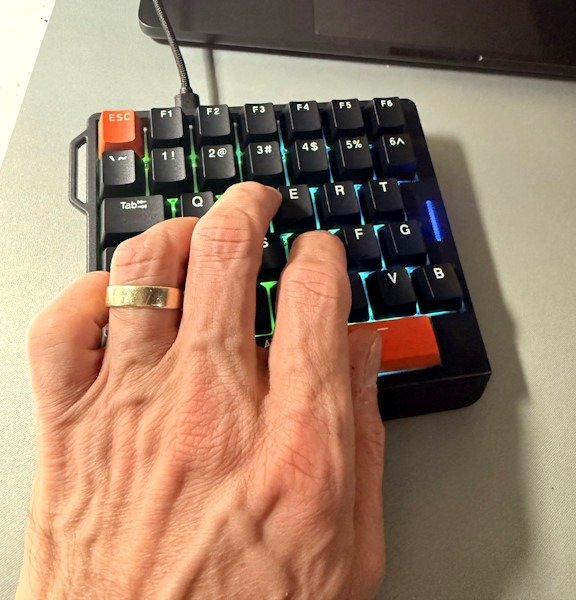
The Epomaker HE30 came close to being perfect for me, though not quite, especially straight out of the box. My first test run was in Cyberpunk 2077. I originally owned it on Xbox, later picked up the Steam version for my laptop, but out of habit, I kept reaching for the Xbox controller. Switching to mouse and keyboard felt awkward, almost like I was forcing myself to play differently. I figured I’d just stick with what I knew. Then the Epomaker HE30 landed on my desk, and I thought, ‘What the hell,’ and things shifted. Its compact design cleared space for my mouse, and suddenly, aiming felt sharper, flicks faster.
Honestly, that’s been the biggest win: the extra desk room gives my mouse hand space to breathe on my small desk, and that alone makes a noticeable difference. Even now, after testing the Epomaker HE30, the controller feels clumsy in comparison.
Precise mouse control quickly became the star of the show. Flick shots aren’t essential in Cyberpunk, but when you’re getting older and your reaction time isn’t what it used to be, they start to matter. Plus, they’re fun. Landing one makes me feel like a hardcore gamer again, not just some old man noob. The Epomaker HE30 made those flicks feel more natural, more instinctive. The downside? Missing keys. The absence of “M” for the map was the most noticeable. I had to reassign and rearrange things, which wasn’t a deal‑breaker but did take some tinkering.
After that, I switched gears to an MMO. I’ve been tempted to rejoin World of Warcraft, so I jumped into the free tier to see how the Epomaker HE30 would hold up. Playing a Priest at low level, I didn’t have many spells on my quick bar, so the six number keys were enough for essentials. Anything beyond that sixth key, though, was a stretch… literally. Reaching further meant shifting hand position, which broke the flow. It’s manageable with mouse clicks or reassigning keys in the software, but it reminded me that this board is about compromise as much as speed.
And yes, the missing “M” key bugged me again. Maybe it’s just me, but I rely on maps constantly. Still, it was easy enough to click through with the mouse instead of rebinding, so not a deal‑breaker.
Overall, the HE30 is responsive, comfortable, and sized so you can position it exactly where you want. It gives you the minimum keys you need for gaming, and while setup takes a bit longer with bindings, the payoff is clear: more desk real estate, more freedom for your mouse, and a smoother rhythm in play. It’s not flawless, but it’s fun—and sometimes that’s enough.
Final Verdict
The Epomaker HE30 isn’t trying to be everything, and maybe that’s why it works. It’s compact, practical, and fast in ways that feel more lived‑in than flashy. The Hall Effect switches deliver consistency that makes you trust every press, while the stripped‑down layout forces you to think about what you actually need on your desk. That trade‑off, space for your mouse at the cost of a few familiar keys, won’t suit everyone, but for me it’s been worth it.
I still miss the “M” key more than I’d like to admit, and it just felt weird hitting “T”, and there are moments where I wish the layout stretched just a little further. Even just a couple of rows. But then I look at my desk, see the extra breathing room, and remember how much smoother my mouse control feels. That’s the Epomaker HE30’s real strength: it changes the rhythm of play without demanding you relearn everything.
It’s not flawless, and it doesn’t shout innovation. Instead, it settles into a role that’s practical, responsive, and surprisingly fun. For a one‑handed keyboard, that’s more than enough. Especially if you don’t need those other keys.




Recent Comments