
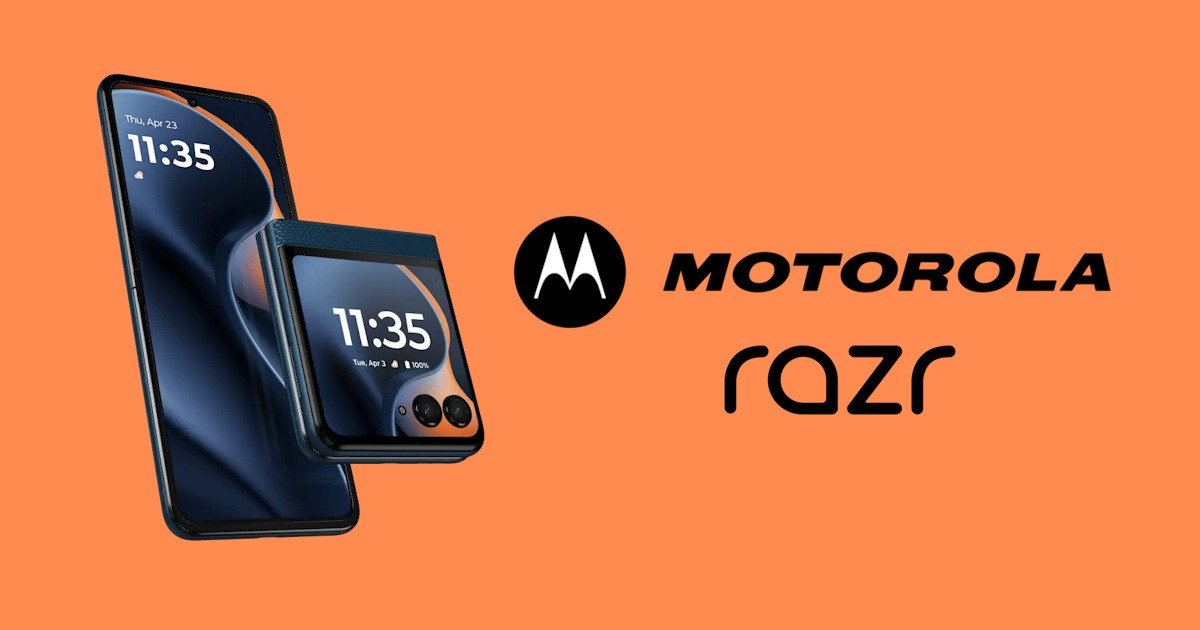
I asked to review the Motorola Razr 60, and I’ll admit that upfront because it explains a lot of what follows. This wasn’t a casual request. It was personal. To this day, the Motorola Razr V3 is still my favourite phone ever. I loved that phone. Properly loved it. I remember getting it, flipping it open, and placing it on a table like it was an accessory rather than a piece of tech. Something you showed off without meaning to. I felt untouchable. Confident. Cool, even. At least in my head. That has to count for something.
That feeling stuck with me longer than the phone itself did. Long after the battery faded and the world moved on to touchscreens, the Motorola Razr stayed lodged somewhere in my brain as the moment phones felt exciting. Intentional. A little indulgent. You didn’t just use it, you interacted with it. There was drama in answering a call. Finality in hanging up. Flip. Done.
So picking up the Motorola Razr 60 brought equal parts nostalgia and nerves. Maybe too much nostalgia. I worried it would mess with the memory. Rewrite it in ways I didn’t want rewritten. Or worse, feel like a tribute band that hits every note perfectly but somehow still leaves you cold. My expectations were a mess. I wanted it to feel modern and capable, but I also wanted it to take me straight back to 2005. I knew that was unreasonable. Time doesn’t work like that. Software definitely doesn’t.
Still, standing there with the box in my hands, all of those thoughts softened a bit. There was curiosity again. A flicker of excitement I hadn’t felt about a phone in a while. I wasn’t sure if the Motorola Razr 60 could live up to the weight I’d unfairly put on it. But I wanted it to try.
First impressions: that flip feeling is still undefeated
The first flip of the Motorola Razr 60 landed exactly where I hoped it would. That snap is still deeply satisfying. Not loud. Not showy. Just firm and confident, like it knows it has nothing to prove. Muscle memory kicked in immediately, which surprised me more than it should have. It’s been years. Possibly too many years. And yet my thumb knew what to do without asking. And though I knew I could only use this for a few days, I was excited for those few days!
I kept flipping it open for no reason at all, weirdly, exactly what I did with my first Motorola Razr. Standing around. Sitting down. Waiting for a message that hadn’t arrived yet. I’d read something, reply, then close it, even when leaving it open would’ve made more sense. Old habits don’t just die, apparently. Some of them patiently wait.
Folded shut, the Motorola Razr 60 feels compact in a way phones rarely do anymore. It feels finished. Purposeful. Something that belongs in your pocket regardless of the pocket size, not something bulging out of it. Open it up, and it effortlessly becomes a regular smartphone, which sounds obvious, but it matters. There’s no moment of regret when it’s open. No compromise feeling creeping in.
That tiny pause during the flip is my favourite part. A fraction of a second where you’re between states. Closed. Open. Before. After. It makes the act of checking your phone feel deliberate instead of automatic. I didn’t realise how much I missed that. Or maybe I didn’t know I missed it until it was back.
The Motorola Razr 60 hinge itself feels solid. Reassuringly so. No flex. No wobble. I didn’t treat it gently or with ceremony. I didn’t feel the need to. Trust came quickly, which is rare, especially with some of the horror stories I’ve heard about folding phones. Usually, there are a few days of cautious handling, a bit of overthinking. That never really happened here. I flipped it as I meant it.
And that felt good.
Motorola Razr 60 at a glance
- Display (main): 6.9‑inch LTPO AMOLED, 2640 × 1080, up to 120Hz, HDR10+, up to 3000 nits
- Display (external): 3.6‑inch AMOLED, 1056 × 1066, 90Hz, up to 1700 nits
- Processor: MediaTek Dimensity 7400X
- RAM: 8GB or 12GB
- Storage: 256GB or 512GB
- Rear cameras: 50MP main (OIS) and 13MP ultra‑wide (120°)
- Front camera: 32MP
- Video: Up to 4K recording
- Battery: 4500mAh
- Charging: 30W wired, 15W wireless
- Build: Gorilla Glass Victus (external), aluminium frame, IP48 rated
- Connectivity: 5G, Wi‑Fi 6/6E, Bluetooth 5.4, NFC, USB‑C
- Security: Side‑mounted fingerprint sensor, face unlock
- Weight: 188g
Design: modern, but respectful of its past
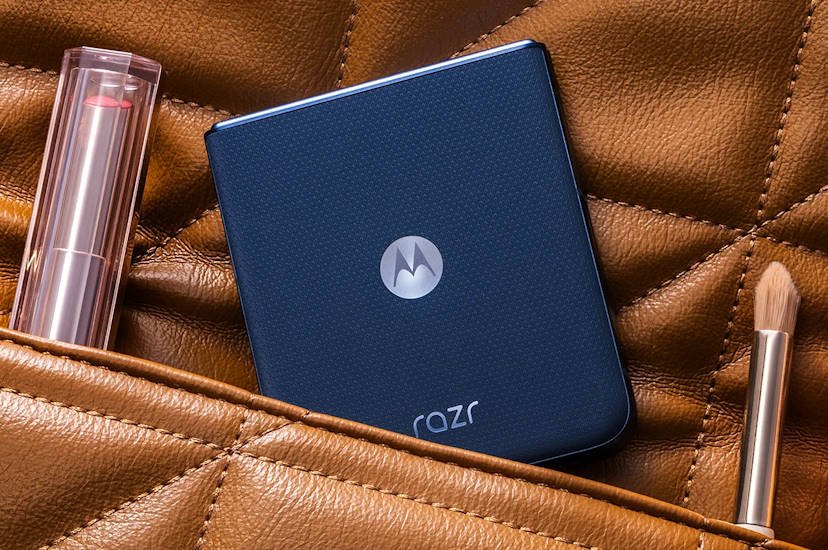
Motorola didn’t try to redo the V3, and I’m genuinely glad they resisted that temptation. The Motorola Razr 60 doesn’t chase nostalgia directly, and I’m ok with that. It nods to it, gives us just enough nostalgia, then keeps moving. The spirit is there without copying the shape or pretending we’re still in 2004. That restraint matters. This feels like a phone that knows where it came from, but also knows it doesn’t need to dwell on it.
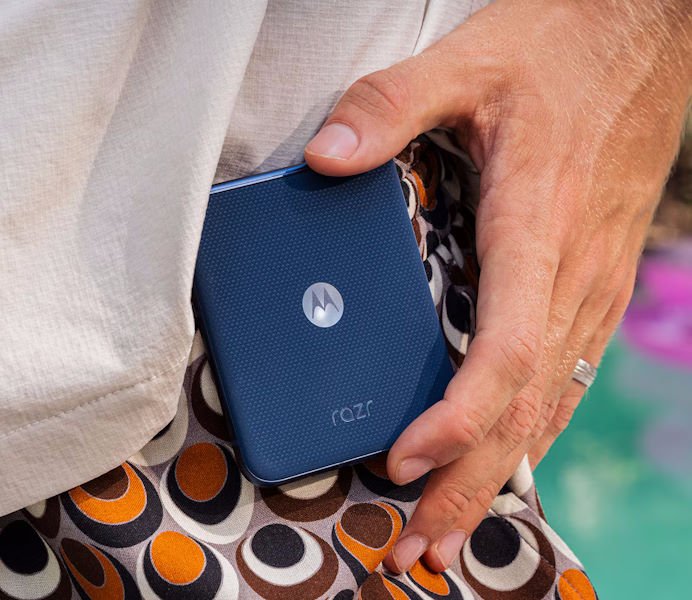
The materials feel properly premium. There’s a softness to the finish that makes it pleasant to hold, almost comforting in a low‑key way. I found myself running my fingers over it absentmindedly while thinking about something else, which sounds strange, and my housemate thought it was having a mental break. But that’s usually a sign the physical design is doing its job.
Folded, it’s sleek and genuinely pocket‑friendly. Not “for a foldable” pocket‑friendly. Just pocket‑friendly. Open it up, and it doesn’t suddenly feel delicate or experimental, like you need to be careful how you hold it. It feels finished. Considered. Like this shape has been lived with and refined, not rushed out as a concept in hardware form.
The crease is there. Of course it is. Some days, you notice it immediately, usually when the light catches it just wrong. Other times, it disappears completely, and you forget about it until someone mentions it. That inconsistency felt strange at first, then normal. After a few days, it stopped being a talking point and became part of the background experience. I’m just curious how it would look a year in, but in the several weeks I had it, I’ve noticed no difference. But definitely something to consider.
What surprised me most was how often I caught myself placing the Motorola Razr 60 on a desk, folded shut, just to look at it. Not to check notifications. Not to charge it. Just setting it down, closed, like it deserved the moment. I haven’t done that with a phone in years, probably because most phones don’t give you a reason to.
Main display: comfortable and immersive
Open the Motorola Razr 60, and you’re greeted with a full, tall display that feels normal almost immediately. There’s no adjustment period where your eyes need to relearn anything. Scrolling feels smooth. Text looks clean and settled. Watching videos feels immersive in a way that doesn’t call attention to itself, which is often the best kind. I remember getting under the covers in my bed on a cold winter’s day, watching my favourite movie of all time, Hudson Hawk, and it was, as kids say, a “vibe.” It was actually more enjoyable than watching it on my TV, the picture was amazing!
I did worry the fold would feel like a visual speed bump. Something my eyes would constantly trip over. That didn’t really happen. On the first day, yes, I noticed it. I was aware of it. After that, my brain seemed to quietly refile it as irrelevant. If I deliberately looked for it, I could find it. Otherwise, it stayed out of the way.
The size works well too. There’s enough vertical space to make reading and browsing feel relaxed, not cramped, without tipping into awkwardly tall territory. It strikes a balance that feels thought through rather than accidentally landed on. I never felt like I was stretching content to fit the screen, or losing anything to strange proportions.
I ended up using it late at night more than once, half‑awake, scrolling through feeds I absolutely didn’t need to be scrolling through. That’s usually when displays expose their flaws. Harsh brightness. Uneven lighting. Eye fatigue that creeps in faster than you expect. None of that stood out here. The display felt calm. Easy on the eyes in a way that’s hard to quantify but very easy to appreciate.
External display: more useful than I expected
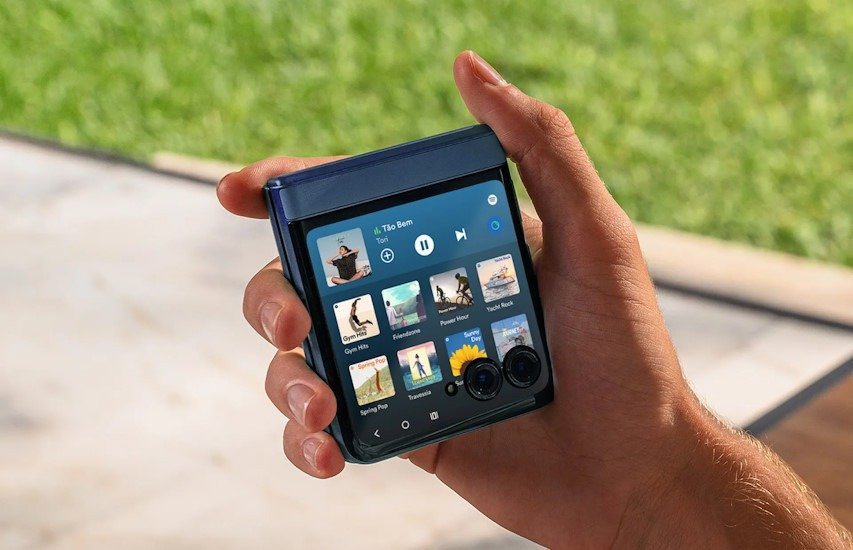
I went in assuming the outer screen would be a novelty. Something I’d poke at for a day or two, show someone nearby in my office, then quietly ignore. That’s usually how these things go. But that’s not what happened here. The external display on the Motorola Razr 60 kept earning its place.
Notifications are clear without feeling crowded or needing a magnifying glass. Messages are easy to read at a glance, not squinted at or half‑cut off. Music controls behave exactly how you want them to, which sounds obvious, but still feels worth calling out. No friction. No relearning. It just works. And as someone who listens to music or podcasts throughout the day and always has to pause them, this became invaluable. Since going back to my phone, it is something I miss so much.
What surprised me most was how often I replied to texts without opening the phone at all. More than I expected. More than I planned to. Quick responses stayed quick. Check, reply, done. It made those small interactions feel lighter somehow, like the phone wasn’t insisting on my full attention every single time. That’s a subtle thing, but it builds over a day. Then over a week.
There’s also something quietly enjoyable about checking a notification with a flick of the wrist instead of going through the full unlock routine. No screen takeover. No endless scroll temptation. Just the information you need, then you’re back to whatever you were doing. Sometimes I still opened the Motorola Razr 60 out of habit, mostly to flick it open and feel cool. Sometimes I didn’t. That choice felt nice to have.
By the end of a few days, the external display had stopped feeling like an extra feature or a gimmick and started feeling like part of the flow.
Performance: dependable, not dramatic
Daily use on the Motorola Razr 60 feels calm and consistent, which I mean as a real compliment. Apps open quickly. Swapping between them feels smooth. Nothing hesitates in a way that pulls you out of what you’re doing. More importantly, there were very few moments where the phone reminded me it was working at all.
I wasn’t trying to break it. No benchmarks. No stress tests just for the sake of it. This was regular use. Messaging all day. Jumping in and out of social apps. Taking photos, then checking them immediately. Maps when I was already late. A bit of everything, scattered across the day, the way phones actually get used. It handled all of that without protest.
There were the occasional micro‑pauses. A half‑beat here or there. You notice them mostly because you’re looking for them. They never stacked up, never turned into frustration, and never made me rethink what I was doing. They felt human, almost. Like the phone taking a breath rather than stumbling.
I also appreciated how consistent it felt over time. Some phones impress in the first few hours and then quietly lose their edge once you settle in. That didn’t really happen here. The experience on day one felt much the same as it did days later. Predictable, in a good way.
Camera: good memories, no fuss
The camera on the Motorola Razr 60 surprised me, mostly because it didn’t try very hard to impress. Photos come out looking natural. Colours stay grounded. Skin tones look like actual people rather than something processed five times before you see it. That mattered more to me than sharpness charts or zoom samples.
I found myself taking photos without second‑guessing them. No quick check, sigh, retake. Just point, shoot, move on. That’s usually my benchmark for a good phone camera. If it lets you stay in the moment instead of thinking about settings or results, it’s doing something right.
Low‑light performance was better than I expected. Not flawless, and not pretending to be. But usable. Consistent. Shots didn’t fall apart the second the lights dimmed, which is where a lot of cameras still stumble. Grain crept in sometimes, contrast softened, but the photos were still recognisably what I was trying to capture. I could live with that.
The external display ended up being more useful here than I anticipated. Using it as a preview for quick shots felt natural very quickly. Hold, frame, snap. Especially for casual photos or something you don’t want to overthink. I reached for it without consciously deciding to.
Battery life: better than my anxiety suggested
Foldables have always made me a little nervous when it comes to battery life. I don’t know if that’s fair, but the worry is there. Smaller form factor, extra screen, more moving parts. My expectations were cautious. The Razr 60 handled full days more comfortably than I expected it to.
Most days, I got through without thinking about it. Some days needed a late top‑up. Some didn’t. It really depended on how much I leaned on the external screen and how scattered my usage was. Heavy navigation days drained it faster. Lighter messaging days barely made a dent. At no point did it feel unpredictable, which is usually where anxiety creeps in.
What stood out was that I never felt stranded. I wasn’t constantly watching the percentage tick down or mentally planning my next charge. The battery faded at a reasonable pace, and that predictability goes further than outright capacity numbers ever do.
Charging is quick enough to take the edge off the whole situation. Plugging it in for a short burst actually moves the needle, which is honestly half the psychological battle. Even when I did need a top‑up, it never felt like a chore or a failure point.
By the end of the week, battery life had stopped being something I actively thought about. And for a foldable, that’s probably the biggest compliment I can give.
Living with it: more emotional than expected
Here’s the part I didn’t fully anticipate. Living with the Motorola Razr 60 made phones feel fun again. Not loud, attention‑seeking fun. Or relying on a piece of fruit fun. Personal fun. The quiet kind. Opening and closing it added a rhythm to the day that I didn’t realise was missing. Small moments. Tiny pauses. A sense of punctuation in a world that usually just scrolls on.
Something is grounding about the physical action of using it. Flip it open to engage. Snap it shut when you’re done. I actually enjoyed making a call on it. Just so I could hang up by slamming it shut. I missed that. That simple movement adds intention in a way flat phones never really managed. I started noticing it during mundane moments. Answering a message. Ending a call. Putting the phone away instead of letting it linger in my hand. It sounds minor, but over time, it changes how the day feels.
It reminded me why I loved the original Razr V3 so much, but without trying to recreate it beat for beat. The Razr 60 doesn’t live in the past or rely on nostalgia to carry it. It just leaves the door open for it. It understands that some of us remember the satisfaction of snapping a phone shut like punctuation. Message sent. Conversation over. Full stop.
At the same time, it doesn’t feel stuck there. I wasn’t constantly comparing it to the old one or wishing it behaved the same way. That surprised me. The memory hovered in the background, but the experience stayed firmly in the present. That balance is hard to pull off, and Motorola mostly nails it here.
By the end of the week, I realised I was enjoying the phone itself, not just what it could do. I wasn’t rushing interactions or defaulting to endless checks. I was engaging, then disengaging. Open. Close. Done. And somehow, that made the whole thing feel a little more human.
Final thoughts: it earned my trust
I went into this review knowing the Motorola Razr 60 was dealing with an uneven playing field. It needed to be a good phone on its own while also carrying the emotional weight of something I remember very, very fondly… actually, it was my true love. That usually ends badly. This time, it didn’t.
The Motorola Razr 60 doesn’t chase nostalgia aggressively, and that’s why it works. It doesn’t try to convince you that this is the same phone you loved years ago. It just borrows the parts that mattered. The intent. The rhythm. The feeling of choosing when you’re done. Everything else is firmly rooted in the present. A modern phone that behaves like one, looks like one, and quietly does what it’s meant to do.
Technically, it’s solid across the board. The displays work well together. Performance stays consistent. The camera captures moments without fuss. Battery life holds up better than fear might suggest. None of those things shouts for attention on its own, but together they create something steady and easy to live with. A phone that doesn’t demand constant evaluation.
What surprised me most, though, is how much the form changed my relationship with it. I checked it less. I finished interactions more cleanly. I put the Motorola Razr 60 down more deliberately. That flip wasn’t just a gimmick or a callback. It genuinely shaped how I used the device day to day. And that’s rare.
This won’t be for everyone. If phones are purely tools to you, slabs still make plenty of sense. If you want the absolute best camera or the fastest benchmarks, there are other options. But if you miss phones having personality. If you like hardware that invites interaction. If you remember enjoying your phone, not just tolerating it. The Motorola Razr 60 has something to offer.
I asked to review this phone because of what the Motorola Razr once meant to me. I finished this review liking it for what it is now. That, more than anything else, tells me Motorola got this one so very right. And I know what my next phone will be!



Recent Comments