
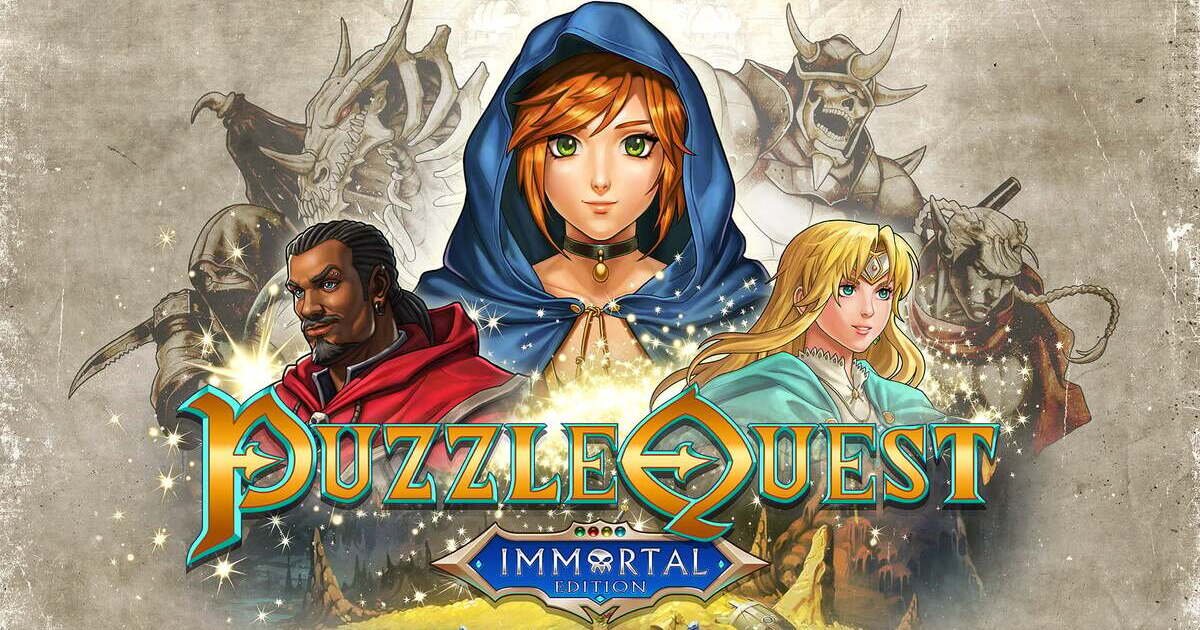
Puzzle Quest: Immortal Edition is one of those games I didn’t expect to care about. Honestly, if you’d asked me a month ago whether I’d go out and buy a match-3 RPG, I’d probably have said no. Maybe even laughed a little. It’s not the kind of genre I usually gravitate towards, too casual, too repetitive, or at least that’s what I thought. But here we are. After a few hours with it, I’m sitting here thinking… yeah, I’d actually pay for this. It’s that kind of surprise. The kind that sneaks up on you when you’re not looking.
What makes it interesting is how much content is packed into this edition. The Immortal Edition isn’t just a re-release; it’s a full collection. Everything from previous Puzzle Quest adventures is here, plus new content layered on top. There’s an exclusive character class, which feels like a nice incentive, and over forty new items to experiment with. That’s a lot of gear for a game that, on the surface, looks simple. And then there’s the 4K artwork. It sounds fancy—and it does look good—but I’ll admit, I wasn’t expecting visuals to matter much in a match-3 game. Turns out, they do. Clean, sharp graphics make a difference when you’re staring at a board for hours.
It’s strange, really. I went in thinking this would be a quick, casual distraction. Something to play for ten minutes and forget. Instead, I found myself planning moves, chasing quests, and wondering what’s next. That’s not what I expected at all.
Story
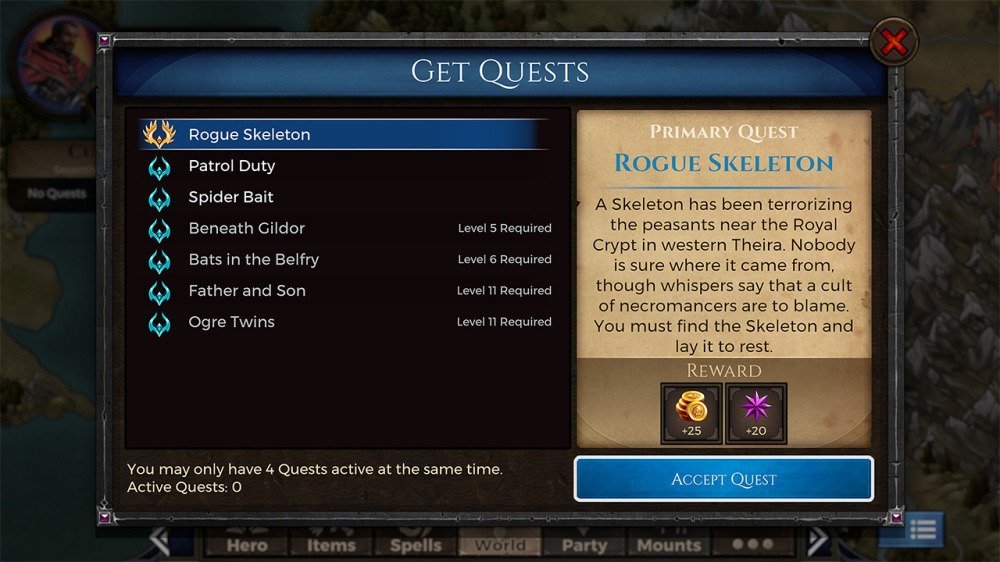
I wasn’t expecting much from the story. Match-3 games aren’t exactly known for deep narratives, right? Usually, it’s a thin excuse to keep you matching tiles. But this one… it sneaks up on you. It starts small, with simple quests, a few characters, nothing overwhelming. You’re just helping out, clearing a path, solving problems. And then, almost without noticing, you’re rebuilding Etheria. Suddenly, the stakes feel bigger, and you’re wondering what’s next.
What surprised me most was how the game gives you a sense of purpose beyond the puzzle board. There’s a world here, and it feels alive enough to matter. You meet characters who aren’t just quest givers; they have personalities, even if they’re not deeply complex. Some dialogue feels a little old-school, sure, but honestly, I kind of like that. It reminds me of classic RPGs where the charm wasn’t in perfect writing but in the sense of adventure.
The pacing is clever. It doesn’t dump everything on you at once. Instead, it layers the story gradually, so you’re always curious about what’s around the corner. There are moments where you think, “Okay, one more quest,” and then suddenly it’s midnight. That happened to me, and it says a lot about how quietly engaging this game can be.
Is it groundbreaking storytelling? No. But it’s more than I expected. It gives you enough mystery and progression to keep you hooked without feeling forced. And the best part? It never tries too hard. It’s comfortable in its own skin, and that makes it easy to enjoy.
Gameplay & Controls
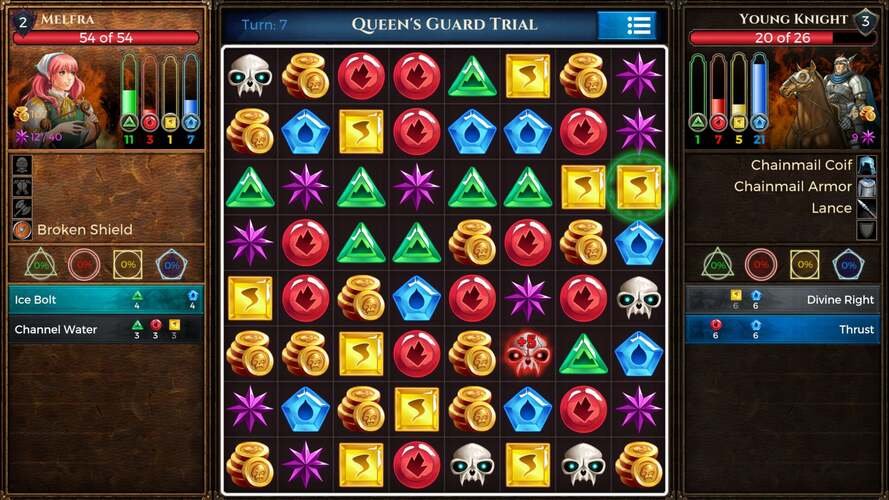
Puzzle Quest: Immortal Edition sticks to its roots with the classic match-3 mechanic, but it doesn’t stop there. It layers in RPG elements, think spells, abilities, gear upgrades, that transform what could have been a simple puzzle game into something far more strategic. At first glance, it feels familiar, almost casual, but the depth creeps in as you play. Suddenly, you’re not just matching gems for points; you’re managing mana, planning combos, and timing spells to turn the tide of battle.
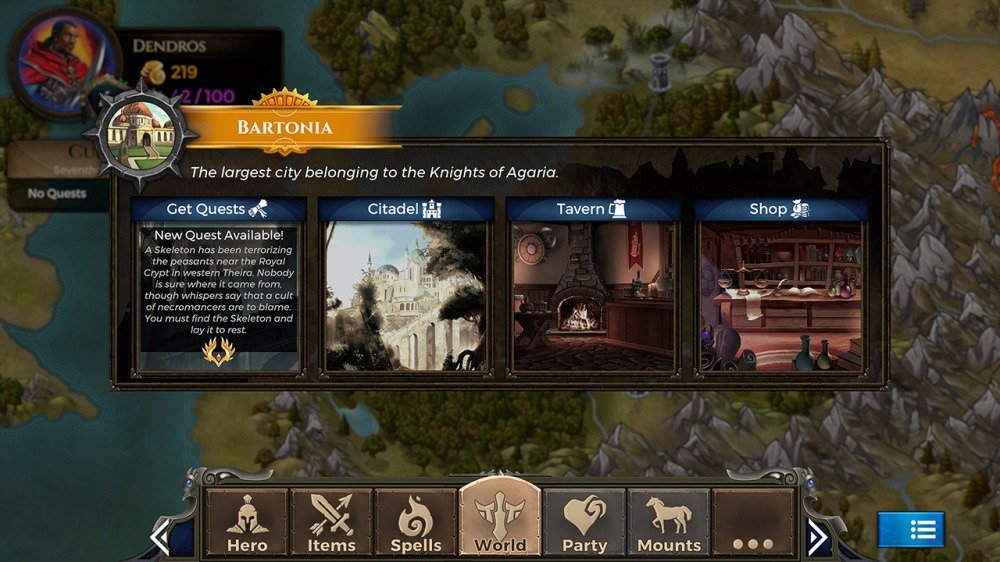
I played on PC, using nothing more than my laptop trackpad. No fuss, no extra setup. You can use a mouse if you prefer, but honestly, it’s not essential. Everything feels intuitive, which is refreshing. No steep learning curve, no fiddly menus. Just click, drag, match, and move on. The interface is clean, and Puzzle Quest: Immortal Edition doesn’t bombard you with unnecessary pop-ups or complicated systems. It respects your time, and that matters.
What really surprised me is how much strategy matters here. You can’t just match whatever looks good; you need to think ahead. Do you grab extra mana for your spell, or block your opponent from pulling off a devastating combo? There were moments where I stared at the board for longer than I’d like to admit, weighing my options. And when you pull off that perfect chain reaction? It feels incredible. When you don’t… well, you learn quickly.
The RPG progression adds another layer of engagement. Levelling up unlocks new spells and abilities, and gear upgrades give you that satisfying sense of growth. It’s not overly complicated, but it’s enough to make you feel like your choices matter. And because battles are quick, you never feel bogged down. It’s easy to jump in for a few minutes—or lose an entire evening without realising it. That happened to me more than once.
Graphics
Here’s the thing: Puzzle Quest: Immortal Edition is a simple game at its core, but visually, it feels polished. The 4K upgrade makes a noticeable difference, even if you’re not the kind of person who obsesses over pixels. The artwork is sharp, and the colours pop without being overwhelming. It’s vibrant but not garish, which is important for a game you might stare at for hours. There’s a balance here that feels deliberate: enough detail to make the world of Etheria look alive, but not so much that it distracts from the puzzle board.
The character portraits and spell icons are clean and easy to recognise, which matters more than people think, especially when your mind wanders when you have to read too much in-game. I’ve played games where the UI was so cluttered or the fonts so tiny that I gave up out of frustration. Puzzle Quest: Immortal Edition gets this right. Text is readable, menus are clear and the icons are easily noticable, and nothing feels like it’s fighting for your attention. It’s functional, but also pleasant to look at.
Animations are subtle but effective. When you match gems, there’s a satisfying pop and a smooth transition that feels responsive without feeling too much like a pokie machine. Spells have a little flair, just enough to make you feel powerful without slowing down the pace. It’s not cinematic, and honestly, it doesn’t need to be. This isn’t a game about jaw-dropping cutscenes; it’s about clarity and flow, and the visuals support that perfectly.
Does the 4K artwork make it feel like a brand-new game? Not exactly. It’s still Puzzle Quest at heart, and that means a certain simplicity. But the upgrade gives it a modern polish that makes it easy on the eyes, especially if you’re playing on a large monitor. It’s the kind of visual design that doesn’t demand attention but quietly improves the experience. And for a game like this, that’s exactly what you want.

Personal Thoughts
I didn’t expect to enjoy Puzzle Quest: Immortal Edition as much as I did. Honestly, I went in thinking, “Alright, I’ll play for a few hours, write a few notes, then the review, and move on.” But that didn’t happen. Maybe it’s the mix of strategy and simplicity. Or maybe it’s that you can play for ten minutes or two hours without feeling punished either way. It’s not trying to be something it’s not, and that honesty makes it easy to like.
What really caught me off guard was how often I found myself laughing at my own mistakes. There was one match where I was so focused on setting up this massive combo, like, I had it all planned out in my head, that I completely missed the fact that my opponent was about to unleash a spell that wiped half my health. I sat there staring at the screen thinking, “Well… that’s fair.” Another time, I accidentally gave the enemy a perfect five-gem match because I got greedy chasing mana. Watching them chain three spells in a row while I sat helplessly was equal parts painful and hilarious.
And then there’s the classic “just one more game” trap. I told myself I’d play for 15 minutes during lunch. Next thing I know, my laptop battery warning pops up, and I’m wondering how it’s already 3 PM. oops. I remember at one point, I even paused mid-battle to grab a snack, came back, and realised I’d left the board in a position where the AI had basically gift-wrapped a win for itself. I laughed, shrugged, and hit restart. It’s that kind of game, frustrating in tiny doses, but never enough to make you quit.
What I like most is how low-pressure it feels. You’re not punished for taking breaks, and you don’t need to grind endlessly to feel progress. It’s relaxing, but still engaging enough to keep your brain ticking. And honestly, that’s rare. A lot of games either demand your full attention or feel so shallow that you lose interest fast. Puzzle Quest: Immortal Edition sits in that sweet spot where you can enjoy it casually or dive deep if you want.
Would I call it perfect? No. There are moments where the Random Number Generator (RNG) feels like it’s laughing at you, and sometimes the pacing slows down. But those quirks almost add to the charm. It’s not flawless, and that’s okay. It’s fun, and at the end of the day, that’s what matters.
Final Thoughts
Puzzle Quest: Immortal Edition is one of those rare surprises that sneaks up on you. It doesn’t try to reinvent the genre, and honestly, it doesn’t need to. What it does is take a formula that works, match-3 puzzles mixed with RPG depth, and polish it into something that feels complete. It’s simple enough to pick up in minutes, yet layered enough to keep you thinking several moves ahead. That balance is hard to pull off, and this game nails it.
Is it perfect? No. There are moments where luck (or RNG) feels like it’s laughing in your face, and sometimes the pacing slows down. But those quirks never overshadow the fun. In fact, they almost add character. The story won’t win awards, but it’s engaging enough to make you care. The visuals are clean and modern without being flashy, and the controls are so intuitive you barely think about them. It’s the kind of game that respects your time while still rewarding your attention.
Would I recommend it? Absolutely. Whether you want something relaxing for short bursts or a game you can sink hours into without noticing, Puzzle Quest: Immortal Edition delivers. For newcomers, it’s a great entry point. For long-time fans, it feels like the ultimate version; a celebration of everything that made the series great, now sharper and more refined.
If you’re looking for a game that’s easy to enjoy but hard to put down, this is it. Simple, strategic, and surprisingly addictive.



Recent Comments