
There is a specific rhythm to the first day of The Game Expo. It’s the sound of hundreds of mechanical keyboards clacking in unison, the low hum of PC fans, and that brief, golden window of time where the developers still have their voices and the coffee hasn’t yet gone cold. It was during this “calm before the storm” that I found Anthony, a developer who has mastered the art of making the complex feel comfortable.
Anthony isn’t a stranger to the big stage; he’s taken his work all the way to PAX in the US, but his latest project, FishOmatic, feels like a deliberate breath of fresh air. We sat down at his booth to talk about what happens when you take the addictive, “just one more belt” automation of a game like Factorio and mash it together with the gentle, low-stakes vibes of Animal Crossing.
Coming off the back of his Screen Australia-funded title, Lighthaze World, a puzzle game that explored the rugged beauty of Tasmania and the nuances of mental health, Anthony is now charting a course toward total creative freedom. FishOmatic is his “self-funded” labour of love, designed for the player who wants to build a robotic fishing empire without the stress of a steep learning curve or the pressure of a ticking clock.
In this conversation, we dive into the philosophy of “accessible automation,” the joy of watching robots do the heavy lifting while you focus on the big picture, and why sometimes the best way to relax after a high-intensity gaming session is to just go build a factory in a cute, fish-filled world.
Pull up a chair, leave the manual labour to the droids, and dive into the world of FishOmatic.
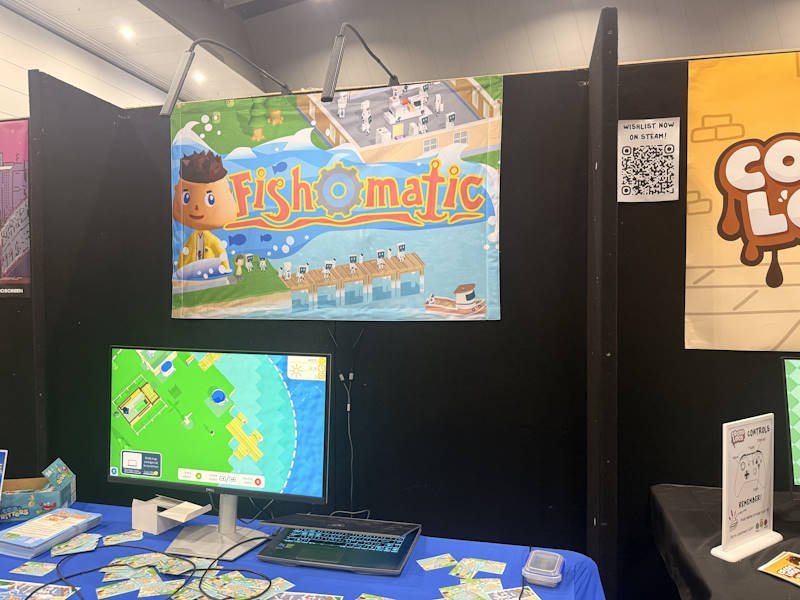
Ben: All right, I’m here with Anthony. to talk about FishOmatic. Hi, how are you?
Anthony: Good, thanks. Long day, as these things are.
B: It’s only day one.
A: I went to Pax US last year, that’s 4 days. At the end, that last day is so hard to get through.
B: So this is a breeze. It’s just 2 days! It’s like a walk in the park. Can you tell us a little about FishOmatic? What’s it all about?
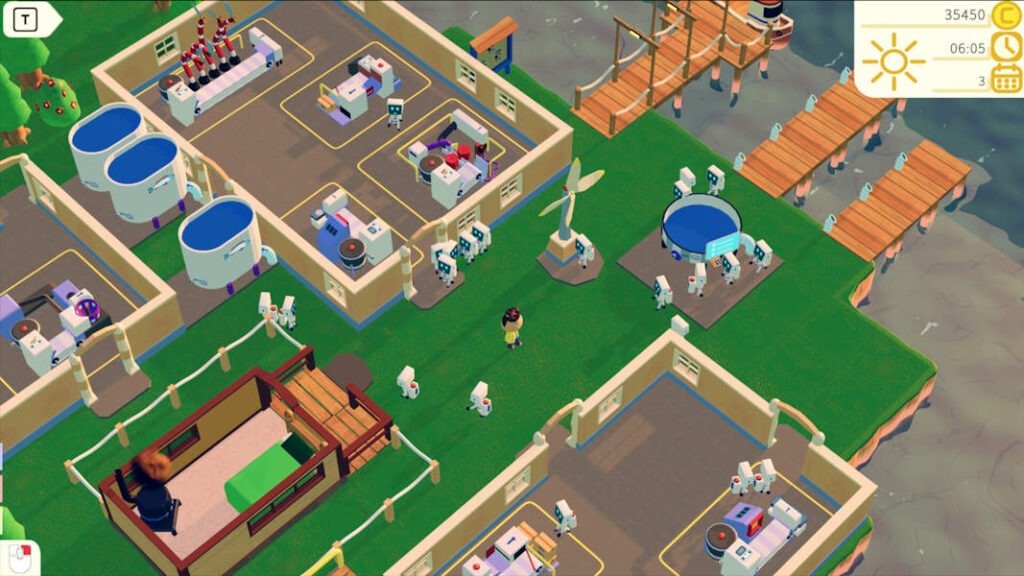
A: FishOmatic originated from the idea that factorial is a fun game. However, many people struggle with factory-style games due to their steep learning curve. So, we thought, “What if we combined factorial with Animal Crossing?” It’s not necessarily easier, but it’s a more accessible entry point. We also wanted to add a story and other elements. That’s the design theory behind FishOmatic.
B: I guess the whole idea is you’re building like a little factory, you’re out collecting fish, bringing the fish back and processing them. Is it basically correct?
A: Yes, but you missed a key point. You’re not actually collecting anything; robots handle that. You’re simply finding locations and building the factory. The robots do everything else. We’ve already done all the thinking, so they’ll identify the next important task and take care of it. Essentially, they’re handling the thinking while you focus on the practical aspects.
B: Are there times when the robots might be waiting for you to instruct them to build or construct the next phase?
A: No, not really. They’ll find a lesser job if there’s nothing else available. Sometimes there’s simply nothing for them to do, and they’ll have symbols above their head; you’ll realise they’re out of work. That’s pretty much it.
B: Awesome. I see you’re about to launch on Steam. Are you looking for a Kickstarter to fund it or other funding?
A: My last game was funded by Screen Australia, and they were fantastic. However, I believe it subtly influences your design philosophy and approach. It essentially shifts your mindset about game design. I wanted complete freedom with this project, so I decided to create something I genuinely wanted, or we’d do it ourselves.
B: So it’s self-funded, and then make the money later. Hopefully, that’s the plan. When are you looking to launch?
A: End of this year or early next year. We’ll see how we’re going.
B: That’s awesome. It’s on Steam now to wishlist, which is cool. Do you plan to put up a demo on Steam later?
A: Right now, this is a really basic demo. We’re trying to understand what people get and don’t get, what they like and dislike about the game. Having an early demo like this is helpful because it gives us good feedback and helps us see if we’re on the right track or not. Instead of building 90% of the game and then realising we should have changed something, we can fix it early on.
B: These events are important because they let us see how people play the game and hope they don’t break it.
A: That’s right. We love that. We can see who wants to play it and who likes it. It’s a great way to discover a lot of things at these events.
B: So far, what demographics are attracted to this game?
A: It’s probably between 20 and 35. It’s a bit of a mix, though.
B: I thought you might have targeted a younger demographic.
A: No, it’s more like the Animal Crossing crowd. There are kids who play that, but it seems to be people who’ve gone to work and just want to relax and unwind with a cute and relaxing game. They don’t want it to be stressful. They want it to be adorable and enjoyable. There’s no pressure or anything like that.
B: It’s a transition game. You build your little worlds.
A: Yeah, that’s right. One of my philosophies about making indie games is that I know they’re sometimes secondary to triple-A titles. So, I want games that are easy to play. If you put them down and return six months later, you should still be able to figure out how to play. You don’t have to relearn the whole game. You might need to revisit a tutorial to understand what’s happening, but it shouldn’t be a complicated sequence of events or require quick reflexes. The focus should be on ease of play.
For myself, I’ll play some AAA games like Call of Duty or Fortnite and then unwind with cosy games. That’s why I prefer cosy games; they’re my way of relaxing after a more intense gaming session.
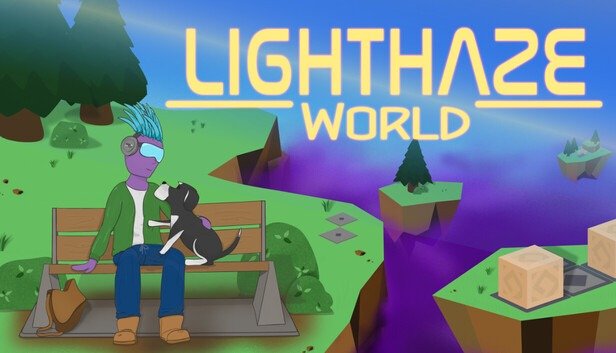
B: You’ve already released a game called Lighthaze World. What’s that about?
A: It’s a cosy puzzle game. The story follows the main character, who visits the morgue, gets overwhelmed by the crowd, and reimagines everything as Tasmania. Players explore hiking trails modelled in the game and solve puzzles along the way.
B: I assume you’re from Tasmania, then?
A: I was. I’m now in Melbourne.
B: Why did you choose Tasmania as the setting for the game?
A: I started it while I was in Tasmania. Then we moved to Melbourne, so we don’t need to include Tasmania in the game anymore.
B: Although it makes the game niche and appealing, it’s a niche that people enjoy.
A: Absolutely, it had a very Australian feel to it. There were also some Tasmanian jokes, particularly puns on their unique businesses that no one outside Tasmania would know. It’s a small but good addition.
B: That’s fantastic, I love ‘in’ jokes! Did you take Lighthaze, or was it FishOmatic over to Pax in the US?
A: I took Lighthaze.
B: How did it go down with the American audience?
A: They absolutely loved it. They particularly enjoyed the mental health aspect, like the game that acknowledges it’s okay, not to be okay.
B: Was that a theme you discussed with Screen Australia earlier? Did they encourage you to explore it, or was it something you’d already considered?
A: We were more focused on immersing people in the Tasmanian wilderness. However, we didn’t want to simply say “You’re in the wilderness.” We wanted to create a unique path for them to experience it. Imagine being dropped out of a truck and suddenly in the Tasmanian wilderness. You’d have to find your way out. I thought, “Well, many people visit Tasmania to escape their lives. The Tasmanian wilderness is perfect for that.”
B: That’s a great way to segue in some uniqueness. Good luck with FishOmatic. I hope everything comes together later this year or early next year so we can see you at Pax AUS.
A: I’m not sure yet. I haven’t made a decision yet.




Recent Comments