
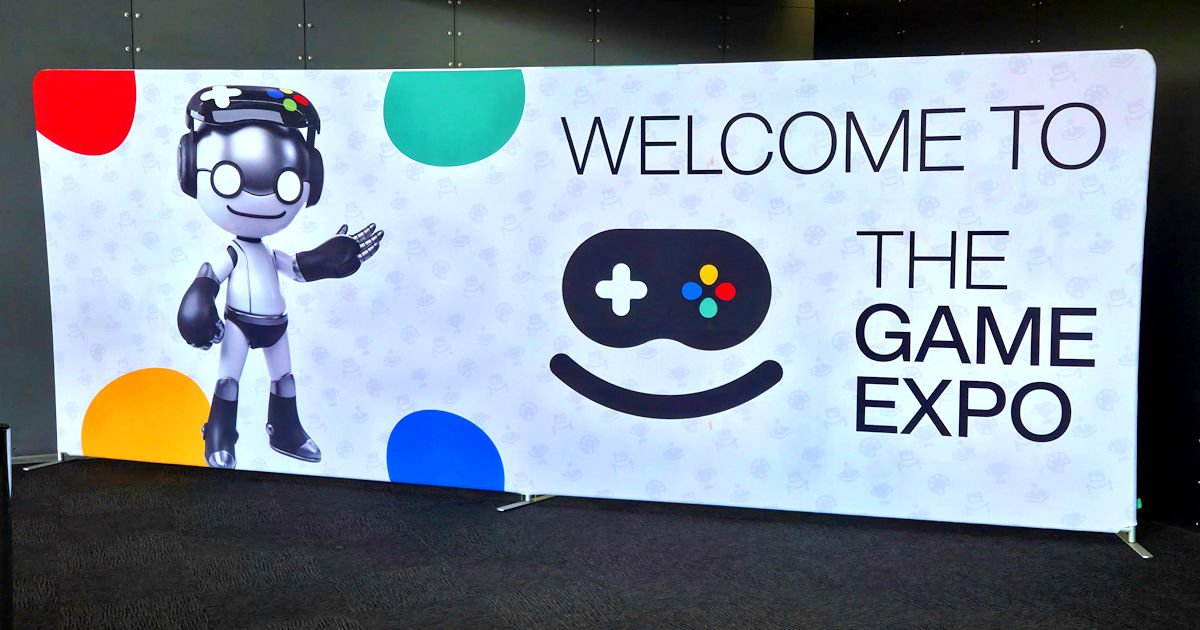
This is my first The Game Expo (TGX), and even though I’ve been following along through the socials of other content creators for years, actually being able to go this time felt different. I’d seen the photos. The clips. The quick walk‑throughs and highlight reels. Still, none of that quite prepares you for being there in person. To say I was excited would be underselling it a bit. I’d been waiting for the right year, the right moment, and suddenly I was walking through the doors instead of watching from a screen.
I remember earlier TGX events looking smaller. Quieter. A little unsure of themselves, maybe. There was a sense that everyone was testing the waters, exhibitors and attendees included, just trying to work out what this thing could become. The Game Expo 2026 feels like it’s moved well past that stage. It knows what it is now. It’s comfortable being busy. Comfortable being loud when it needs to be. Comfortable letting you drift from booth to booth without feeling like you’re missing something important if you slow down.
There’s a confidence to it that’s hard to fake. Not everything is shouting for attention, and somehow that makes the whole thing feel more alive. You’re allowed to wander. To stop. To double back because something caught your eye and you weren’t ready for it yet. That ease, that lack of pressure, might be the biggest change of all—and it sets the tone for everything that follows.
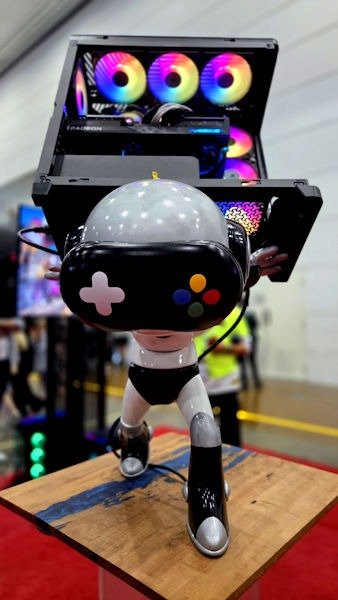
First Impressions (and Immediately Questionable Financial Decisions)
I walked up to the Melbourne Convention & Exhibition Centre on March 14 with a coffee in one hand (my third at that point, but not my last) and absolutely no idea where the entrance was, mostly because the first three side doors I confidently tried were locked. Properly locked. Not even a polite “wrong door” sign. Just me, standing there, staring at my reflection. Classic MCEC experience. At that point, I briefly wondered if I was early, late, or simply bad at conventions.
Luckily, I didn’t have to think too hard about it. I just followed the trail. Cosplayers adjusting armour straps, people juggling tote bags already threatening to tear, and a group loudly debating which Pokémon starter is the best. It’s Totodile, by the way. This is not up for discussion. That familiar mix of chaos and excitement is usually a good sign you’re heading in the right direction.
The moment I finally stepped inside, the energy hit like a crit. Instantly. TGX isn’t a corporate mega‑expo with polished smiles and sterile booths. It feels more like a community expo, for fans, done by fans. You could practically feel the collective excitement, that low hum of noise that says something fun is happening everywhere at once.
And then I walked fully into the convention space, and whatever sense of direction I had left immediately disappeared, in the best possible way.
And then, immediately, Thermaltake.
There’s a brief second right after you enter TGX where your brain doesn’t quite know where to focus. Do you look left? Right? Straight ahead? Something colourful catches your eye, then something loud, then something shiny. I hesitated for a moment, took a sip of now‑lukewarm coffee, and let it all wash over me.
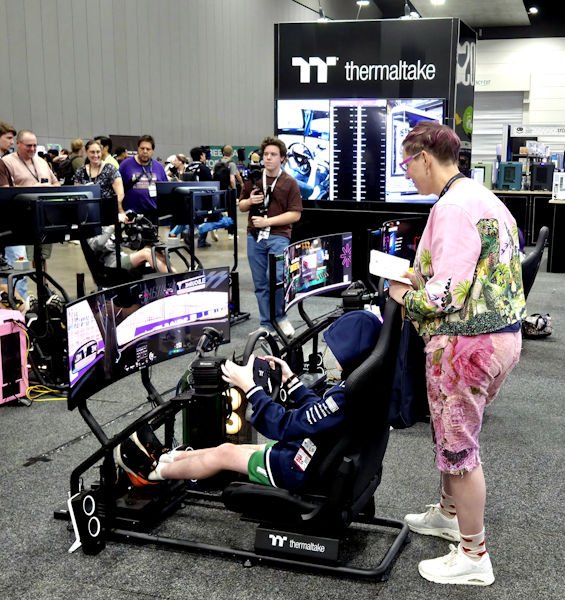
Walking in, you’re hit with what looks like a wall of racing sims. Okay, a wall is a strong word. It was six. But six full Thermaltake racing rigs lined up side by side still smacks you in the face in the best way. Seats, frames, wheels, screens, the whole setup. They looked incredible, and maybe more dangerously, they looked achievable. Not cheap, but close enough that my brain started doing the “well, technically…” calculations. Never a good sign, especially when I found out the price. And it is far cheaper than it looks.
Thermaltake had pride of place right at the entrance, and it felt very intentional. You couldn’t miss them. Big booth, clean layout, and staff who actually wanted to talk to you rather than just point vaguely at a spec sheet. The racing rigs dominated the middle, pulling people in instantly. You could hear them before you really registered what you were looking at.
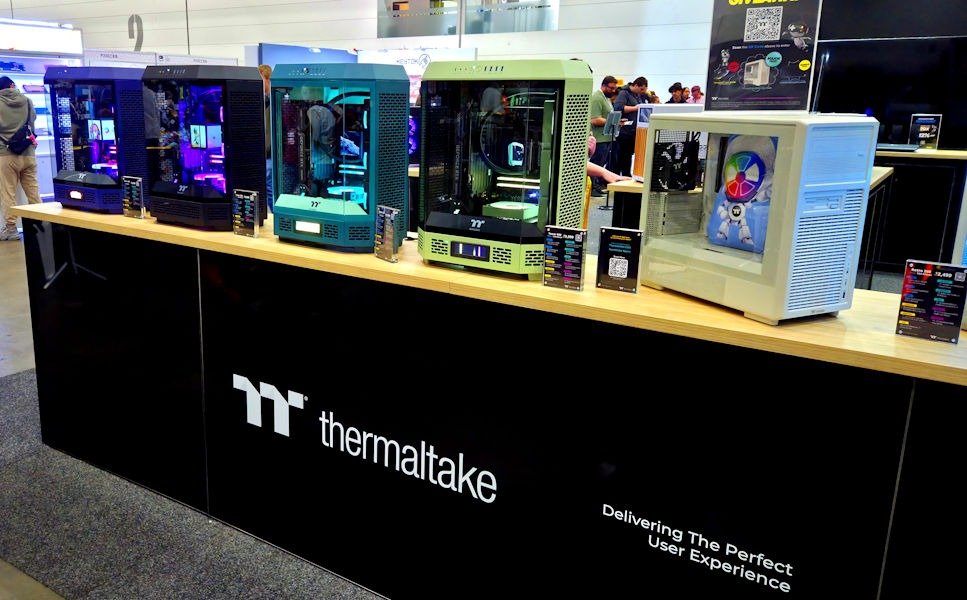
On the other side of the Thermaltake divide sat the more sensible stuff. Beautiful new cases and the prebuilt that looks heaven-sent. The kind of setups you can picture fitting into your life without having to rearrange furniture or explain yourself to anyone. They were the pretties!
The pre‑builts and showcase cases were genuinely stunning. The kind of machines that make you stop mid‑sentence and just stare for a second longer than you meant to. Perfect cable runs, tasteful lighting, and that’s coming from someone that doesn’t like RGB in their build. That quiet confidence of a PC that knows it looks good. On Sunday, they were offering $500 off, which almost had me diving headfirst into my emergency money.
A high‑end desktop is absolutely an emergency. Right? Right?
Keyboards Everywhere (and Way Too Many Opinions)
If there was one area of TGX 2026 where I completely lost all sense of time, self‑control, and financial responsibility, it was the keyboards. Full stop.
Keychron. MCHOSE. NuPhy. Keytok. QK. Fantech. Lofree. Yunzii. Melgeek. Maono. All in one place. All within arm’s reach. All begging to be typed on.
It genuinely felt unfair.
This hit especially hard because we’d just released the DezDoes Ultimate Keyboard Roundup. Several of these brands even got a mention. You know that feeling when you finish a big project, finally relax, and then immediately get thrown into the exact thing you’ve been obsessing over for weeks? That was Ben and me for about an hour, standing in the middle of TGX, fingers hovering over switches, before typing, twisting knobs and getting blown away from the little LED screens. I was about to make a series of very poor decisions, and yet, I was so excited too.
Keychron’s presence felt reassuring. Familiar. Solid. The kind of boards you trust without needing to be convinced. Clean layouts, sensible designs, keyboards that quietly say, “Yes, this will still be good in three years.” I lingered there longer than I meant to, mostly because everything just… made sense. Having owned several of their keyboards and finally getting to try out their Ceramic Keyboard, I think Ben undersold it, as it is a work of art.
NuPhy, on the other hand, was pure temptation. Sleek, low‑profile boards that make you rethink your entire desk setup. The kind of keyboards that feel fast before you even touch them. I typed a few lines, nodded to myself like I’d learned something important, and then immediately had to walk away before I justified buying one I absolutely didn’t need…. and when I say one, there were 3 I wanted. And my Emergency fund was shaking in its account!
Then there were the brands that made things feel playful. Melgeek and Lofree in particular. Colour everywhere. Personality everywhere. Boards that look like they belong in a design studio, not hidden under a monitor arm. I loved that they weren’t trying to be subtle. They knew exactly what they were, and they leaned into it hard. It was magical, and if my housemate were at TGX, I think I would be banned from ever going to an event again… yet would have wanted one of these
Yunzii and Fantech sat somewhere in the middle, approachable but still exciting. Keyboards that feel like a gateway. Easy to recommend. Easy to enjoy. Easy to imagine ending up on someone’s desk after a “just browsing” moment goes too far. They’re the kind of boards you tell yourself are sensible, practical even, right up until you realise you’ve spent ten minutes swapping between switches and quietly planning where it would live at home. Not flashy for the sake of it, not intimidating either. Just solid, good‑feeling keyboards that make getting into the hobby feel effortless… and that’s a dangerous thing. Especially if you read Ben’s review on a Yunzii keyboard, as it makes it hard not to want one.
And then there were my beloved, QK and Keytok, which scratched the custom‑keyboard itch. The kind of boards that make you slow down when you type. Heavier. More deliberate. Every keystroke felt intentional, like the keyboard wanted you to respect it, and I do so much. I overheard more than one very serious conversation about switch feel and mounting styles that sounded borderline philosophical.
What really tipped this into full keyboard heaven territory was that nothing felt locked away. You could touch everything. Type on everything. Judge everything silently. People were comparing boards in real time, swapping opinions mid‑sentence, disagreeing politely, then immediately moving on to the next keyboard as if nothing happened. It felt communal in the most niche way possible.
By the time I stepped away, my fingers were tired, my standards had quietly risen again, and I was painfully aware that my current keyboard at home was about to feel… fine. Which might be the worst outcome of all.
Still. Standing there, surrounded by that many great keyboards, right after pouring so much time into the DezDoes roundup? Absolute heaven. No regrets. Yet, some concerns for my wallet.
And lastly, a brand that I had never heard of, Maono. Which was a brand I’ve never heard of, but brought pure audio gear energy. What really caught me off guard, though, was their audio gear, especially the MAONO WAVE T1 MINI Wireless Microphone. I picked it up expecting “entry‑level, probably fine,” and then realised it’s roughly a third of the price of my current lapel mic. A mic I have defended. Out loud. To people. And recommended to anyone who would listen. That moment stung a little. In the best way.
It wasn’t just cheaper for the sake of it either. It felt solid, thoughtfully designed, and actually practical for the kind of on‑the‑go recording most of us end up doing. The kind of product that makes you quietly reassess past purchases and wonder if you were being loyal for no good reason. I left that booth impressed, slightly humbled, and very aware that Maono had completely recalibrated my expectations.
Weird, Retro, and the Realisation I’m Not Old — I’m Retro
Then there was the Weird and Retro and Camsobselete display, which quietly became one of my favourite parts of the entire weekend.
I wandered in thinking, “Oh cool, old stuff, from my youth,” and wandered out having learned something important about myself. I’m not old. I’m retro. There’s a difference. A meaningful one. At least that’s what I’m telling myself now.
What really got me, though, wasn’t just seeing the consoles lined up. It was that they were real. Not emulated. Not running through a modern screen, trying its best to pretend. These were the actual consoles, hooked up to CRTs, humming away like they never stopped. The soft glow. The curve of the glass. That faint buzz you only notice once you’re standing there again. This is how these games were meant to be played.
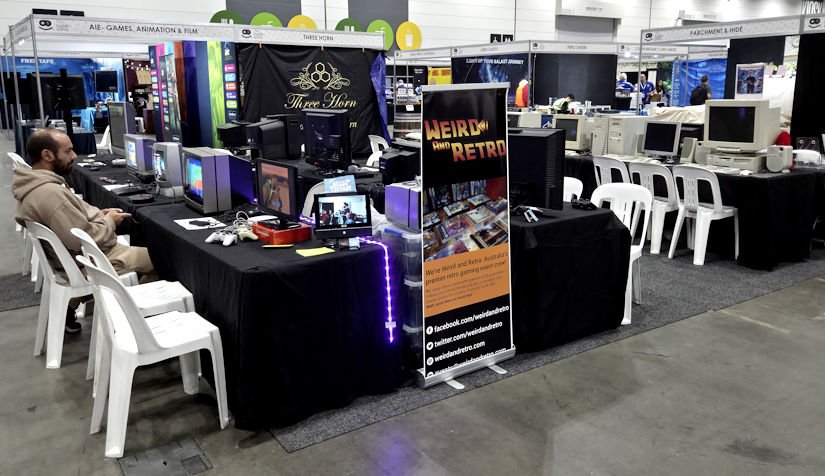
I sat down and played Alex Kidd, and something in my brain clicked into place immediately. The colours looked right. The movement felt right. Even the slight blur felt right. It’s funny how your hands remember things your brain hasn’t thought about in years. No tutorials. No reminders. Just muscle memory waking up like it had been waiting.
There was Atari, too, and everything in between. Chunky controllers. Minimal buttons. Games that explained nothing and expected you to figure it out or fail trying. I watched younger players pick up controllers and pause, clearly recalibrating. No save states. No checkpoints. Just vibes and consequences.
And that was the magic of it. Standing there, shoulder to shoulder with people who’d grown up with this stuff and people discovering it for the first time, all of us squinting at CRT screens like it was completely normal. No nostalgia filters. No upscaling. Just the real thing, flaws and all.
It didn’t feel like a museum. It felt alive. Loud. A little stubborn. Exactly like the hardware itself.
I walked away smiling, slightly emotional, and deeply validated in my new personal truth: I’m not old. I’m retro. And honestly, I’m okay with that.
Where Did All the TCG Go?
That said, one thing felt noticeably lighter: Trading card games exhibitors. And I don’t mean slightly lighter. I mean, where did everyone go lighter?
There were a few tournaments tucked away at the back, and if you were actively looking for them, you could find them. But you really had to be looking. Compared to the rest of The Game Expo 2026, the TCG presence felt almost shy. No big booths pulling you in as you walked past. No sprawling tables covered in binders, deck boxes, and playmats out in the open. No constant buzz of trades happening mid‑aisle. It felt more like a huge miss. I was hoping to pick up a few TMNT singles, but there were none.
That was genuinely disappointing.
Part of me really missed that TCG energy. The noise. The chaos. The half‑finished conversations were because someone just pulled something wild from a pack. Another part of me wondered if this was just a reflection of where the focus is shifting right now. Still, it felt like a gap. Not a deal‑breaker, but absolutely noticeable if that cardboard crack is your thing.
That said, there was one very bright shining light. Cost Plus Games.
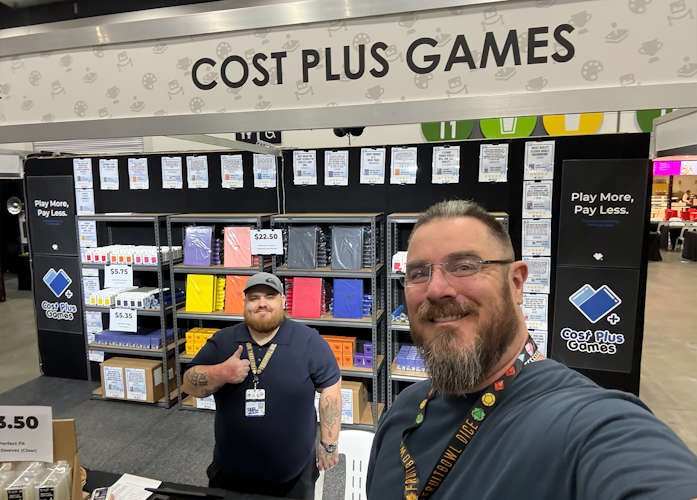
They were doing everything right. Stocked with pretty much every TCG accessory you’d need, and somehow doing it at a fraction of the price, without the quality drop you’re usually bracing for when you hear that sentence. If anything, the quality felt the same, if not better, than what I’ve seen elsewhere. I even heard one guy say, ‘Wow, they are great quality but at Temu prices!’ A weird compliment, but I kind of agree.
Dale and Ziggy were fantastic. Properly knowledgeable. Not pushy. Happy to explain things, compare options, and actually talk through what you’re buying instead of just ringing it up. You could tell they cared about the space and the people in it. Which was really nice to see, as there is nothing worse than looking at a product and feeling so pressured that you walk away. I picked up a folder (My beloved purple, 360 card folder) for $22.50. Yes, you read that right, and that isn’t some con‑special price or “show discount.” That was just… the price. Which was mildly infuriating, because I bought a very similar one just before Christmas at my local game store for $49.95. That one hurt a bit. Not their fault, obviously, but it did make me stand there quietly re‑evaluating past decisions.
Still, price aside, I was genuinely blown away by the quality they were offering for what they were charging. It felt fair. Honest. Like someone actually asked, “What should this cost?” and stuck to it. Which almost made the lack of broader TCG representation sting a little more. Because it showed what could have been there. The interest was clearly still present. The crowd was ready for it. It just wasn’t given the space this year.
So yeah, the lack of TCG exhibitors was a let‑down. No point pretending otherwise. But if there was one booth that reminded me why I love that side of the hobby in the first place, Cost Plus Games was it.
Midnight Mana: Finally, My TCG Fix
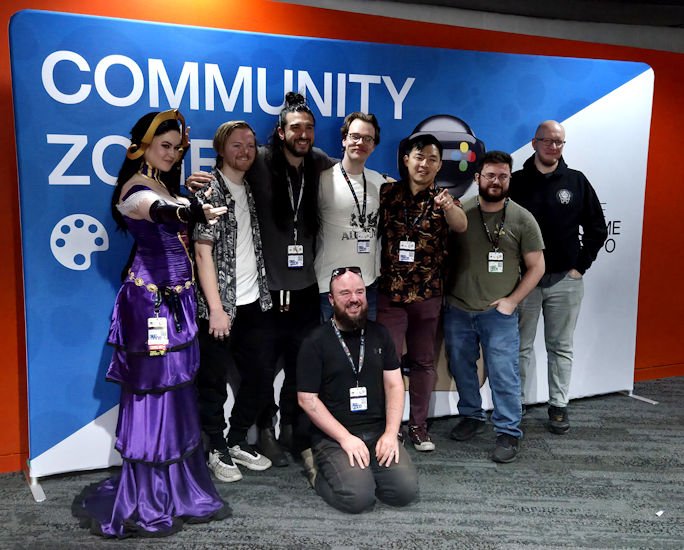
One of the biggest and most welcome surprises of the weekend was the Midnight Mana community event. Especially after feeling the lack of TCG presence elsewhere at TGX, this felt like stumbling into an oasis. Not loud. Not flashy. Just a small group of trestle tables outside of the main hall in the community group area.
It sat slightly apart from the main chaos of the expo, and honestly, that’s probably why it worked so well. This wasn’t about grabbing attention as people walked past. It was about pulling up a chair and staying a while. Conversations lasted longer. Games ran over time. People recognised each other, even if it took a few minutes to work out whether they knew each other from YouTube, Discord, or just vibes.
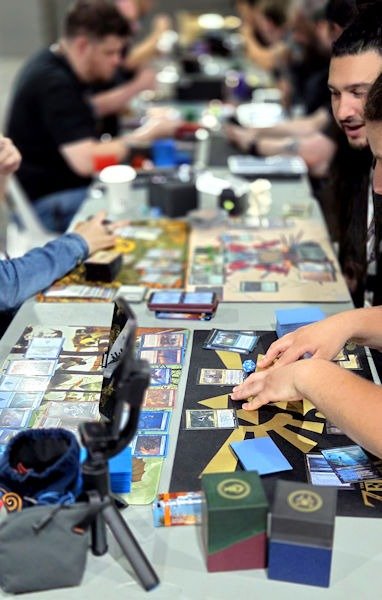
I went down planning to “have a look” and ended up actually playing Commander. Properly. Cards on the table, shuffling, laughing, misplays are immediately pointed out or advice given. It felt good to finally get that TCG fix in. Familiar, comforting chaos. Exactly what I’d been missing.
The atmosphere was incredibly welcoming. I hovered longer than I planned to, listening to deck talk, future ideas, and those beautifully unhinged tangents that only make sense if you’ve been part of the same community for long enough. No sales pitch energy. No pressure. Just people who genuinely care about the format, the game, and the community they’ve built around it.
Huge shout‑out to Logan and Phizzi, who were absolute legends for those few hours. Friendly, generous with their time, and clearly passionate about making sure everyone felt included, whether you were a regular or someone wandering in with a deck and a bit of hesitation. They also brought along some amazing special guests who jumped in and played with the community, which added an extra layer of excitement without ever feeling intimidating.
If you haven’t checked out the Midnight Mana YouTube channel, you really should. It’s Commander content that doesn’t take itself too seriously but still knows its stuff. And yes, the shock collar episode is exactly as hilarious as it sounds. Possibly more. I won’t spoil it, but it’s the kind of video that makes you pause, laugh, and then immediately send it to someone else.
Indies, Art, and a Talent Overload I Can’t Fully Explain
The indie games and Artist Alley at TGX felt like walking into a completely separate mini‑convention that just happened to be living inside the bigger one. You’d turn a corner, and suddenly the energy shifted. Quieter in some places. More focused. More personal.
On the games side, it was a great mix of video games and tabletop experiences. Pixel art next to hand‑drawn boards. Controllers beside decks of cards. Developers standing there, half‑excited and half‑nervous, watching you play something they’ve poured months or years into. Some booths were polished and confident. Others felt scrappy and charming. Both worked and added to the vibe.
I genuinely wish I could go into more detail here. I wish I could show you a million photos. Screens. Boards. Sketches. Smiling devs explaining mechanics with their hands. But I can’t, and honestly, I don’t need to. Ben already has several interviews lined up that dig properly into the games themselves, and I’d rather let him and the designers do that work justice.
Artist Alley sat right alongside it all, and that was dangerous in a completely different way. Homemade prettiness everywhere. Prints, stickers, pins, keychains, zines, plushies, things I didn’t know I needed until I saw them. Every table felt like someone’s personality laid out neatly in rows, except “neatly” isn’t really the right word. It was vibrant. Messy in a good way. Overflowing with creativity.
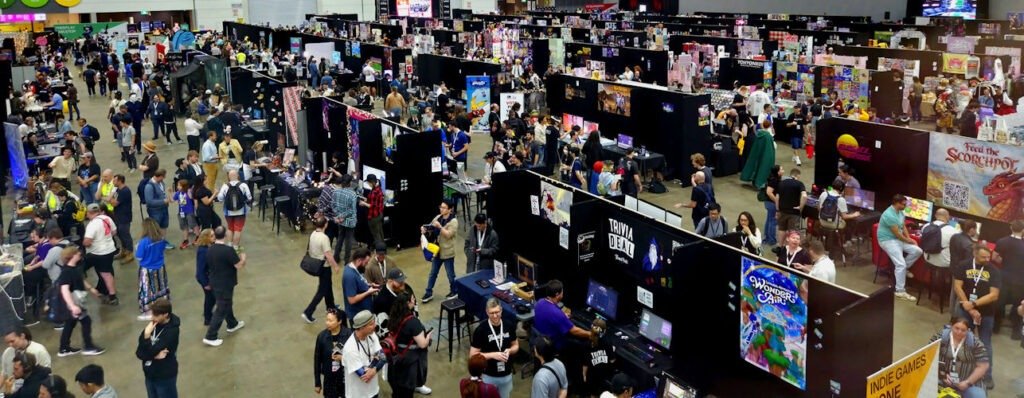
The best way I can describe it is this: if you want an artist‑style farmers market of talent, TGX has you covered. You wander. You browse. You stop longer than you meant to. You talk to someone about how they made a thing, then you buy it because now it means something more. Or you just see your favourite character or something cute, and you throw money at them without a word. There was no rush. No pressure. Just a constant feeling that you were surrounded by people who make stuff because they want to, not because they were told to. That kind of space is special, and TGX gave it room to breathe.
I didn’t walk out with everything I wanted. That’s probably for the best. But I walked out knowing that the indie and artist side of The Game Expo 2026 isn’t just filler between big booths. It’s a heartbeat. One I could have happily stayed with all day.
Tournaments & Esports: Not My Thing, Still Impressive
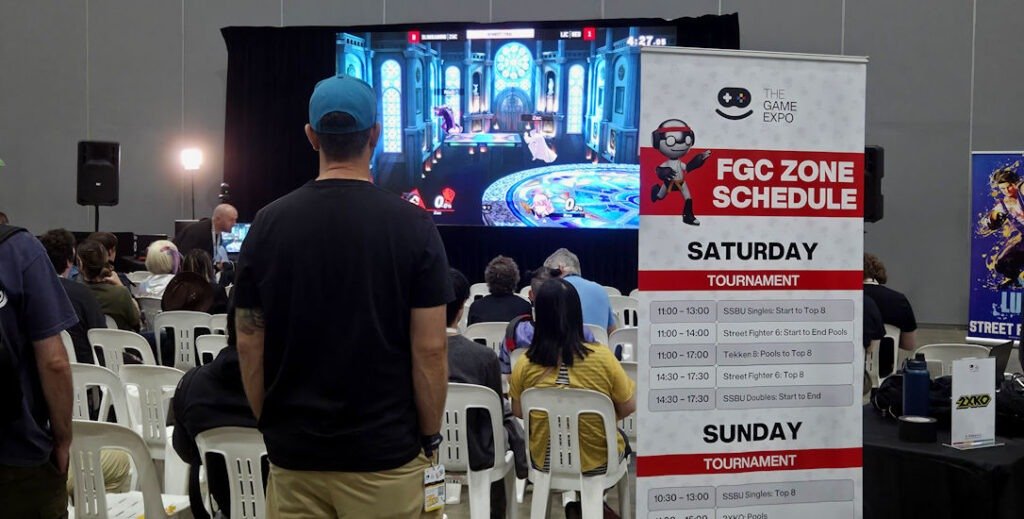
Tournaments and esports are a big part of TGX. You can feel that immediately. Big screens, tight crowds, people standing three deep just to catch a glimpse of what’s happening on stage. It’s loud, focused, and charged with that specific kind of competitive tension.
I’ll be honest, it’s not usually the part of an expo that pulls me in first. I appreciate it, I respect it, but I don’t naturally gravitate toward watching high‑level competitive play. That said, just because it doesn’t blow me away personally doesn’t mean it isn’t absolutely alive with excitement. I found myself stopping anyway. Mostly because everyone else had stopped.
There’s something magnetic about a crowd that’s fully locked in. You don’t even need to know what’s happening yet. You just follow the noise, the reactions, the sudden gasps and cheers, and suddenly you’re watching a Tekken match you didn’t plan on watching at all. And that’s where it clicked for me.
International commentator Brownman was on commentary, and he was exceptional. I know very little about Tekken beyond having played it a few times over the years and mostly button‑mashing my way through matches. But within minutes, I wasn’t lost anymore. He explained what was happening, why it mattered, and what to watch for, without ever talking down to the audience or drowning them in jargon. That balance is everything.
By the time the match wrapped up, I genuinely felt smarter. I understood more than I did walking in. I could follow the momentum shifts. I knew when something impressive had just happened before the crowd even reacted. That doesn’t happen by accident.
That’s when it really hit me why good commentary is so important for tournaments like this. Having someone who is deeply knowledgeable but can still simplify things for complete noobs like me is what turns a competitive match into a professional spectacle. It bridges the gap between the hardcore fans and the curious onlookers who just wandered over because something sounded exciting. You don’t need to know the game inside and out to enjoy it. You just need someone who knows how to bring you along for the ride.
I still didn’t suddenly become an esports die‑hard, but I walked away appreciating it more than I expected.
Final Thoughts: TGX 2026 Found Its Rhythm
By the time I finally stepped outside, feet sore, phone battery barely alive, brain full, I realised something quietly important had happened. TGX 2026 didn’t just meet my expectations; it reshaped them. This was my first The Game Expo in person, but it never once felt like a “first‑timer” experience or that this event was only an infant. It felt welcoming in that unforced way. Confident without being loud about it. Big, but not overwhelming. The kind of event that trusts you to find your own highlights instead of shouting at you about what’s important.
That confidence shows up everywhere. In the way the floor flows. In how easy it is to wander off and accidentally lose an hour. In a way, nothing feels rushed, even when the place is busy. You’re allowed to slow down. To double back. To stop because something caught your eye and you weren’t ready for it yet.
There were obvious highs. The keyboard section alone could’ve eaten an entire day if I’d let it. The indie games and Artist Alley felt like their own mini‑convention living inside the bigger one; a pocket of creativity that felt personal, human, and deeply talented. It wasn’t filler between big booths. It was a heartbeat. One I could’ve happily stayed with all day, talking to creators, buying things I didn’t plan to, and wishing I could show you a thousand photos instead of just describing it.
The retro area reminded me why old hardware still matters. Why playing games the way they were originally meant to be played just hits differently. It wasn’t nostalgia for nostalgia’s sake. It felt alive. Loud. Slightly stubborn. Exactly like the consoles themselves.
Even areas I don’t usually gravitate toward surprised me. Esports and tournaments aren’t normally my thing, but watching a Tekken match with proper, thoughtful commentary pulled me in more than I expected. I didn’t walk away a die‑hard, but I walked away understanding more, and that matters. TGX didn’t need to convert me. It just needed to make me care for a few minutes, and it absolutely did.
There were gaps, too, and it’s worth being honest about that. The lack of TCG exhibitors was genuinely disappointing. It felt like something was missing, especially for an event that thrives on community. But even there, TGX showed its strength. Cost Plus Games stepped up. Midnight Mana stepped up. The community filled the space where the floor plan didn’t.
And maybe that’s the real takeaway.
TGX 2026 feels powered by people. By passion. By creators, players, artists, developers, organisers, and attendees all pulling in roughly the same direction. It’s not perfect, and it doesn’t try to be. It’s alive. A little chaotic. Occasionally dangerous for your wallet. Exactly how a gaming expo should feel.
I walked into TGX excited. I walked out tired, inspired, slightly poorer, and already thinking about next year. And honestly? That feels like the best possible outcome.




3 Comments
[…] a very specific moment at The Game Expo before the doors open and the crowds roll in, tables are neatly set, dice are perfectly stacked, […]
[…] There’s a particular kind of focus that settles over a designer’s table long before anyone even whispers the words “final box art.” It’s quiet but not really silent, the scratch of a pencil trying to fix a mechanic that almost worked, the soft rumble of a playtest group arguing over whether a rule should stay or go. I always find that energy strangely comforting. It’s the same feeling I had when I sat down with Harry Metcalf, the creative mind behind Doopy Games, at The Game Expo. […]
[…] is a specific rhythm to the first day of The Game Expo. It’s the sound of hundreds of mechanical keyboards clacking in unison, the low hum of PC fans, […]
Comments are closed.