
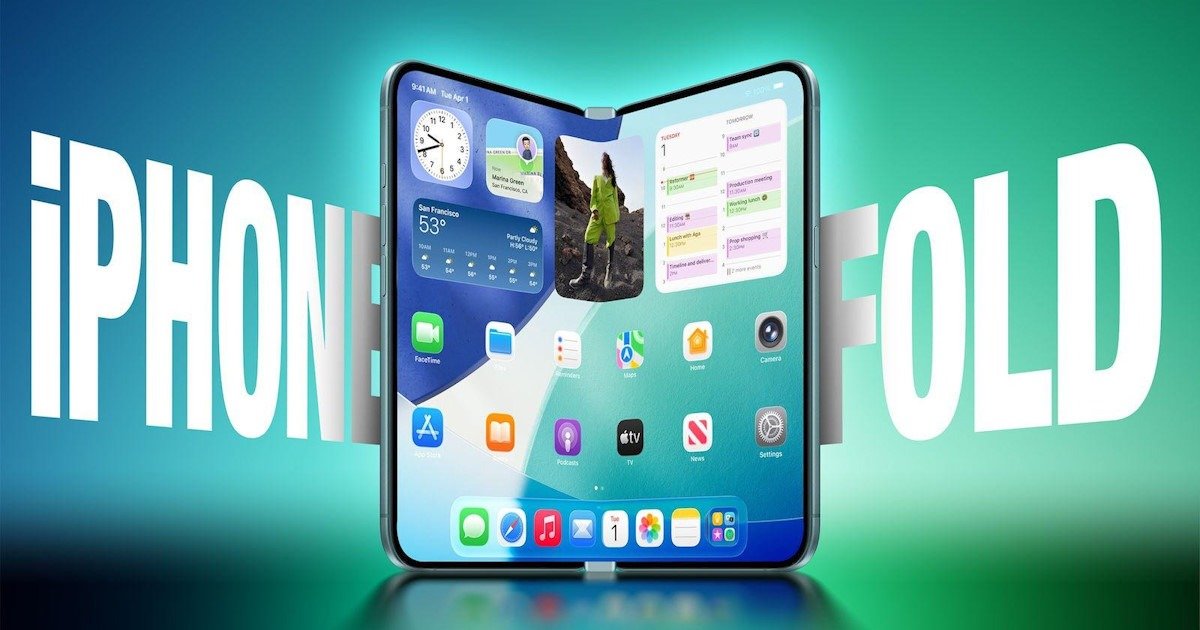
If you thought Apple was slowing down, think again. A wave of major leaks, spanning internal iOS 26 code to detailed supply‑chain reports, has now surfaced.
And honestly, it all feels a bit surreal. I’ve been following Apple rumours for years, probably too closely, if I’m being truthful, and even I had to reread some of these details because they seemed almost… un‑Apple. Or maybe this is Apple now. Hard to say. There’s a sense that the company is shifting gears, maybe even trying to outrun a narrative that it’s become too predictable.
The Fold, in particular, keeps tugging at my attention. Not just because it’s Apple’s first real attempt at entering a category everyone thought they’d written off, but because the pieces keep lining up in ways that are hard to ignore. The display manufacturing timelines, the hinge durability tests leaking from factories, the software hooks buried deep in early iOS 26 builds; it’s all pointing in one direction. I can’t help thinking that Apple has wanted to do this for years and only now feels the tech is finally catching up to the vision. Or maybe they were just waiting for Samsung to stop breaking screens. Who knows.
What’s interesting is how this sits alongside the rest of the 2026 and 2027 roadmap. It isn’t just a single flashy product launch; it feels like part of a broader repositioning. The regular iPhone line is getting reshuffled in a way that almost implies Apple’s preparing us for a world where the “main” iPhone isn’t the one most people buy anymore. It’s subtle, but you can see the outline if you tilt your head a bit.
And then there’s the robotics angle, which still feels almost too strange to be real. Every time I read another report about Apple prototyping some kind of home assistant on wheels, I picture the company trying to replace that quiet, helpful friend in the corner who never complains. I’m not sure how I feel about that yet. Part of me is curious, like, genuinely curious, but another part wonders if this is Apple searching for its next big “thing” a little too aggressively.
Still, taking all of this together, 2026 and 2027 are shaping up to be far more unpredictable than I expected. I’m not convinced Apple has every detail locked in, and I suppose that’s fine. Plans shift. Products slip. But the overall direction? That seems set. And if the Fold lands anywhere near the way these leaks suggest, we’re in for an interesting couple of years.
2026: The Year of the “iPhone Fold”
It’s strange to finally say this out loud, but 2026 is shaping up to be the year the foldable iPhone stops being a rumour people joke about and actually turns into a real thing. For so long, it felt like one of those tech myths that refuses to die, mentioned everywhere, seen nowhere. But now the leaks are lining up in a way that’s hard to brush off. There’s a sense that Apple isn’t just testing ideas anymore; they’re actually preparing to ship something.
The device, internally called V68, is going for a horizontal fold. I’ll admit I wasn’t expecting that. Apple usually waits until a trend stabilises before they commit, and yet here it is skipping the whole “flip phone nostalgia” movement altogether. Instead, the Fold aims to look and feel like a regular iPhone at first glance, then quietly open into this big 7.8‑inch screen that almost feels oversized when you picture it. The outer display being just 5.3 inches gives it a compact look, maybe even too compact depending on your hands, but Apple seems oddly confident about the proportions. Wider than tall when open is going to look a bit unconventional, though. I keep trying to imagine that shape and coming up with different answers each time.
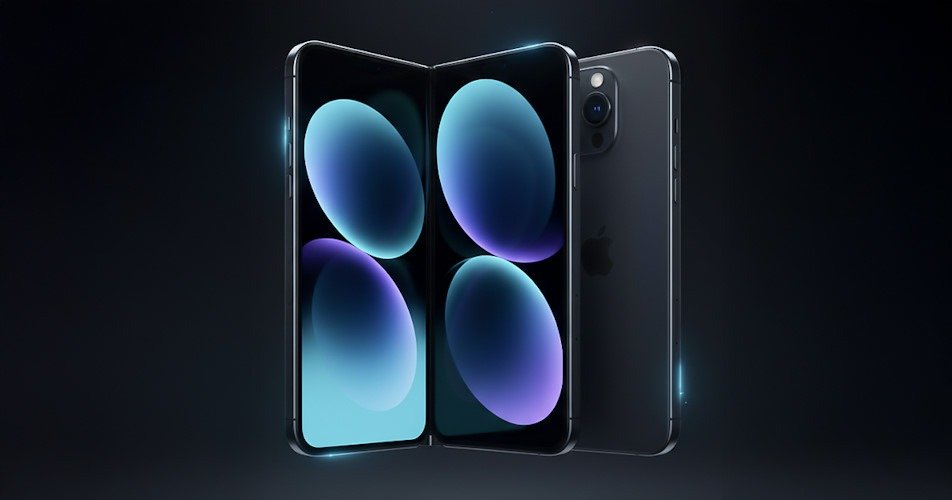
As for the core hardware details, here’s what the leaks keep circling back to:
- The Return of Touch ID – One of the more unexpected twists. Instead of trying to cram Face ID into a foldable setup, which, honestly, sounds like a nightmare to engineer, Apple is reportedly bringing back Touch ID. Probably a practical decision more than anything philosophical. I get the feeling they’d rather avoid fighting the limitations of a bending display.
- Hybrid Construction – The Fold’s frame is said to use an aluminium‑titanium blend. It’s an unusual combination for an iPhone, but it does make sense. Foldables have a reputation for feeling fragile or overly heavy, and Apple seems determined to dodge both of those. The hybrid casing feels like their attempt to find a middle ground between strength and weight.
- Camera Compromises – This is where some people might raise an eyebrow. Instead of the Pro-level triple camera system, the Fold is expected to stick with two 48MP lenses. Not exactly a letdown, but noticeable if you’re used to the full array. On the flip side, having 18MP selfie cameras on both the inside and the outside feels genuinely practical, especially if you open the phone mid‑call and suddenly need the other camera to pick up.
- Premium Power – Internally, the A20 Pro on TSMC’s N2 process is shaping up to be the real powerhouse here. I get the impression Apple wants the Fold to double as a showcase for whatever they’re doing with on‑device AI and the much‑talked‑about Siri overhaul. It’s the kind of chip you give a device when you’re trying to prove a point.
All up, the iPhone Fold looks like a mix of bold choices and cautious engineering. Some parts feel experimental, others extremely Apple. And maybe that’s why 2026 feels like the year this finally happens, they’ve reached a point where the risks feel manageable, or at least manageable enough to ship something new without apologising for it upfront.
Other 2026 Highlights:
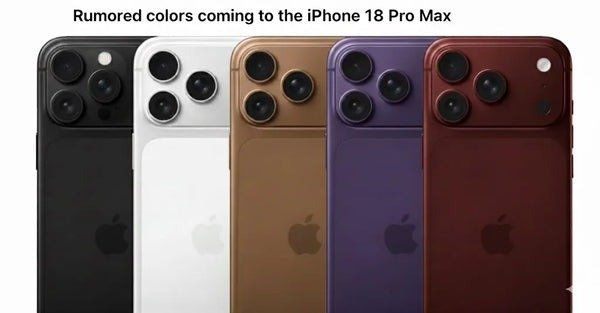
- iPhone 18 Pro & Pro Max – These models are expected to finally retire the Dynamic Island. Apple’s reportedly shifting to under‑display Face ID, which should leave just a small cutout for the selfie camera. It’s another step toward that long‑promised “sheet of uninterrupted glass” look they keep chasing. I’m curious how noticeable the cutout will be, but I guess we’ll find out.
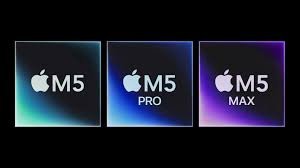
- The M5 Transition – The M5 rollout is set to hit the MacBook Air, Mac mini, and Mac Studio next year. The big talking point is the redesigned GPU, which is supposedly capable of roughly four times the peak compute performance of the M4. That number sounds almost too high at first, but Apple has pulled off surprising jumps before, so I’m trying not to read too much into it yet.
- Home Hubs – Apple is also rumoured to be working on a pair of new smart home hubs, one that mounts to a wall and another that sits on a base, more like a small display. Both are said to run a fresh platform called “homeOS.” It’s still a bit unclear how ambitious Apple is here, but the idea of them taking home automation more seriously feels long overdue.
2027: The 20th Anniversary “iPhone 20”
If 2026 is Apple spreading its wings, then 2027 feels more like the company looking in the mirror and deciding it wants to make a statement. It’s the 20th anniversary of the original iPhone, after all, and Apple seems ready to lean into the moment. The plan, at least based on what keeps surfacing, is to skip the “19” entirely and go straight to iPhone 20. There’s even a whisper or two about “iPhone XX,” which sounds dramatic but also very Apple if they decide to get sentimental with Roman numerals again.
The phone itself is described as a pretty bold redesign. Curved glass on every edge, almost like the device is quietly melting into your hand, and a display that finally drops every last trace of a bezel. By 2027, the selfie camera is expected to sit under the screen too, which makes the idea of a true all‑screen iPhone feel less like a concept video and more like a real product someone might actually buy. I’m still not sure how invisible that camera will be, though; some under‑display systems still show a faint outline if you catch them in the right light. Maybe Apple has found a way around that. Or maybe we’ll just learn to ignore it.
What really stands out is how this fits into the broader lineup strategy Apple is building toward. By the end of 2027, things look… well, a bit scattered, though maybe “specialised” is a kinder word. Seven distinct models, each with its own angle:
- iPhone 18e: A simple, budget‑friendly option dropping in spring.
- iPhone 18: The mainline model, also moving into the spring window.
- iPhone Air 2: A very thin, lighter design with dual cameras—it feels like Apple’s way of testing how far they can push minimalism.
- iPhone 18 Pro: The usual high‑end anchor.
- iPhone 18 Pro Max: The everything-but-the-kitchen-sink version.
- iPhone Fold: Positioned almost like a luxury productivity device rather than just another phone.
- iPhone 20: The anniversary centrepiece, the one Apple wants people to remember.
It’s a broader spread than we’re used to, and honestly, a little chaotic at first glance. But the longer I stare at it, the more it feels like Apple is preparing for a world where different customers want very different kinds of iPhones, and the company is finally okay with that.
Beyond the Phone: AI Glasses and Robots
It’s pretty clear Apple isn’t stopping at phones or even trying to pretend the future is limited to what fits in your hand. They’re starting to look at, well, everywhere else; your face, your desk, your living room. It feels a little strange to see all these ideas appear at once, but maybe that’s just where the industry is heading.
- AI Smart Glasses – After watching the Meta Ray‑Ban glasses quietly turn into a hit, Apple seems to have shifted direction. The bulky AR headset experiments are still happening somewhere in the background, I’m sure, but the attention now seems to be on something lighter and more wearable. The plan, if the timelines hold, is for a pair of AI‑powered glasses sometime in 2027. They’ll probably lean heavily on an upgraded Siri and tight iPhone integration. I keep trying to picture Apple making something subtle enough that people would actually wear it outside, and honestly, it’s not impossible anymore.
- The Tabletop Robot – And then there’s the rumour that still makes me pause every time I read it: a home robot with an attached iPad‑sized display on a movable arm. The whole thing supposedly swivels and tilts to keep you in view during calls, almost like a very polite robot trying not to lose sight of you. It’s unusual for Apple, maybe even a little whimsical, but also just plausible enough that I can’t dismiss it.
The Verdict
Apple has never claimed to invent the categories it ends up dominating. They refine things—sometimes aggressively, sometimes slowly, until the final product feels inevitable. The next two years look like an extension of that pattern, but with more experimentation than we’ve seen from them in a long time. Whether you’re interested in a foldable device, a super‑thin Air-style phone, or something that looks like a piece of futuristic glass art, it feels like Apple is preparing to try a bit of everything.
So now I’m curious: what kind of Apple phone are you hoping to see in 2026?




Recent Comments