
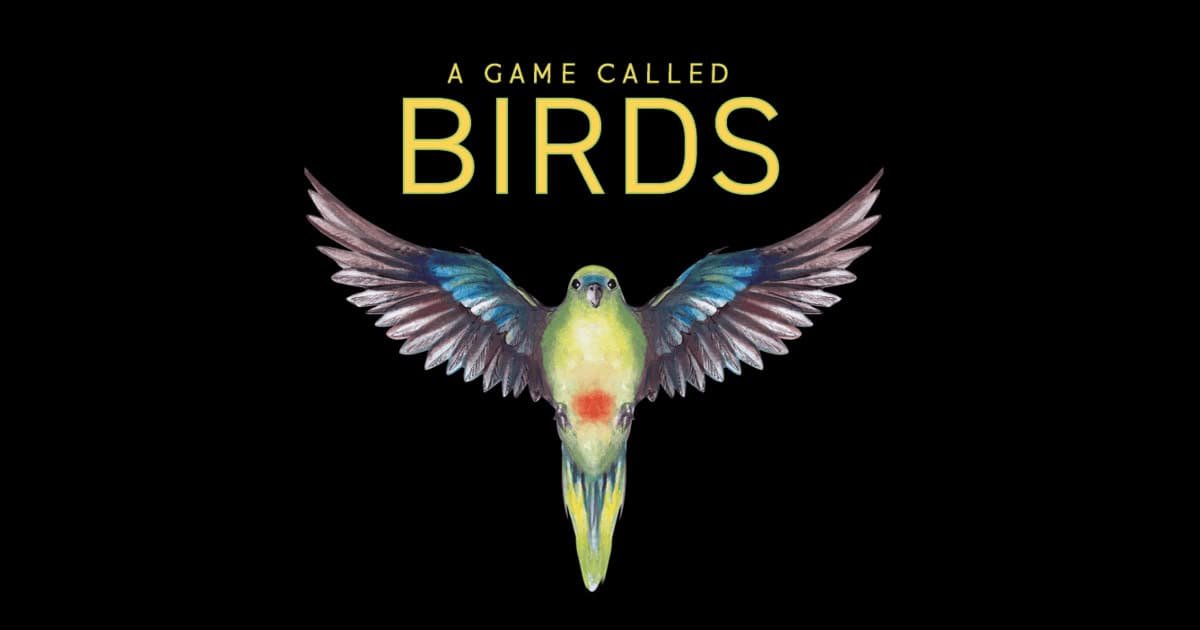
A new Australian-designed board game landed on my table recently, Edition 2, to be specific, courtesy of the publisher. It’s the work of Chris Bury, Corey Graham, Julia Stone, Leigh Ellis, and Thomas Friend. And while I’ve played my fair share of nature-themed games, this one stood out for a few reasons. Some good. Some… less so.
The Cards: Colourful, Local, and Textured
The game includes 104 cards, featuring 69 unique Australian birds and of which 12 are Tasmanian endemics, dubbed “Power Birds.” The rest are duplicates, which makes sense for gameplay balance. Each card has two values: TWITCH (T) and FIGHT (F), which are used throughout the game’s various modes.
The cards themselves are nicely done. Good texture, bright colours, and clear print. They feel durable, which is always a plus when you’re shuffling constantly. And the photography? Genuinely lovely. Real birds in the wild, with each photographer credited on the card, is a thoughtful touch. The extinct Tasmanian Emu is AI-generated, which… well, fair enough. There aren’t exactly photos of that one lying around.

The Board: Circular, Strategic, Slightly Familiar
The board, while square shaped has a circular thematic, with a double-ringed score track running around the edge. It’s cleanly laid out, and the standout feature is the spinner—a Wedge-Tailed Eagle that determines whether TWITCH or FIGHT is used in a round. It’s a clever integration, both visually and mechanically. The spinner feels satisfying to use, and it’s a nice use of space.
There are also tiles on the score track that includes in game effects—some helpful, some annoying. Land on the wrong one and you might lose progress; hit a good one and you get a bonus. It’s a mechanic that feels a little Monopoly-esque, right down to the “jail” equivalents on tiles 10 and 50. Personally, I found this part a bit too familiar. More on that later.

Four Levels of Play
The game scales in complexity across four modes: Flapping, Flying, Gliding, and Soaring. Each adds a new mechanic or scoring layer. We played through all four in one session, gradually increasing the difficulty to see how each level changed the feel of the game.
- Flapping – This is the simplest mode. Players play two cards face-up, one at a time. The highest combined TWITCH or FIGHT score wins the round, depending on the spinner. Power Birds trigger effects immediately when played. It’s straightforward, but maybe a little too luck-driven.
- Flying – Here, things get more interesting. Cards can be played face-up or face-down. The Up/Down icon on the card determines play order, and players must declare either TWITCH or FIGHT when placing a card face-down. If the next player matches that value, they get a bonus move. Power Birds played face-down resolve at the end of the round. This added a bit of bluffing and timing, which we liked.
- Gliding – This level introduces the Roost—a face-down card from the deck that resets the Up/Down order mid-round. Players can choose to take the Roost at the end, but only the last player knows both cards’ values. It adds a layer of risk and reward that feels fresh.
- Soaring – The final layer adds “Feathering,” a set-collection mechanic. You try to build runs of numbers (like 2-3-4 or 5-6-7) using your cards and the Eagle spinner. One quadrant of the spinner disables Feathering for that round, which can be frustrating, but also forces you to adapt. It’s the most complex mode, and while it added depth, it also slowed the game down a bit.

![]() Our Playthrough: Mixed Reactions
Our Playthrough: Mixed Reactions
I played this with my regular gaming group, some casual players, some board game designers. We appreciated the artwork and the effort that went into the bird selection. The Power Birds added a nice thematic twist, and the spinner was a hit. It’s tactile, and it gives the game a bit of personality.
But not everything landed.
We found the early levels too reliant on luck. You’re often just playing your highest cards and hoping the spinner goes your way. That’s fine for casual play, but it didn’t leave much room for strategy. The later levels, especially Gliding and Soaring, introduced more interesting decisions, but also more complexity. Sometimes it felt like the game was trying to do too much at once.
And the board tiles? We ended up ignoring them. They felt tacked on, like a mechanic borrowed from another game that didn’t quite fit here. It made the game feel more like Monopoly than we wanted, and not in a nostalgic way.
Final Thoughts
This is a game with heart. It’s clearly a passion project, and there’s a lot to admire from the photography to the layered gameplay modes. The community around it seems strong too, with events like the “Tawnies” and multiple editions showing that it’s evolving.
But for my group? It didn’t quite click. We tend to prefer games with tighter mechanics and less randomness. That said, I can absolutely see this working for families or casual groups who want something light but with a bit of depth to grow into.
I’d give it a solid 3 out of 5. Not for me, but not without merit. And if you’re into birds, or just want something a little different on game night, it might be worth a spin.



Recent Comments