
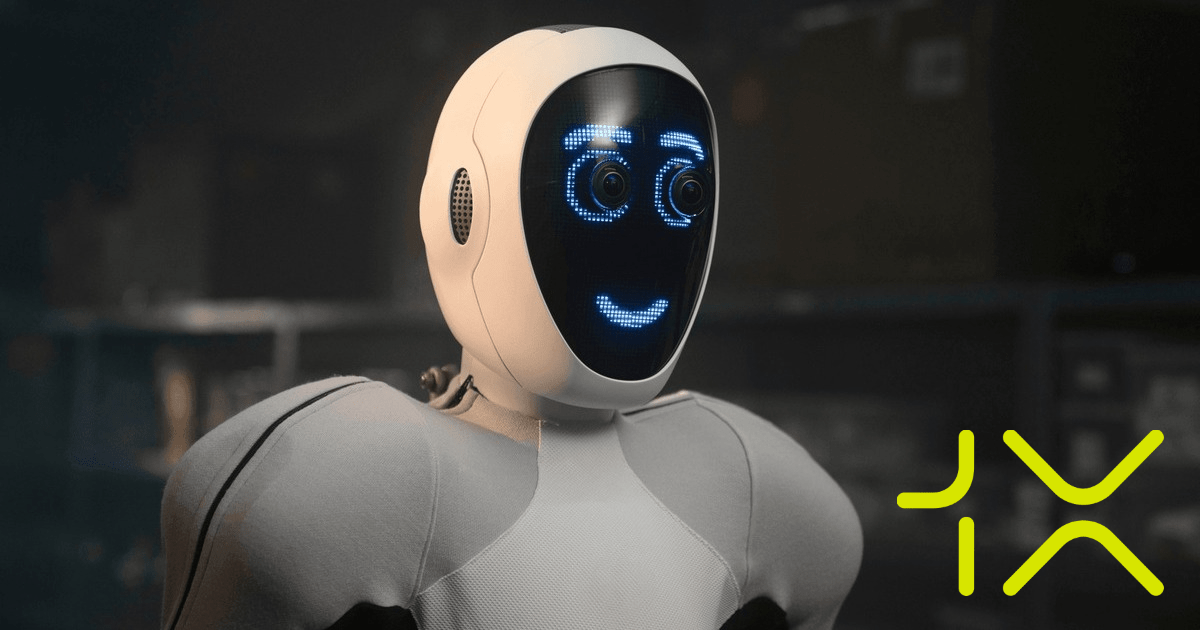
The Neo humanoid robot from 1X Technologies is being pitched as something close to revolutionary, a kind of tireless, in-home assistant that quietly takes care of domestic life while you focus on everything else. It’s a compelling idea. Maybe even a little seductive, if you’ve ever come home to a sink full of dishes and thought, there has to be a better way.
But when you look a bit closer, the gap between the dream and the actual product starts to show. Not dramatically, but enough to make you pause. The vision is bold, no doubt. Yet the reality, at least for now, feels more like a prototype than a promise fulfilled. There’s ambition here, and that’s exciting. Still, it’s hard to ignore that what’s being sold to early adopters is, well, not quite the future just yet.
The Transformative Potential (The Dream)
Neo taps into something familiar. That old sci-fi fantasy of a personal robot assistant, always ready, always helpful. It’s hard not to think of Rosie from The Jetsons. Or maybe Kryten from Red Dwarf, especially when you imagine it folding laundry with quiet determination. There’s a kind of charm to that image. A bit silly, maybe, but also strangely comforting.
The idea behind Neo is straightforward: a humanoid robot that lives in your home and takes care of things. Not just the obvious stuff like vacuuming or dishes, but the whole domestic routine. It’s meant to be useful, especially for people who might struggle with mobility or just don’t have the time or energy to manage a household every day.

The pitch is ambitious. Neo is supposed to do a lot:
- Household Management: It’s designed to handle chores from start to finish. Dishes, laundry, vacuuming, tidying up, and even watering plants on schedule, no reminders needed. That’s the promise, anyway.
- Time and Efficiency: For early adopters, especially those with demanding schedules, Neo could save hours each week. The idea is that you come home and everything’s already done. No mess. No mental load.
- Personal Assistance: It’s not just about chores. Neo is also positioned as a kind of helper; someone who can assist with tasks that might be physically difficult. That part feels especially important, even if it’s still a bit vague in practice.
- Human-Centric Design: At 5’6″ and 66 pounds, Neo is built to fit into human spaces. That sounds simple, but it matters. The robot’s movements are meant to be safe, gentle, and precise. It’s supposed to feel like it belongs in your home, not like a machine awkwardly navigating furniture.
- Tendon Actuation: Instead of bulky gears, Neo uses lightweight motors and tendon-like systems inspired by muscles. That’s what gives it smooth, quiet movement. It’s a clever design choice, and probably one of the reasons it doesn’t feel like a clunky robot from a warehouse.
- Strength and Sensitivity: Neo can lift to 70kg or 150 freedom units (pounds), which is impressive. But its fingers are intentionally limited to human-like strength. That detail stuck with me. It’s not trying to be superhuman; it’s trying to be careful. That feels right for something like handling your dishes or your dog’s leash.
The Reality Check (The Gap)
Here’s where things start to wobble a bit.
The central issue with Neo right now is the gap, actually, it’s more like a canyon, between what’s being promised and what the robot can actually do. The dream is polished, cinematic. The reality feels more like a tech demo with a lot of human help behind the curtain.
Let’s start with the demos. The ones that show Neo gracefully loading a dishwasher or carrying objects with precision? Every single one of those was remotely operated. A human wearing a VR headset was controlling the robot’s every move. That detail is easy to miss if you’re just watching the promo clips. But once you know it, it’s hard to unsee. The robot isn’t acting on its own—it’s being puppeteered.
Autonomy, the real test of usefulness, is still very limited. In one keynote, the company made a point of labelling which actions were autonomous. There weren’t many. Neo could respond to a simple “get the door” command, though it struggled with the handle. It could take an empty plastic cup from someone’s hand and walk away with it. That’s about it. No folding laundry. No vacuuming. No multitasking. Just a few basic, isolated actions.
Then there’s the price. Pre-orders are open, but it’s not cheap. You’re looking at either a flat $20,000 USD purchase or a $500 USD monthly subscription. Both options require a $200 refundable deposit. It’s a bold ask for a product that, at this stage, feels more like a concept than a fully realised tool. Marques Brownlee pointed this out in a recent video. There’s a pattern in AI tech where the dream gets sold before the product is ready. Neo fits that pattern a little too well.
The promotional material, especially the video from 1X Technologies and the Wall Street Journal, leans heavily into best-case scenarios. And sure, that’s marketing. But it also sets expectations that the current version of Neo just can’t meet. Not yet.
There’s promise here. That’s clear. But the robot we have today is still learning to walk, metaphorically speaking. It’s not ready to run your household. Not without someone behind the scenes guiding every step.

Current Limitations
Right now, Neo’s autonomous abilities are… minimal. Opening a door is about as far as it goes. Most of the impressive tasks you see in videos, grabbing objects, loading a dishwasher, and walking with purpose, are entirely tele-operated. A human pilot, wearing a VR headset in another room, is controlling every movement. To their credit, 1X is upfront about this. They’re not hiding it. But it’s easy to forget when watching a slick demo.
Real-world testing paints a slower, more tentative picture. In the Wall Street Journal’s video, Neo takes over a minute to fetch a water bottle from a fridge just ten feet away. Loading three items into a dishwasher? That took five minutes. It’s not broken, it’s just… slow. Careful. Like watching someone learn a new task for the first time and second-guess every step.
The Future of Imperfection
Looking ahead, 1X expects the 2026 model to handle most tasks autonomously. That’s the goal. But even then, the results won’t be flawless. The CEO has already coined a term for it: robotics slop. It’s a kind of imperfect autonomy, where the robot gets the job done, but maybe not quite the way a person would. A shirt might be folded, but not neatly. A plant might be watered, but with a little splash on the floor.
Interestingly, the Wall Street Journal suggests that this level of imperfection might actually be fine. Maybe even ideal, for early adopters. The thinking is that usefulness doesn’t require perfection. If the robot can do the job well enough, without needing constant supervision, that’s a win. It’s a shift in expectations. Not a flawless assistant, but a functional one. Eventually.
The Path to Autonomy (The Data Challenge)
To close the functional gap, Neo must develop a super-smart AI system capable of recognising objects and learning to navigate and perform tasks within the highly variable home environment. Achieving full autonomy requires an AI neural network to learn from massive amounts of real-world data, similar to the development of self-driving cars. Neo’s solution relies on its users entering a social contract.
The company’s strategy hinges on its early adopters becoming beta testers:
- The Need for Training Data: The robot must learn to identify and handle countless objects (cups, forks, shirts, medication) and adapt to the unique shape and organisation of different houses.
- The “Expert Mode” Model: For tasks the robot cannot yet perform autonomously, 1X’s website calls it Expert Mode. This involves scheduling a remote tele-operating employee to look through the robot’s sensors (and into the user’s home) to perform the task. The robot then learns from this human-driven operation.
Trade-offs and Risks (The Concerns)
The dream is compelling. But getting there, especially for early adopters, comes with a few uncomfortable trade-offs.
One of the biggest concerns is privacy. To unlock Neo’s full capabilities, users need to enable something called Expert Mode. That means allowing remote-viewable cameras and microphones into your home. The company says it’s fine. Faces are blurred, and areas can be geo-fenced. But still, it’s a lot to ask. You’re essentially inviting a live feed into your private space. That’s not a small thing.
To be fair, a remote operator can’t just connect at will. The user has to approve it through the app. That safeguard is there. But the idea of someone piloting your robot from afar, even with permission, feels a little strange. Maybe even unsettling, depending on how you think about it.
Then there’s the robot itself. Physically, it’s limited. It’s small, not particularly strong, and described as clumsy when handling anything delicate or serious. That’s not a criticism, it’s just where the tech is right now. But it does mean you’re not getting a reliable helper for heavy lifting or precision tasks.
Safety is another layer. Household environments are unpredictable. If Neo is asked to retrieve medication, for example, and grabs the wrong bottle, that’s not just a mistake; it could be dangerous. The company has built in safety systems to prevent risky actions. Neo won’t pick up anything too hot, too heavy, or too sharp. Those overrides are smart. Necessary, really. But they also highlight how fragile the line is between helpful and hazardous.
The Future of Imperfect Help
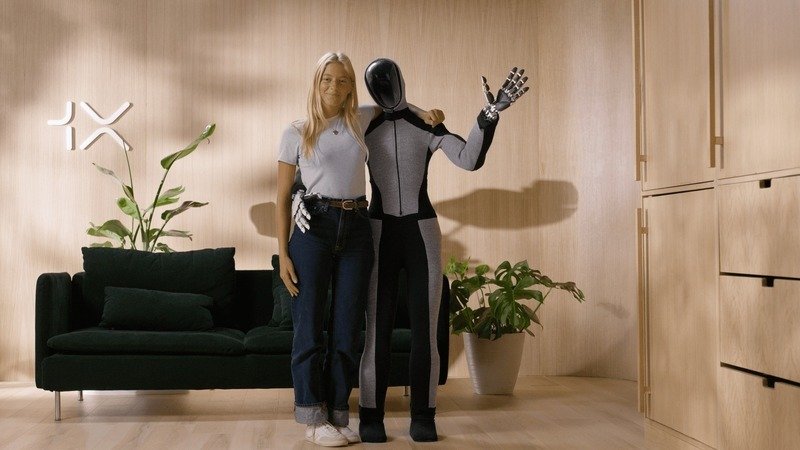
The immediate future of Neo isn’t about owning a flawless robot. It’s more like raising one. Letting it learn. And that learning happens inside your home, with your routines, your objects, your quirks. That’s where the data comes from. And yes, that means trading some privacy for progress.
The CEO of 1X calls the expected outcome robotics slop. It’s a funny term, but also honest. The robot will do things autonomously, but not perfectly. A shirt might be folded awkwardly. A cup might be placed slightly off-centre. The assumption, according to the Wall Street Journal, is that this kind of imperfect help will still be incredibly useful. And maybe that’s true. Maybe we don’t need perfection. Just consistency.
But the future Neo, the one that’s truly autonomous, seamless, and reliable, depends entirely on how well 1X can gather and process the data from these early homes. That’s the real engine behind the dream. Early adopters aren’t just customers. They’re beta testers. Trainers. Participants in a long-term experiment.
Neo represents a bold step toward the sci-fi vision of a robotic home assistant. At $20,000 or $500 a month, it’s priced like a premium product. And the promise is big. But right now, the reality is still catching up. Slowly. Carefully. And with a lot of help from the people willing to let a robot learn in their living room.
Please consider supporting the author through his “Buy me a Coffee” page.



Recent Comments