
Another PAX means another incredible opportunity to connect with the creative minds shaping the games we love. This year at PAX AUS 2025, I had the pleasure of catching up with the brilliant team behind Storybrewers Roleplaying, a studio known for crafting deeply narrative-driven, emotionally resonant tabletop experiences.
Amid the buzz of the show floor, I managed to steal a few precious minutes with Hayley to dive into their latest projects, explore what’s new in their lineup, and talk about the unique design philosophy that keeps Storybrewers at the forefront of indie roleplaying innovation.
Ben: How’s things going here at Pax?
Hayley: Going great. I love this because it’s one of the rare opportunities you have to actually talk to the people who are playing your games. I love, when people come back and they’re like, oh, I believe this. What else have you got? It’s such a good vibe.
The thing I like about Storybrewers is that you’re not a Dudgeons and Dragons type role role-playing. For someone new, how would you describe your games?
Our three themes are that our games are emotional, collaborative, and evocative. What that means is our games tend to be about the feels, whether that’s like romance drama feels or whether it’s tragic space feels, and we make all our games our custom for the system and the theme that they are talking about.
The theme and the game really reflect each other.
I noticed that with saltfish and almanacs. I liked that it was based around a story development and how you add onto the story as you’re playing the game (see our review – https://dezdoes.com/saltfish-and-almanac-a-richly-crafted-merchants-tale/)
That’s the whole thing.
Is there anything new this year that you’re doing, you’re brought her to PAX?
Our latest release only came out a few weeks ago, and it is a solo epistolary game, with a regency theme. The idea with this one is letter writing. Basically, you receive letters during the game, and you reply to them.
It’s a bit of a bittersweet family drama where some family secrets get unravelled along the way as well.
Is it a replayable type of journey, or is it a one-off?
The solo version takes you through the story, in contrast to other games, which are really replayable. There’s a two-player variant that’s replayable.
We’re about halfway through the whole weekend. We’ve had a little bit of an emergency earlier where we all had to evacuate for a bit. But how’s it all going?
It’s always a bit of a different experience, depending on where we are. Originally, we were in the tabletop hall. Now we’re in the video games hall. You get a different crowd coming through, which is interesting to see that the different halls have a different vibe. People are interested in different games compared to other locations. It’s curious to see.
What else is on the horizon?
We have a project called Castles in the Air, which was meant to be here, actually, but unfortunately got delayed due to logistical issues. It will be here next year. It’s basically a Gilded Age, coming of age game about growing up and then when you grow up, how your life goes. Based on the foundations of Good Society, but it’s very much a long span of time story as well.
Good Society is the Jane Austen-themed RPG?
Yes, we have that here as well.
Thanks again, Hayley.
Thank you so much.
Catch you next time.
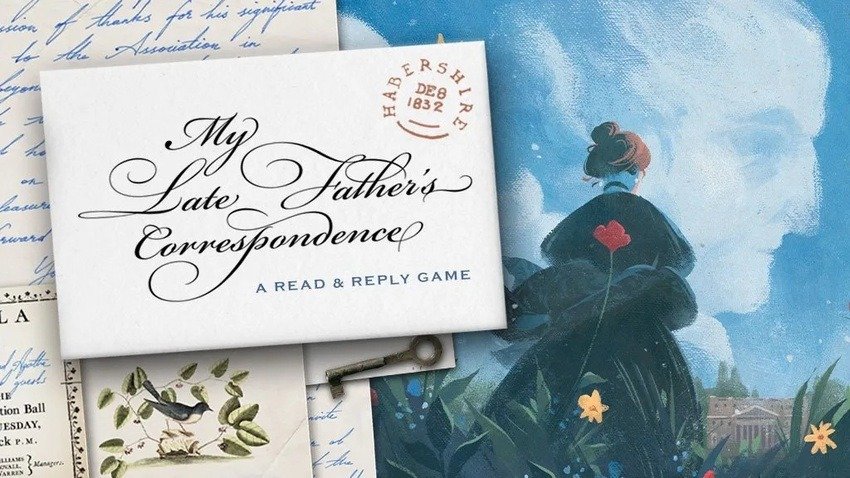
My Late Father’s Correspondence
My Late Father’s Correspondence is an Epistolary Roleplaying Game (RPG) of bittersweet family drama, designed for 1 to 2 players and is described as beginner-friendly.
- Genre: Historical Drama, Epistolary (story told through letters), Contemplative.
- Setting: 1832.
- Gameplay: Players take on the role of the younger child of the recently deceased Col. Thomas Lockley. The core mechanic involves the player receiving, reading, and writing replies to the letters that continue to arrive at Eadly Hall.
- Narrative Focus: The game centers on the player learning about their late father, who had a difficult and distant role in their life, uncovering family secrets, and navigating their changing place in the world due to the pressures of duty and expectation.
- Pacing: The game is structured so that the story unfolds over time as new letters arrive. It can be played at a contemplative pace over days or weeks of real-life time, or “binged” like a drama series.
- Components: The game features over 70 pages of painstakingly compiled handwritten letters and documents. These documents are historically researched, including details like ink colors, stationery, and postmarks, to fully immerse the player in the 1832 setting.
The game is recommended for those who enjoy historical or interactive fiction and are looking for an immersive literary experience rooted in the struggles of day-to-day life and quiet tragedy, rather than mysteries or occult secrets.
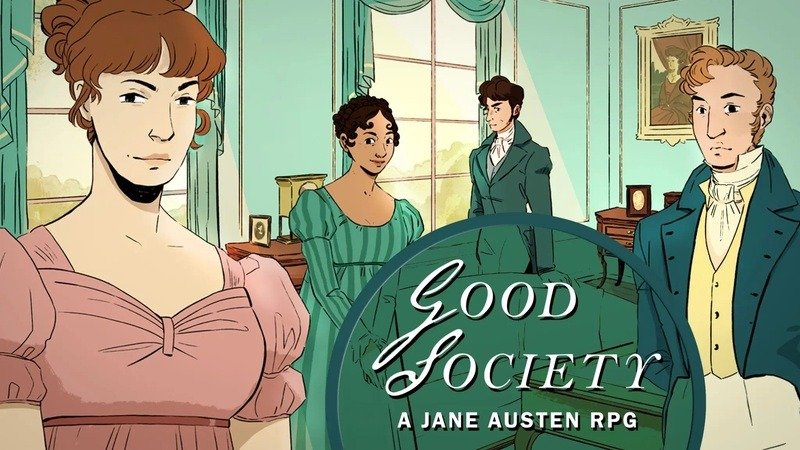
Good Society
Good Society is a collaborative tabletop Roleplaying Game (RPG) that aims to capture the romance, scandal, and social intrigue of Jane Austen’s novels.
- Players: 2 to 5 players (including a facilitator).
- Duration: Best played across 3 to 8 sessions, but can be played for any number of sessions.
- Genre: Regency Drama, Social Intrigue, Romance.
Gameplay and Theme
- Objective: Players create their own regency characters (such as wealthy heirs, socialites, or rivals) and play out a drama of balls, estates, passions, and desires.
- Core Conflict: While on the surface it’s a game of manners and sly glances, underneath it is a game of social ambition, family obligation, and intense longing.
- Player Agency: Unlike many traditional RPGs, the players in Good Society have the power to control the narrative. They can spend “tokens” and use mechanics to:
- Orchestrate major events (balls, carriage accidents, marriages).
- Create and spread rumors and scandals.
- Control influential non-player characters (Connections).
- Character Creation: Characters are defined by key elements crucial to Regency society:
- Character Role: Are you the Heir, the Socialite, etc.?
- Family: Which family line and social standing do you hail from?
- Secret Desire: A hidden passion the character strives to achieve.
- Closest Relationship: A core tie that may be a loyal confidant, a bitter rival, or a jilted former affection.
The game is praised for its elegant mechanics, which include specific phases for rumour and letter-writing and a system of reputation markers to capture the pacing and concerns of Austen’s storytelling style. It has won multiple awards, including Best Rules Winner at the Indie Groundbreaker Awards.
Please consider supporting the author through his “Buy me a Coffee” page.





2 Comments
[…] is the third instalment in my “Meet the Designer” series (Part one and two, if you missed them), and each conversation has revealed something unexpected, whether […]
[…] really stops. This is the fourth entry in my “Meet the Designer” series (If you missed parts one, two and three), and today we’re diving into one of the quirkiest, most mind-bending puzzle games […]
Comments are closed.