

The unsettling events of the EBOLA series unfold in the USSR, and EBOLA VILLAGE sits right in the middle of that grim timeline. The game was developed alongside the EBOLA VILLAGE short film, and you can feel that crossover energy almost immediately. It has that slightly cinematic framing, like you’re stepping into a story that already existed before you picked up the controller.
What stands out is how restrained the storytelling in EBOLA VILLAGE feels. The game isn’t interested in dramatic speeches or excessive exposition. Details are tucked into environments, scattered through notes and small interactions that are easy to miss if you’re rushing. I found myself slowing down without really meaning to, checking corners, rereading things, second‑guessing assumptions. It creates a sense that the village itself remembers more than it’s willing to say.
There’s a persistent feeling that you’ve arrived too late. Something has already gone wrong, and you’re walking through the aftermath rather than witnessing the collapse as it happens. That works well for the tone, even if it occasionally leads to moments where you wish for clearer direction. The game is comfortable, leaving you unsettled and slightly unsure of your next step, which feels very deliberate.
Maria, the EBOLA VILLAGE protagonist, is fairly quiet, almost passive at times, but that distance fits the experience. You’re not being dragged along by a larger‑than‑life hero. You’re observing, reacting, and trying to make sense of a situation that doesn’t follow any clear logic. Her personal connection to the village adds weight to what’s happening, even if the game doesn’t dwell on it too heavily. It lets the setting do most of the emotional work.
By the time you begin to understand how personal and widespread the events are, EBOLA VILLAGE has already settled into its rhythm. Slow exploration, subtle dread, and the sense that every answer raises another uncomfortable question. It’s not trying to shock you at every turn. Instead, it builds a quiet pressure that stays with you, even when nothing is happening, especially when nothing is happening.
Puzzles
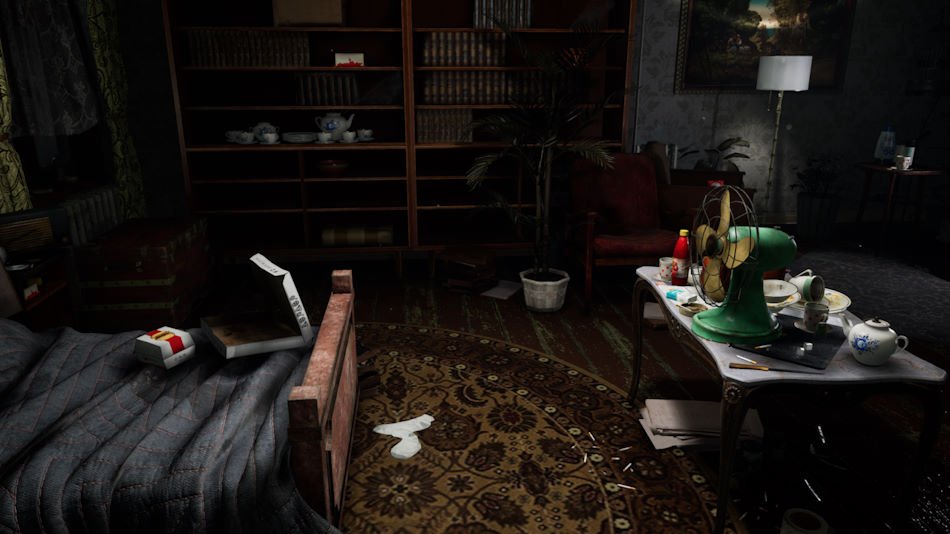
The EBOLA VILLAGE puzzle design sits in an interesting space. It’s frustrating and intriguing in almost equal measure. I didn’t throw a controller across the room, which feels like an achievement in itself, but these puzzles definitely demand patience. They’re layered in a way that asks you to rethink mechanics you thought you already understood, and sometimes even question whether you’re overthinking things. Often, you are. Sometimes, you aren’t.
There were moments where I felt a bit punished for missing a detail that seemed obvious after the fact. That sting is real. You’ll walk away, circle back later, and suddenly the solution feels almost insulting in how simple it was. Still, when everything finally clicks, there’s a genuine sense of relief and satisfaction. It’s the kind where you sigh, maybe laugh a little, and think, okay, fair enough. That balance mostly works, even if it occasionally tests your tolerance.
What I appreciated is that the EBOLA VILLAGE puzzles rarely feel disconnected from the world. They make sense within the environment, even when they’re being stubborn. You’re not solving abstract logic problems just for the sake of it. Most of the time, you’re interacting with spaces, objects, and systems that feel like they belong there. That helps ground the frustration and makes the effort feel worthwhile, even when progress slows to a crawl.
That said, the pacing can be uneven. Some sections flow nicely, letting you move from one problem to the next with a sense of momentum. Others hit a wall and stay there longer than they probably should. When that happens, the tension shifts from atmospheric to mechanical, and you become very aware that you’re stuck in a game puzzle rather than trapped in a creepy village. It doesn’t happen constantly, but when it does, it’s noticeable.
The EBOLA VILLAGE puzzles feel intentionally uncompromising. They expect you to pay attention, to experiment, and to accept that failure is part of the process. That won’t work for everyone. For me, it mostly did, even if there were a few moments where I had to step away, take a breath, and come back with fresh eyes. Sometimes that’s exactly what the game wants from you.
Controls
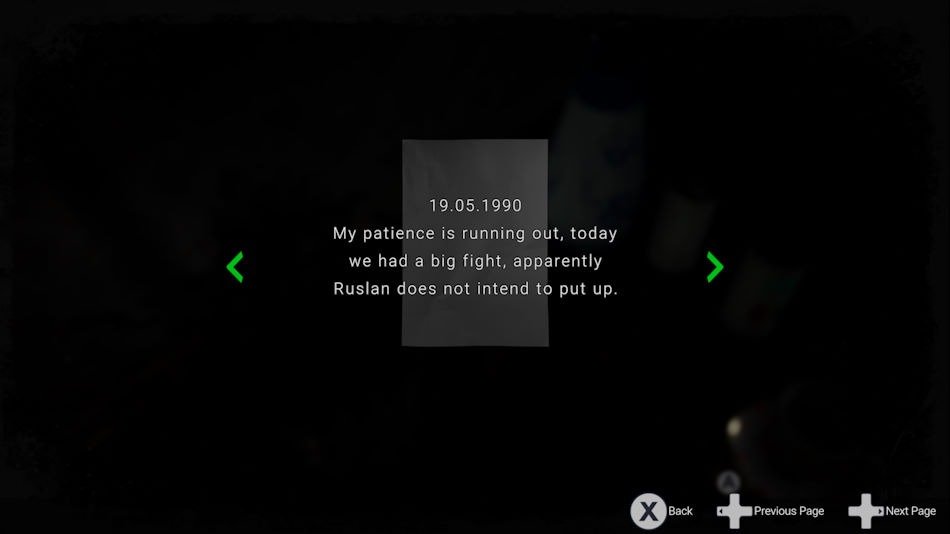
On Xbox, the EBOLA VILLAGE controls make it pretty clear this was built with PC in mind first. The longer you play, the harder it is to ignore. Movement, aiming, and inventory management all of it technically works, but not always in the way your hands expect it to. There’s a slight resistance there, like the game and the controller are constantly negotiating with each other and never quite settling on a compromise.
That said, it is playable, which honestly surprised me in a good way. For a PC-heavy title making the jump to console, it doesn’t completely fall apart. There are definitely clunky moments, especially when navigating menus or interacting with objects that require precision. You feel it most during tense situations, when you’re already on edge, and the controls slow you down in ways they probably shouldn’t. Those moments break immersion more than anything else.
I found myself getting used to it, though. Not enjoying it exactly, but adjusting. Muscle memory starts to form, and eventually, you stop fighting the controls as much as working around them. That’s not ideal, but it’s manageable. The experience becomes less about fluidity and more about patience, which, oddly enough, fits the tone of the game even if it wasn’t intentional.
It’s not elegant, and it’s not clean, but it doesn’t ruin the experience outright. But it is always there and noticeable. I’ll give credit where it’s due. At least they made it work. That already puts it ahead of some PC ports that barely function once a controller is introduced. It feels like effort was made, even if the execution didn’t fully stick the landing.
Sound & Audio
Sound design plays a subtle but important role in EBOLA VILLAGE, and is quite eerily impressive. It doesn’t rely on constant music or loud audio cues to create tension like many horror games. Instead, it leans heavily on silence, ambient noise, and the occasional unsettling sound cutting through the quiet. Footsteps echo uncomfortably. Background noises feel distant and indistinct, making it hard to tell what’s normal and what isn’t. You’re often left listening as much as you’re watching, which fits the slow, observant pace of the game.
What’s interesting is how often the audio makes you hesitate. You’ll hear something faint and pause, unsure whether it’s environmental, intentional, or a warning you should be taking seriously. That uncertainty does a lot of work. It nudges you forward cautiously rather than forcing fear through volume or shock. In some moments, the quiet feels heavier than any dramatic score could.
When the game does use audio to heighten a moment, it’s usually restrained rather than dramatic. Sounds arrive softly, almost politely, and then linger longer than expected. There’s a clear sense of control here that mirrors the game’s overall design philosophy. Sometimes that restraint works beautifully, especially during exploration, where silence becomes its own kind of pressure. Other times, the audio fades into the background more than it probably should, and moments that could have landed harder pass by without much impact.
It’s an uneven approach, but not an ineffective one. The sound design doesn’t demand attention, and it rarely tells you how to feel. Instead, it supports the creeping dread in a quieter way, letting tension grow naturally. When it works, it really works. When it doesn’t, you notice the absence more than the presence. And in a game like this, that absence is often part of the experience, whether you like it or not.
Graphics
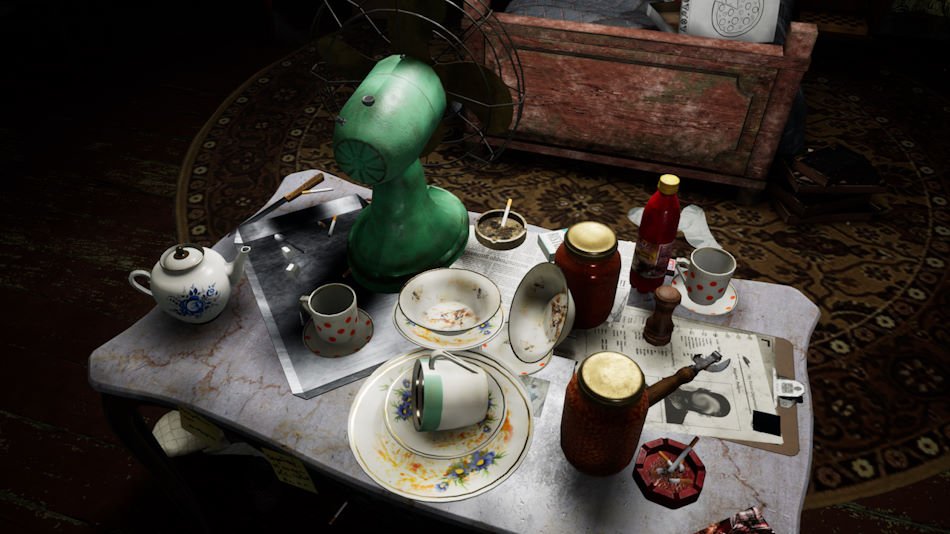
Visually, the 90s influence is unmistakable. I think they leaned a bit too hard into it, though I understand why. The atmosphere and overall design absolutely capture that era. The environments feel deliberate, moody, and isolated, and there’s a strong sense of place throughout. You’re not wandering through generic horror spaces. Each location feels like it belongs to this specific world, and that does a lot of the heavy lifting when it comes to immersion.
Lighting plays a big role here. Shadows do more work than textures ever could, and in quieter moments, the game looks genuinely effective. Empty rooms feel uneasy. Corridors stretch just a bit too long. There’s a roughness to it that fits the tone, even if it occasionally comes across as dated rather than intentional. It’s effective mood-setting, but not consistently impressive to look at.
Playing on a next-gen console, though, it’s hard not to want a little more. The aesthetic clearly commits to the vibe, but some of the finer details feel undercooked. Textures can look flat up close, and character models don’t always hold up when the camera lingers. It’s not ugly by any means, just restrained. Sometimes overly so. Maybe that’s intentional. Maybe it’s a limitation. Either way, the result lands somewhere between stylised and bare.
I kept going back and forth on it while playing. One moment I’d admire how well the visuals supported the atmosphere, and the next I’d catch myself wishing for sharper detail or a bit more visual flair. That tension never fully resolves. You can appreciate what they were aiming for while still feeling like the hardware had more to give. In the end, it left me slightly torn between appreciation and expectation, which honestly sums up a lot of EBOLA VILLAGE as a whole.
Who This Is For
EBOLA VILLAGE feels best suited to players who enjoy slower, more deliberate survival horror experiences. If you have patience for exploration, environmental storytelling, and puzzles that expect you to pay attention rather than react quickly, there’s something here worth engaging with. Players chasing tight controls, flashy visuals, or constant momentum may struggle to stay invested. This is a game for those who remember, or are curious about, a time when horror games were quieter, rougher, and a little uncomfortable by design.
Overall Thoughts
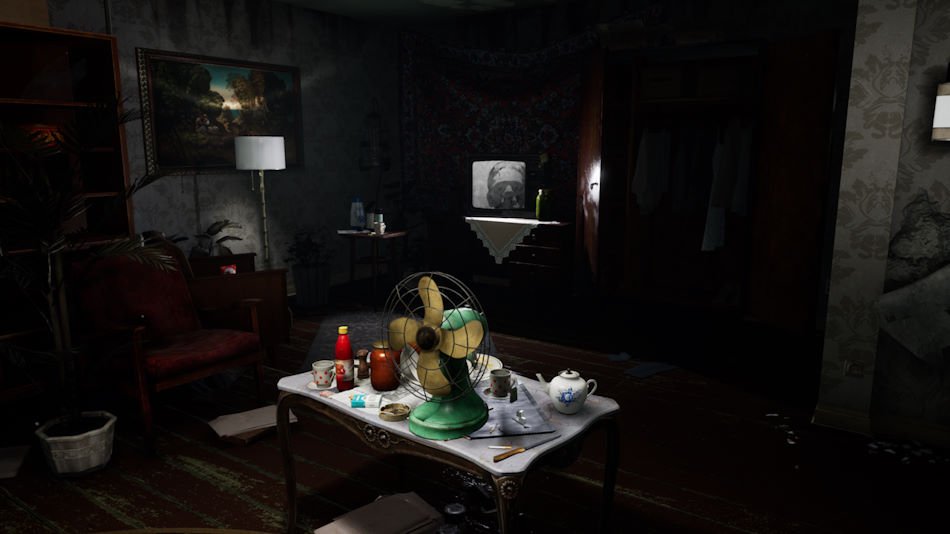
This is one of those games that sits awkwardly between being impressive and being forgettable. I wasn’t immediately drawn in, and even after giving it a fair go, I found myself drifting in and out of engagement. Some moments pulled me in, others pushed me away just as quickly. Still, the effort behind it is obvious. Someone genuinely cared about the atmosphere, the world, and the experience they were building. That sincerity shows, even when the execution doesn’t always land.
EBOLA VILLAGE had been sitting in my “to be played” list on Xbox for a while, quietly waiting its turn. When I finally jumped in, I didn’t regret it, but I also didn’t come away desperate to tell everyone about it. I’d play more, sure. I’m curious enough to keep going. But I wouldn’t brag about it, and I wouldn’t expect it to suddenly explode in popularity. It feels like an indie take on an early Resident Evil concept. Familiar, a little rough around the edges, and quietly ambitious rather than loud about it.
I’ve heard the game is around five hours long, which honestly sounds about right for what it’s trying to do. My issue wasn’t the length so much as the pull. I just didn’t feel hooked enough, at least not yet, to push past the first hour in one sitting. That could change later. It often does with games like this. Or it might not. Time will tell.
What I did find genuinely interesting is how convincingly it captures the feeling of a 90s survival horror game, from before Resident Evil became a massive cultural machine. Before the movies. Before the polish and spectacle. Back when horror games were quieter, stranger, and a bit more awkward. That nostalgia hits harder than I expected, and in a weird way, it’s the thing that stuck with me most. That feeling alone almost makes it worth experiencing. Almost.



Recent Comments